Navigating Tokyo’s vast underground network can be intimidating for even the most seasoned travelers. Between the tangled lines of the Tokyo Metro and Toei Subway, individual fares quickly add up, eating into your travel budget. If you’re planning to explore iconic districts like Shinjuku, Asakusa, and Shibuya in a single trip, finding a cost-effective transit solution is essential. This guide walks you through the best pass options for visitors, compares coverage and value, and explains where to get them without hassle. By choosing the right ticket from the start, you can spend less on transport and more time enjoying everything Tokyo has to offer.
Options for Tokyo Subway Passes: Quick Comparison
So the first thing you need to know about trains in Tokyo is that the metro lines and subway lines are run by multiple operators. This means that one ticket type might not work at every station.To save money and avoid buying individual tickets, you generally have two choices: a Discount Pass (unlimited rides) or an IC Card (prepaid "tap-and-go").Here are the main passes for tourists categorized by how you plan to travel.
|
Type |
Name |
Price (Adult) |
Validity |
Coverage |
Best For |
|
Discount Pass |
Tokyo Subway Ticket |
¥800 / ¥1,200 / ¥1,500 |
24, 48, or 72 consecutive hours |
All 13 Tokyo Metro + 4 Toei Subway lines. |
Focused tourists. Maximizing subway use over 1-3 days in central Tokyo. |
|
Common One-day Ticket for Tokyo Metro & Toei Subway |
¥900 |
One day (from first train to last train on the date of purchase) |
All 13 Tokyo Metro + 4 Toei Subway lines. |
Tourists or locals planning a full day of subway travel in Tokyo. |
|
|
Tokyo City Pass |
¥3,900 / ¥4,800 / ¥5,600 |
24, 48, or 72 hours |
|
Looking to save money versus buying each train fare + attraction ticket separately. |
|
|
Greater Tokyo Pass |
¥6,500 |
5 consecutive days |
Subways + Private lines to suburbs (Nikko, etc.) |
Power users wanting unlimited access to virtually ALL transit in the region, including private lines to outskirts. |
|
|
IC Card |
Suica / PASMO |
Pay-as-you-go |
28 days to none |
Everything (Subway, JR, Buses, Shops) |
Everyone. The essential base card for all other options. Flexible, convenient. |
Each of these options are going to suit a different type of traveller, so read on for a more comprehensive description of all.
1. Tokyo Subway Ticket
The Tokyo Subway Ticket is a tourist-oriented unlimited subway pass that gives you unlimited rides on all Tokyo Metro and Toei Subway 13 lines for a set period. It’s ideal for visitors who plan to ride the subway many times a day.It’s one of the best value options if you are planning to do a lot of sightseeing in a short time. One of the biggest advantages of this ticket is that you don’t have to calculate fares or check your balance, you just tap in and out at the station gates.
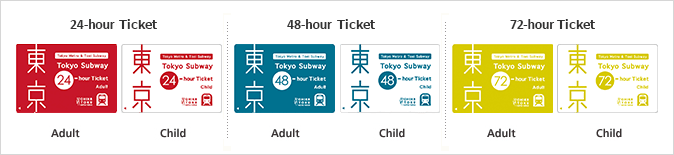
What's Included:
-
Tokyo Metro lines
-
Toei Subway lines
Together these cover 13 subway lines throughout central Tokyo.
⚠️Important: This pass does not cover JR Lines (like the circular Yamanote Line) or private lines like the Yurikamome (to Odaiba).
Validity & Pricing:
You can choose a pass based on how long you need it:
|
Ticket Type |
Adult Price |
Child Price |
|
24-hour pass |
¥800 |
¥400 |
|
48-hour pass |
¥1,200 |
¥600 |
|
72-hour pass |
¥1,500 |
¥750 |
The clock starts from the first time you insert the ticket into a gate. If you start a 24-hour ticket at 2:00 PM on Monday, it is valid until 2:00 PM on Tuesday.
Who can Buy:
-
Short-term visitors entering Japan on a tourist visa.
-
Foreign passport holders.
-
Some domestic travelers living outside the Tokyo region may also be eligible (check official rules).
Where to Buy:
-
Online (Recommended): Purchase via sites like Klook, KKday, Trip.com, or the official Tokyo Metro website. You will receive a QR Code.After purchasing online, you'll get a QR code voucher that you exchange for the actual subway ticket at a machine or counter in Japan.
-
At the Station: Look for the red "Pick up your tickets" stickers on vending machines at major Tokyo Metro/Toei stations.
-
Airport/Tourist Centers: Available at Haneda and Narita airports and major BIC CAMERA stores. You must show your passport.
📌Note: Purchasing usually requires showing your passport in Japan (at airports or select subway stations).
How to Use:
-
Physical Ticket: Insert the card into the yellow/green slot at the ticket gate. Don't forget to take it when it pops out on the other side!
-
Digital/IC Version: Some passes can now be loaded onto a Pasmo card, but the physical ticket obtained via QR code remains the most common method for tourists.
2. Common One-day Ticket for Tokyo Metro & Toei Subway
The Common One-day Ticket for Tokyo Metro and Toei Subway is a, 900-yen day pass (adults) allowing unlimited, one-day travel on all 13 subway lines (9 Tokyo Metro + 4 Toei lines) within Tokyo's 23 wards. Valid until the last train on the day of purchase, it offers a cost-effective option for extensive, single-day subway travel.
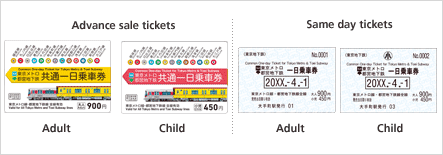
What's Included:
-
All Tokyo Metro lines (9 lines)
-
All Toei Subway lines (4 lines)
This means you can freely hop between the major subway routes in Tokyo without paying each individual fare.
Validity & Pricing:
🎟️ Price:
-
Adult: ¥900
-
Child: ¥450
🕐 Validity:
-
Same-day ticket: Valid for that calendar day (first train to last train).
-
Advance ticket: You can buy it ahead of time and use it on any one day within about six months after purchase.
So if you buy it in advance you can choose which day you want to use it later.
Who can Buy:
The ticket is available to anyone, including both domestic and international tourists, as well as Tokyo residents.
Where to Buy:
-
Same-day: Ticket machines at Tokyo Metro and Toei Subway stations.
-
Advance:
-
Tokyo Metro pass offices and some ticket counters
-
Toei Subway station offices (with a few exceptions)
-
How to Use:
You simply insert or scan the ticket at the subway gate each time you travel. Once activated on the first trip of the day, you can ride as many times as you want on both Tokyo Metro and Toei Subway lines during that day.
3. Tokyo City Pass
The Tokyo City Pass is a tourist-oriented sightseeing pass that combines transport and attractions into one ticket — designed to help visitors explore Tokyo easily and save money compared with buying everything separately.It combines the unlimited subway travel mentioned in the guide with pre-paid admission to major attractions, offering a more "packaged" experience.It offers unlimited Tokyo subway rides (24/48/72 hours) combined with access to top attractions and, in some cases, retail discounts. It allows visitors to save up to 45–85% on popular spots, skip lines, and easily explore over 50+ cultural, art, and amusement venues in Tokyo.
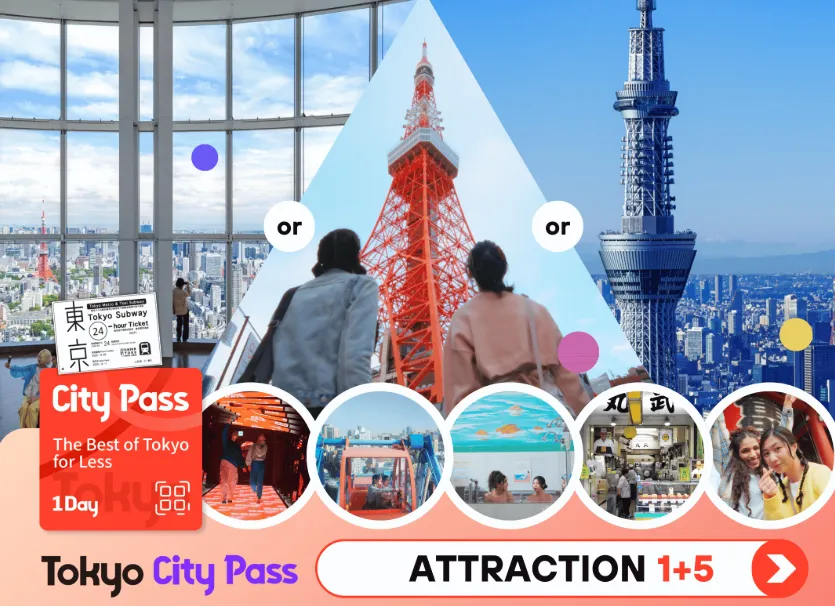
What's Included:
The pass is a "bundle" that typically includes three core components:
-
Unlimited Transport: A 24, 48, or 72-hour Tokyo Subway Ticket (covering all Tokyo Metro and Toei Subway lines).
-
One "Major" Attraction: You choose one big-ticket item from a list that usually includes:
-
teamLab Planets (Toyosu)
-
Tokyo Skytree (Tembo Deck)
-
Tokyo Tower (Main Deck)
-
Art Aquarium Museum Ginza
-
Tokyo City View (Roppongi Hills)
-
-
Bonus "Classic" Experiences: Many versions of the pass also include small, pre-selected experiences like:
-
A ride on the Big-O Ferris Wheel at Tokyo Dome City.
-
An incense burning experience at Senso-ji Temple.
-
A visit to a traditional Japanese bathhouse (Sento).
-
Validity & Pricing:
Tokyo City Pass comes in 1-day, 2-day, or 3-day options, with prices starting around (Actual cost depends on your selection and included attractions):
-
1-day: ~¥3,900
-
2-day: ~¥4,800
-
3-day: ~¥5,600
Once activated, the unlimited subway access runs for the chosen period (e.g., 24, 48, or 72 hours), and you can visit your chosen sights anytime within your pass validity.
Who can Buy:
-
Short-term visitors entering Japan on a tourist visa.
-
Foreign passport holders.
-
Some domestic travelers living outside the Tokyo region may also be eligible (check official rules).
Where to Buy:
You can purchase the pass through the following official and authorized channels:
-
Official Website: tokyocitypass.com (Direct purchase).
-
Klook: Search for "Tokyo City Pass" or the specific activity bundle (e.g., "Tokyo City Pass + teamLab Planets").
-
KKday: Available as a 1, 2, or 3-day pass bundle.
-
Rakuten Travel Experiences: Often lists the pass under their "Sightseeing" section.
While the attractions part of the pass stays on your phone, you need a physical card for the subway gates.
-
After buying online, you will receive a QR code via email.
-
Go to any major Tokyo Metro or Toei Subway station.
-
Look for a ticket vending machine with a red QR code scanner (usually labeled for "Tourist" or "Subway Ticket").
-
Scan your QR code, and the machine will print your physical 24, 48, or 72-hour ticket.
How to Use:
Unlike the subway ticket, you do not need to pick anything up for the sights:
-
Selectable Spots (e.g., Skytree, teamLab): You must reserve your entry time through the link provided in your confirmation email. At the venue, simply show your digital mobile pass.
-
Free-to-Go Spots (e.g., Tokyo Dome Ferris Wheel): Open your mobile pass list on your phone and show the specific facility ticket to the staff. They will either scan it or ask you to tap "Use" in front of them.
4. Greater Tokyo Pass
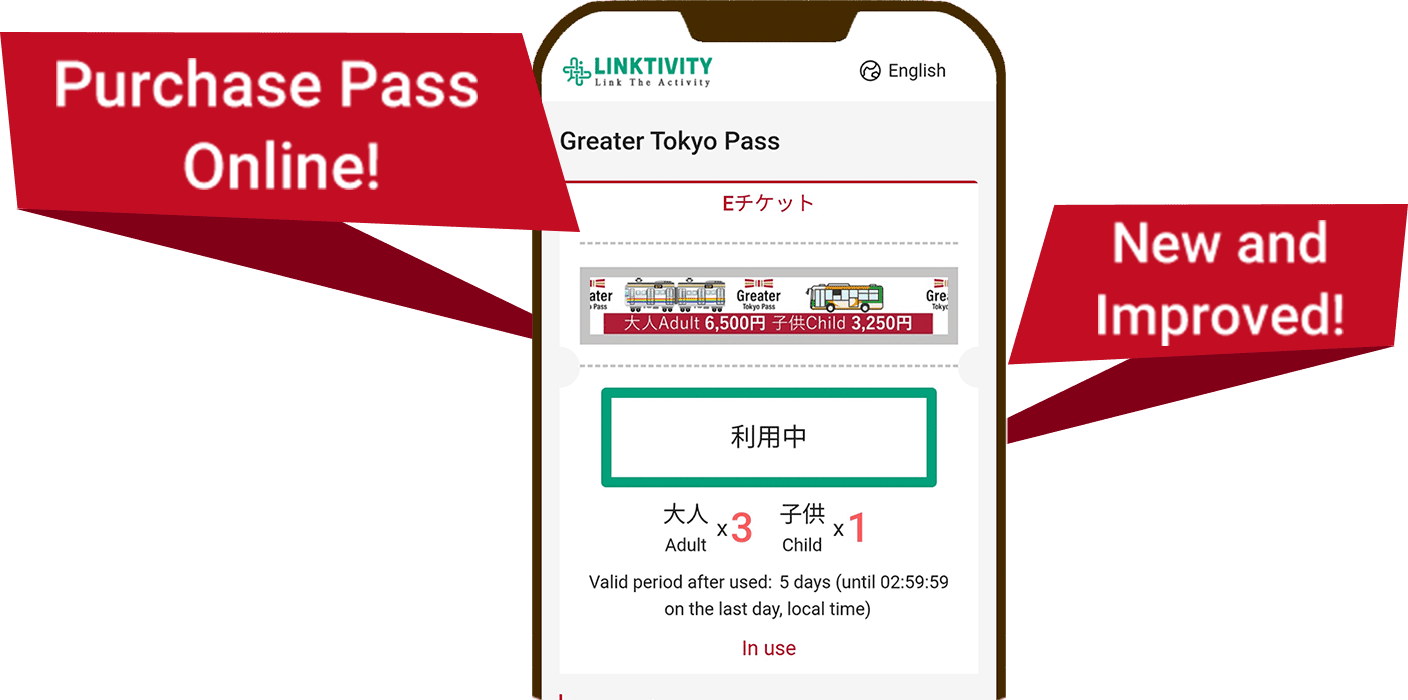
The Greater Tokyo Pass is a specialized multi-day transport ticket designed exclusively for international tourists. It allows 5 days of unrestricted travel on all train and tram lines that are members of the Greater Tokyo Pass Council, including all Tokyo Metro lines and some bus lines.It provides extensive, cost-effective travel to popular spots like Nikko, Kamakura, and Yokohama, but excludes JR lines and the Tokyo Monorail. This is a digital pass (shown on your smartphone) and present it to station staff or bus drivers instead of using automatic ticket gates.And you must show a valid foreign passport to use it.
What's Included?
The pass covers 13 private railway companies and over 30 bus companies, including:
-
Tokyo Metro & Toei Subway (all lines)
-
JR East Lines within the Tokyo Metropolitan Area (including the Yamanote Line, Chuo-Sobu Line, etc., but NOT the Shinkansen)
-
Buses (Tokyo Metro, Toei, and JR buses)
-
Other Railways: Often includes private railways like Tobu, Seibu, Keio, Keikyu, Tokyu, and more, extending to areas like Nikko, Chichibu, Kawagoe, Yokohama, Kamakura, and the Izu Peninsula.
| Valid Transportation Companies |
Railway and Tramline Companies:
|
| Bus Company: Toei Transportation (Toei Bus) |
Validity & Pricing:
-
Price: ¥6,500 for Adults / ¥3,250 for Children.
-
Validity: 5 consecutive days.
Who can Buy:
It is exclusively available to foreign tourists (non-Japanese passport holders) visiting Japan with "Temporary Visitor" status. It cannot be used by Japanese citizens or foreign residents living in Japan. A valid passport is required for purchase and use.
Where to Buy:
-
Official Website: Visit the Greater Tokyo Pass Official Site.
-
Travel Platforms: Sites like Klook, KKday, or Rakuten Travel Experiences sell the pass.These often work similarly to the official site, but refund and support rules may vary depending on the agency you choose.
How to Use:
Once you purchase the pass, you will receive a link to a digital ticket. Do not click the "USE" button until the moment you are ready to begin your first journey.
-
Open the digital pass on your smartphone (from the confirmation email or app).
-
Tap “Use” when you’re ready to start your trip — this activates the pass and starts your 5-day validity period.
-
Once activated, the pass is valid for 5 consecutive days. A "day" is defined from 3:00 AM to 2:59 AM the following morning.
Because it is a digital screen pass, you cannot tap through the automatic gates. You must walk through the manned side-booth and show your phone screen to the station staff.
5. Suica / PASMO (IC Cards)
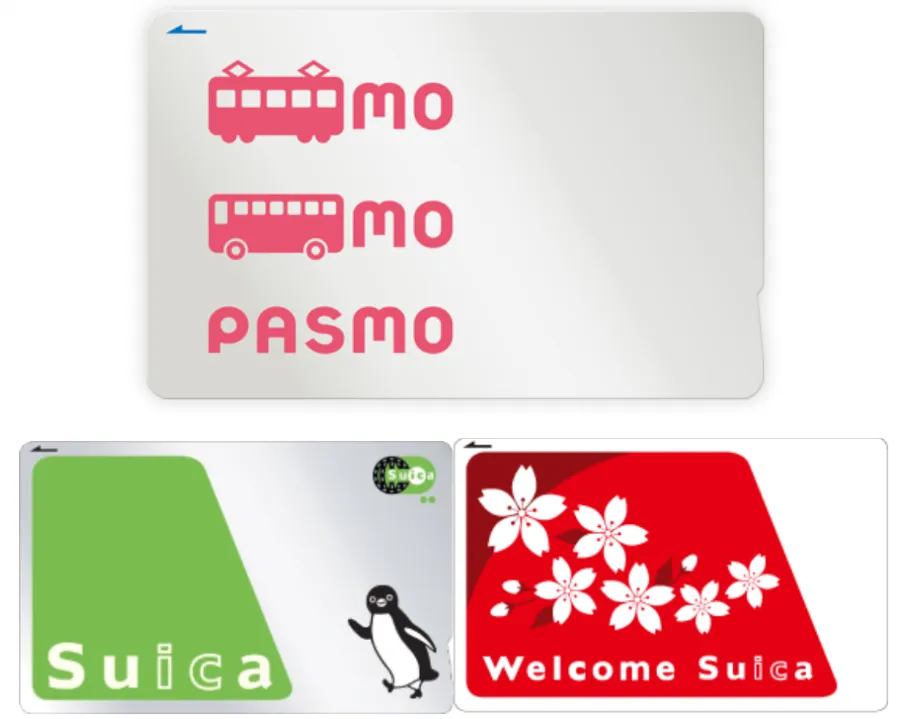
Suica and PASMO are rechargeable "smart cards" (IC cards) that act as electronic wallets for your trip. They are not "discount passes," but rather a replacement for buying paper tickets every time you ride.In 2026, these are the gold standard for getting around because they work on almost every train, subway, and bus line in Japan, regardless of the company.If you want flexibility over pure savings, these are prepaid, rechargeable cards. You "tap-in" and "tap-out" at gates.
What's Included?
-
Tokyo Metro
-
Toei Subway
-
JR trains (including Yamanote Line)
-
Private railways
-
Buses
-
Monorails & trams
-
Convenience stores, vending machines, lockers, cafés, etc.
The "magic" of these cards is that they are not limited to Tokyo.
Validity & Pricing:
|
Feature |
Physical (Regular) |
Welcome Suica (Tourist) |
Mobile (Apple/Google) |
|
Issuance Fee |
¥500 (Deposit) |
¥0 |
¥0 |
|
Initial Cost |
Min. ¥1,000 (¥500 credit + ¥500 deposit) |
Min. ¥1,000 (Full amount is credit) |
¥0 (Add whatever you like) |
|
Validity |
10 years from the date of your last use |
28 days |
None (approx.) |
Who can Buy:
-
Welcome Suica & PASMO Passport (Tourist-Only):
- Eligible: Only short-term foreign visitors (tourists).
-
Requirement: You must show your passport with the "Temporary Visitor" stamp to a staff member or at specific vending machines at the airport.
-
Regular Suica & PASMO (Standard Green/Pink): Eligible: Everyone (Tourists, Foreign Residents, and Japanese Citizens).
- Eligible: Everyone (Tourists, Foreign Residents, and Japanese Citizens).
-
Where: After the chip shortages of previous years, sales of regular cards have resumed at major JR and subway stations.
-
Requirement: No ID is needed for a "blank" (unnamed) card, but you must register your name/phone number if you want a "MySuica" that can be reissued if lost.
Where to Buy:
1) Suica:
Suica is issued by Japan Railways. It is the most common card for travelers landing at Haneda or Narita.
-
At Airports (Narita & Haneda):
-
Welcome Suica (Tourist): Available at dedicated red vending machines near the airport train station entrances and at the JR East Travel Service Centers.
-
Standard Suica (Green): Available at regular black multi-function ticket machines and JR Ticket Offices (Midori-no-Madoguchi).
-
-
In Tokyo City:
-
Major Stations: You can buy a standard Suica at stations like Tokyo, Shinjuku, Shibuya, Ueno, and Shinagawa. Look for the black ticket machines (green machines are usually for recharging only).
-
Welcome Suica: Available at the JAPAN RAIL CAFÉ (Tokyo Station) and major JR East Travel Service Centers in the hubs listed above.
-
2) PASMO:
-
At Airports:
-
Narita: Available at the Skyliner & Keisei Information Center.
-
Haneda: Available at the Keikyu Tourist Information Center (Terminal 3).
-
-
In Tokyo City:
-
Subway Stations: You can buy a standard PASMO at almost any Tokyo Metro or Toei Subway station using the pink or white ticket machines.
-
3) Digital:
If you have an iPhone, you don't need to find a physical machine at all.
-
How: Open Apple Wallet → Tap "+" → Transit Card → Search "Suica" or "Pasmo".
-
Top-up: You can add funds immediately using any credit card in your Apple Wallet. This works 24/7 and bypasses all station lines.
How to Use:
This is the primary use for the cards. You don’t need to buy a ticket; the system calculates the fare automatically between your start and end points.
-
At the Gate: Look for the blue glowing reader on top of the ticket gate.
-
The Tap: Touch your card (or the top of your phone) to the reader for about one second. You will hear a "ping" and the gate will open.
-
The Screen: A small display on the gate will show your remaining balance.
-
Exiting: Tap again at your destination. The gate will show the fare deducted for that trip and your new balance.
💡Pro Tip: If the gate turns red and "beeps" at you, it usually means your balance is too low. Look for a "Fare Adjustment" machine nearby (inside the gates) to add more cash.
Technically, Suica is issued by JR East (blue signs), and PASMO is issued by non-JR companies (pink signs).However, there is zero functional difference for a tourist. You can use a Suica on a PASMO line and vice versa. They are 100% interchangeable across Japan (including Kyoto, Osaka, and Fukuoka).
Quick Summary: Which to Choose?
Option A: The "Don't Think About It" Choice (Suica / PASMO)
If you hate checking maps to see which company owns which line, just use an IC card.
-
The Win: It works on JR lines (like the Yamanote loop), which the subway-only passes do not cover.
-
The Catch: You pay for every ride. If you move around a lot, you’ll spend more than with a pass.
Option B: The "Power Tourist" Choice (Tokyo Subway Ticket)
If you are visiting central spots (Shinjuku, Ginza, Asakusa, Roppongi) and plan to take the train 4+ times a day.
-
The Win: The 72-hour version is only ¥500 per day. It is the cheapest way to see Tokyo.
-
The Catch: It’s strictly for the Subway. If you accidentally walk into a JR station, you’ll need a Suica anyway.
Option C: The "One-Day Resident" (Common One-Day Ticket)
You buy this at the ticket machine on a whim.
-
Difference vs. Subway Ticket: This is valid for one calendar day (until the last train). The tourist "Subway Ticket" is valid for a full 24 hours from your first tap.
-
Verdict: Only get this if you aren't eligible for the tourist discount or forgot to buy the 24-hour pass online.
Option D: The "All-In" (Tokyo City Pass)
New for 2026, this is for people who want their transport and their sightseeing in one QR code.
-
The Win: It includes the 24/48/72-hour Subway Ticket plus entry to a major spot like teamLab Planets or Skytree.
-
Verdict: Get this if you were already planning to visit one of those big attractions; it simplifies the booking process.
Option E: The "Explorer" (Greater Tokyo Pass)
-
The Win: It’s for 5 days and covers the subway PLUS private lines to places like Kamakura, Nikko, or Mt. Takao.
-
Verdict: Only worth it if you are doing at least two big day trips outside central Tokyo within a 5-day window.
‼️The Pro Strategy:
Most experienced travelers in 2026 do a Hybrid Approach:
-
Load a Suica/PASMO onto their iPhone/Android for "backup" and small JR hops.
-
Buy a 72-hour Tokyo Subway Ticket (online via Klook or similar) to use as their primary "engine" for moving between major sightseeing districts.