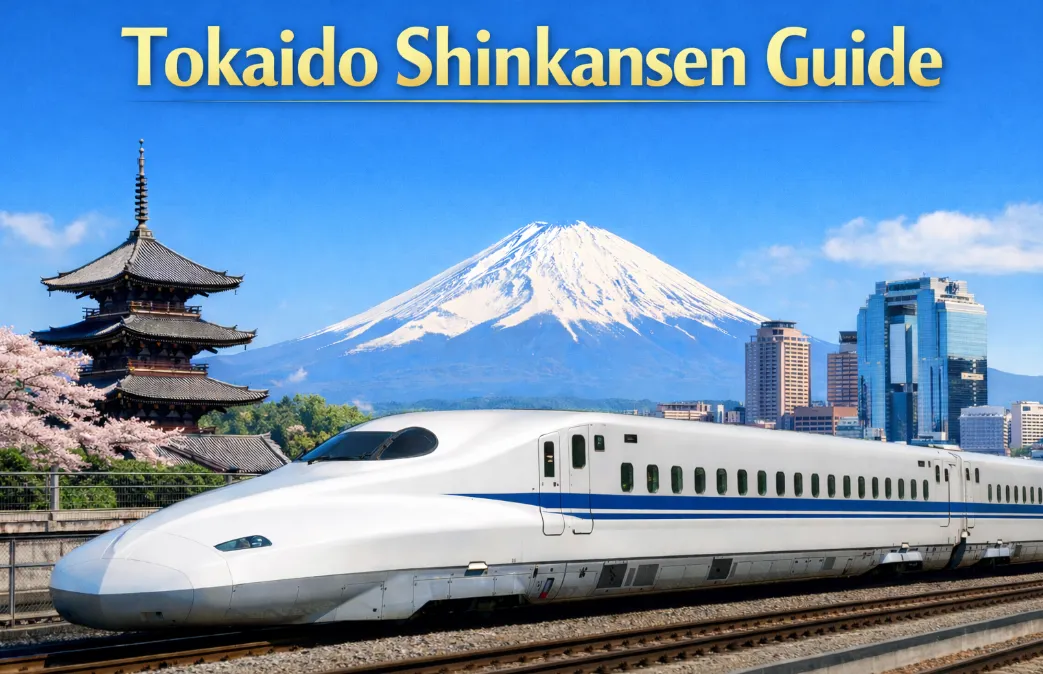
Traveling between Tokyo, Kyoto, and Osaka is incredibly efficient thanks to Japan’s high-speed rail network. As the country’s busiest bullet train route, the Tokaido Shinkansen connects major cities in record time and is widely used by both visitors and locals. But before you step onto the platform, it’s essential to understand the seat map layouts and the strict baggage area reservations now in place. In this guide, you’ll learn how to plan your journey with confidence—from understanding fare options and seating layouts to booking in advance and handling large baggage.Whether you're looking for the best window seat with a Fuji view or trying to decode the oversized baggage rules, this comprehensive guide covers everything from booking digital tickets via Smart EX to understanding the latest onboard amenities. Get ready to experience Japan’s most iconic rail line with confidence and ease.
What is the Tokaido Shinkansen?
➤ Operator: Central Japan Railway Company (JR Central).
➤ Opened: October 1, 1964, just in time for the Tokyo Olympics. It symbolized Japan's postwar recovery and technological prowess.
➤ Name: Named after the historical Tōkaidō road, the most important coastal route during the Edo period.
➤ Route: Connects Tokyo (Tokyo Station) to Osaka (Shin-Osaka Station).
➤ Length: Approximately 514.4 km (320 miles).
➤ Top Speed: 285 km/h (177 mph).
➤ Rolling Stock: Primarily N700A and N700S series trains.
➤ Services: Nozomi (fastest), Hikari, Kodama (all stops).
The Tokaido Shinkansen is Japan's first and busiest high-speed "bullet train" line, connecting the major cities of Tokyo, Nagoya, Kyoto, and Osaka, forming a crucial economic artery. Opened in 1964 for the Tokyo Olympics, it was the world's first high-speed rail system, renowned for its speed (up to 285 km/h or 177 mph), punctuality (averaging 12-second delays), efficiency, and comfortable service, with trains like the Nozomi, Hikari, and Kodama.
🔺Key Features:
-
Punctuality: The average delay per train is usually measured in seconds (often less than a minute), even including delays caused by natural disasters like typhoons or earthquakes.
-
Revolutionized Travel: Reduced the Tokyo-Osaka journey from about 6.5 hours (by conventional train) to just about 2.5 hours (by Nozomi).
-
Frequency: During peak hours, trains depart as often as every 3–5 minutes—essentially acting like a high-speed subway system for the entire country.
-
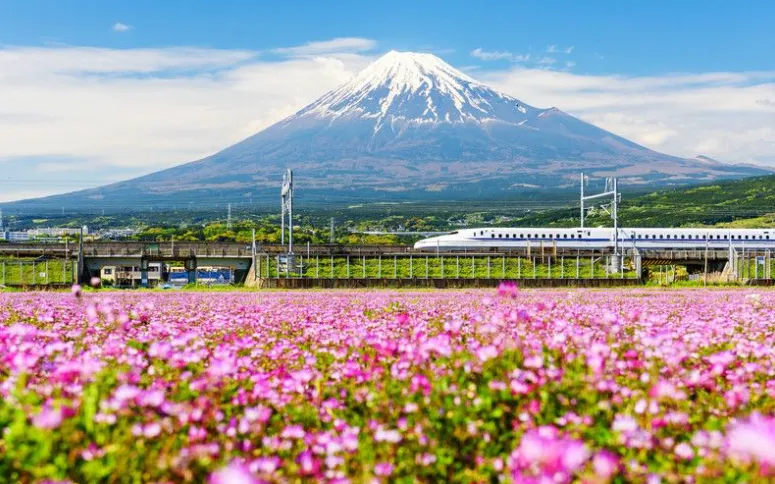
Mt. Fuji Views: On clear days, passengers traveling from Tokyo toward Osaka can see a stunning view of Mount Fuji on the right side of the train (D-E seats) about 45 minutes into the journey.
-
Comfort & Convenience:
-
Seating: Wide, comfortable seats, often with forward-facing, rotating configurations.
-
Classes: Standard cars (reserved/unreserved) and Green Cars (first class, all reserved).
-
Amenities: Free Wi-Fi, power outlets at seats, luggage racks, large luggage space, and toilets.
-
Food Service: Mobile ordering for Green Car passengers; trolley service discontinued.
-
-
Safety & Reliability:
-
Earthquake Detection: Automatic power cut and emergency braking upon tremor detection.
-
Platform Screen Doors: Prevents falls onto tracks at major stations.
-
Meteorological Sensors: Adjusts speed for heavy rain or typhoons.
-
1. Train Service Levels
It is primarily served by the N700 Series "bullet trains" (and its variants), known for their speed, safety, and comfort.There are three main service types, distinguished by the number of stops:
-
Nozomi (のぞみ): The fastest and most frequent service. Makes only the major stops (e.g., Tokyo, Shinagawa, Shin-Yokohama, Nagoya, Kyoto, Shin-Osaka). Not covered by the standard Japan Rail Pass (a separate ticket must be purchased).
-
Hikari (ひかり): The semi-fast service, making more stops than Nozomi. The fastest service covered by the standard Japan Rail Pass.
-
Kodama (こだま): Stops at every single station along the route. While slower, it is the only way to reach smaller local stations like Atami or Shizuoka.
|
Train Name |
Speed |
Total Stops |
Typical Journey (Tokyo ↔ Osaka) |
Description |
JR Pass |
|
Nozomi (のぞみ) |
Fastest |
6-8 stops |
~2 hours 25 mins |
Stops only at major cities (Tokyo, Nagoya, Kyoto, etc.).Ideal for long-distance travel between Tokyo, Nagoya, Kyoto, and Osaka |
❌NOT Covered |
|
Hikari (ひかり) |
Fast |
8-9 stops |
~3 hours |
Stops at a few more mid-sized cities. Popular among international travelers using rail passes. |
✔️Covered (Fastest with Pass) |
|
Kodama (こだま) |
Slowest |
All stops |
~4 hours |
Stops at every station. Ideal for shorter hops to places like Atami. |
✔️Covered |
2. Route and Stops
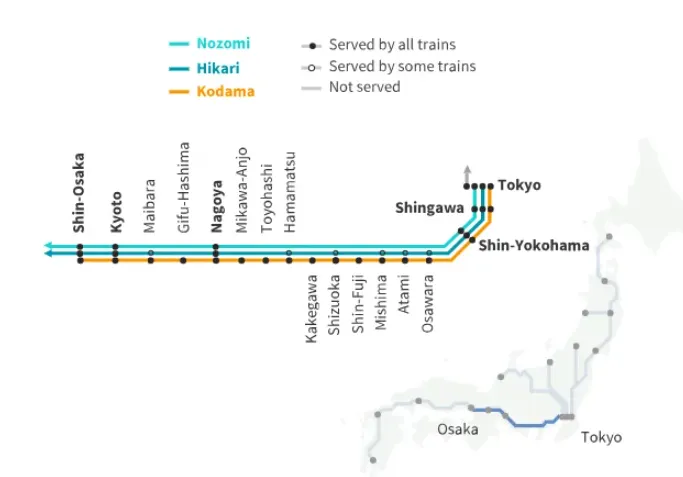
The Tokaido Shinkansen runs along Japan’s Pacific coast, linking the country’s largest metropolitan areas from eastern to western Japan. It connects Tokyo with Shin-Osaka, serving major business hubs, tourist cities, and regional centers along the way.Below are all Tokaido Shinkansen stations (east to west):
|
Station Name (English) |
Station Name (Japanese) |
Prefecture |
Major City/Area Served |
Notes |
|
Tokyo |
東京 |
Tokyo |
Tokyo (Marunouchi/Otemachi) |
Main terminus. Connects to virtually all JR lines, subways, and the Tohoku/Jōetsu Shinkansen. |
|
Shinagawa |
品川 |
Tokyo |
Tokyo (Minato/Southern business district) |
Major business hub. Convenient for access to Haneda Airport via monorail. |
|
Shin-Yokohama |
新横浜 |
Kanagawa |
Yokohama (Northern part) |
Serves Yokohama. The station is a short subway ride from the city's central Minato Mirai area. |
|
Odawara |
小田原 |
Kanagawa |
Odawara City |
Gateway to Hakone and the Fuji-Hakone-Izu National Park. |
|
Atami |
熱海 |
Shizuoka |
Atami City |
Gateway to the Izu Peninsula, a popular hot spring resort area. |
|
Mishima |
三島 |
Shizuoka |
Mishima City |
Access point for Izu, and to buses for the Fuji Five Lakes (Kawaguchiko) area. |
|
Shin-Fuji |
新富士 |
Shizuoka |
Fuji City |
Offers the best panoramic views of Mount Fuji from the train (right side, ~40 min from Tokyo). |
|
Shizuoka |
静岡 |
Shizuoka |
Shizuoka City |
Capital of Shizuoka Prefecture. Famous for green tea and views of Mt. Fuji. |
|
Kakegawa |
掛川 |
Shizuoka |
Kakegawa City |
/ |
|
Hamamatsu |
浜松 |
Shizuoka |
Hamamatsu City |
Major industrial city, known for musical instruments (Yamaha, Kawai). |
|
Toyohashi |
豊橋 |
Aichi |
Toyohashi City |
Transfer point for local trains to the Ise-Shima region. |
|
Mikawa-Anjō |
三河安城 |
Aichi |
Anjō City |
/ |
|
Nagoya |
名古屋 |
Aichi |
Nagoya |
Major metropolis. Key transfer hub for the Chūō Main Line and the Tōkaidō Main Line. The station complex is massive. |
|
Gifu-Hashima |
岐阜羽島 |
Gifu |
Hashima City |
The main Shinkansen stop for Gifu City (requires a local train transfer). |
|
Maibara |
米原 |
Shiga |
Maibara City |
Transfer point for the Hokuriku Shinkansen to Kanazawa and local lines to Lake Biwa. |
|
Kyoto |
京都 |
Kyoto |
Kyoto |
Serves the heart of the ancient capital. Connects to multiple subway and JR lines for temples/shrines. |
|
Shin-Osaka |
新大阪 |
Osaka |
Osaka (Northern part) |
Western terminus. Transfer here to the local subway (Midosuji Line) to reach central Osaka (Umeda, Namba, Shinsaibashi) or to the Sanyō Shinkansen. |
Key Scenic & Travel Highlights Along the Route:
-
View of Mount Fuji: The absolute highlight. Best seen about 40-50 minutes after leaving Tokyo, between Shin-Fuji and Shizuoka stations.
-
Direction: From Tokyo to Osaka/Kyoto, sit on the RIGHT side (Window Seat D or E); From Osaka/Kyoto to Tokyo, sit on the LEFT side (Window Seat A).
-
Visibility depends heavily on weather.
-
-
Major Transfer Hubs:
-
Tokyo/Shinagawa: For the Tohoku, Hokkaido, Hokuriku, and Jōetsu Shinkansen lines.
-
Nagoya: For the Chūō Shinkansen (Maglev to/from SCMaglev Museum) and local trains to Central Japan.
-
Maibara: For the Hokuriku Shinkansen to Kanazawa and Toyama.
-
Shin-Osaka: For the Sanyō Shinkansen to Hiroshima and Fukuoka (Hakata).
-
-
Gateway to Tourist Regions:
-
Odawara/Atami: For Hakone (onsen, ryokan, view of Fuji).
-
Mishima: For buses to the Fuji Five Lakes.
-
Kyoto: For the ancient capital's temples, shrines, and gardens.
-
Shin-Osaka: For the food and nightlife of Osaka, and access to Kobe, Nara, and Kyoto (via local trains).
-
3. Train Models & Seat Types
1) Train Models
The Tokaido line uses 16-car trainsets. Knowing your model helps with charging your devices.
⏭ Series N700S (Supreme) - The New Standard:
-
Power Outlets: Available at every seat (including all B and C seats).
-
Ride Quality: Improved active suspension for a smoother ride.
-
Extra: Features larger LCD displays for station information and upgraded "S Work" cars for business travelers.
⏭ Series N700A (Advanced):
-
Power Outlets: Available at Window Seats (A/E) and the Front/Back rows only.
-
Seating Layout:
-
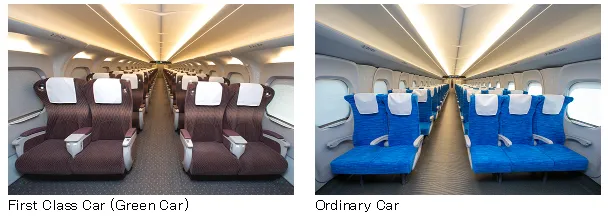
Ordinary Car (Cars 1–7, 11–16): 3+2 layout. Seat E is the window with Mt. Fuji views.
-
Green Car (Cars 8–10): 2+2 layout. More legroom and power outlets at every seat.
-
2) Seat Types
The Tokaido Shinkansen offers several seating options designed for different budgets and comfort levels. Whether you’re traveling for business or leisure, understanding the seat types will help you choose the best option for your journey.
Ordinary Class (普通車 - Futsuusha)
This is the standard class, found in cars unreserved and reserved on a typical N700 Series train.These Seats are comfortable with plenty of legroom, though the middle seat ("B") is slightly wider to compensate for being between two others.
A. Unreserved Seats (自由席 - Jiyūseki)
-
Location: Usually Cars 1, 2, and 3 (sometimes up to Car 5).
-
Ticket: Cheaper than a reserved seat. Valid on any train of the correct service type (e.g., any Hikari) on your travel date.
-
Seat Type: Identical in comfort and size to reserved ordinary seats.
-
Pros: More flexibility, slightly cheaper.
-
Cons: No guaranteed seat. During peak times (golden hours, holidays), you may have to stand. Seating is first-come, first-served. Cars can be crowded.
-
Best For: Travelers on flexible schedules, off-peak travel, or short hops where standing is acceptable.
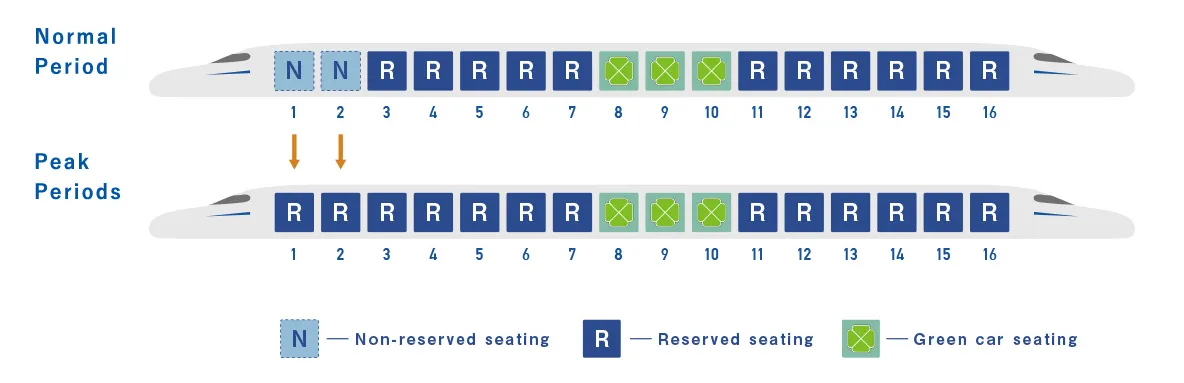
B. Reserved Seats (指定席 - Shiteiseki)
-
Location: Designated cars, typically Cars 7, 10, 11, 12 (varies by train).
-
Ticket: Slightly more expensive than unreserved. Guarantees a specific seat on a specific train.
-
Seat Type & Features:
-
Layout: Configured in rows of 3 seats (A-B-C) and 2 seats (D-E) per row.
-
Width/Pitch: Approximately 43 cm (17 in) width, 104 cm (41 in) pitch (legroom).
-
Amenities: Large reclining seat, fold-out tray table, cup holder, power outlet (universal 2-pin or 3-pin) between seats, coat hook. Headrests are adjustable.
-
Seat Rotation: All seats can be rotated 180 degrees by train staff at terminal stations, so you can always face the direction of travel if desired.
-
-
Pros: Peace of mind, guaranteed comfort, essential during busy periods.
-
Best For: Almost all travelers, especially those with fixed itineraries, groups, families, or during peak seasons.
Green Car (グリーン車 - Gurīnsha) - First Class
-
Location: Usually Car 8 or 9, the quietest middle car of the train.
-
Ticket: Significantly more expensive than ordinary class, but often considered excellent value for the upgrade.
-
Seat Type & Features:
-
Layout: Spacious 2 x 2 configuration (Seats A-C and D-F).
-
Width/Pitch: Approximately 48-50 cm (19 in) width, 116-130 cm (46-51 in) pitch — much more legroom.
-
Material: Higher quality upholstery, often leather or plush fabric.
-
Amenities: All features of ordinary class plus: footrests, armrests with pop-out drink holders, individual reading lights, higher-grade power outlets, and often complimentary services like an oshibori (hot towel), a drink, and a newspaper (on some services).
-
Ambiance: Quieter, less crowded, more attentive service. The cabin is separated by automatic doors.
-
-
Best For: Business travelers, those seeking maximum comfort on a long journey, or travelers who value quiet and space. Also a great option if ordinary cars are fully booked.
🔺Special / Accessible Seating:
-
Wheelchair-Accessible Seats: Located in Car 7 (on most trains). These are reserved seats with ample space for a wheelchair. Bookable via ticket offices.
-
Multi-Purpose Compartments: Available in Cars 3 & 10. They provide private space for nursing mothers, passengers with medical needs, or those traveling with small children. Not for general seating.
-
Oversized Luggage Seats: The last-row seats in certain cars have space behind them for large suitcases (160-250 cm total dimension). You must reserve these seats and declare your oversized luggage in advance (¥1000 fee).
Tokaido Shinkansen Timetable
The Tokaido Shinkansen operates with extremely high frequency, making advance timetable planning unnecessary for most travelers. Trains run throughout the day between Tokyo and Shin-Osaka, with short intervals even during off-peak hours.
Providing a specific, real-time timetable for the Tōkaidō Shinkansen is not possible as schedules change seasonally and on weekends/holidays. However, I can give you the essential framework, frequency, and how to access the exact, current timetable for your travel date.
🔅Operating Hours:
-
First trains: Around 6:00 AM
-
Last trains: Around 11:00 PM
-
Service runs daily, including weekends and national holidays
Exact departure times may vary slightly by station and season.The Tokaido Shinkansen timetable for the first and last trains that depart from Tokyo, and from Shin-Osaka, is as follows:
Tokyo to Osaka:
|
Stop |
First train departure |
Last train departure |
|
Tokyo |
6:00 |
21:24 |
|
Shinagawa |
6:07 |
21:31 |
|
Shin-Yokohama |
6:18 |
21:42 |
|
Nagoya |
7:35 |
22:58 |
|
Kyoto |
8:09 |
23:32 |
|
Shin-Osaka |
8:22 |
23:45 |
Osaka to Tokyo:
|
Stop |
First train departure |
Last train departure |
|
Shin-Osaka |
6:00 |
21:30 |
|
Kyoto |
6:14 |
21:44 |
|
Nagoya |
6:49 |
22:18 |
|
Shin-Yokohama |
8:05 |
23:33 |
|
Shinagawa |
8:16 |
23:44 |
|
Tokyo |
8:23 |
23:51 |
🔅Train Frequency (Approximate):
During most of the day:
-
Nozomi: Every 5–10 minutes
-
Hikari: About 2 trains per hour
-
Kodama: About 2 trains per hour
During peak periods (morning and evening rush hours, holidays), departures can reach 10–12 trains per hour in each direction.
🔅Peak vs Off-Peak Travel:
-
Peak hours:
-
Weekdays: 7:00–9:00 AM, 5:00–8:00 PM
-
Weekends & holidays: late morning to early afternoon
-
-
Off-peak hours:
-
Midday and late evening
-
Easier to find non-reserved seats and quieter cars
-
How to Find the EXACT, Current Timetable?
You can find the full, up-to-date timetable for the Tokaido Shinkansen on the JR Central official website.Because the schedule is so dense, most travelers do not use a PDF timetable. Instead, use these tools for live updates:
-
SmartEX App: The official booking tool. It shows exact seat availability and platform numbers for every train today and up to a month in advance.
-
NAVITIME / Google Maps: Excellent for seeing how the Shinkansen connects to local lines (like the Yamanote Line in Tokyo or the Midosuji Line in Osaka).
-
JR Central Status Website: Use this if there is heavy rain or snow, as it provides real-time delay info (usually in minutes).
- Large Digital Departure Boards: Located above the Shinkansen ticket gates and on platforms. They show the next 5-8 departures in real-time.
Critical Timetable Tips for Travelers:
-
Peak vs. Off-Peak: Avoid traveling on Sunday evenings, Monday mornings, and around national holiday bookends if you want empty seats. These are the busiest times.
-
Seat Reservations are Crucial: For any travel during peak times or with a fixed itinerary, book a reserved seat in advance. Unreserved cars can be standing-room only.
-
Last Train Warning: Japanese last trains are punctual. Do not cut it close. Plan to be at your departure station at least 20 minutes before the last desired train.
-
Real-Time Delays: While rare, delays can happen due to weather (typhoons, heavy snow) or incidents. Check station boards for alerts. Major delays are communicated in English.
How to Book Tokaido Shinkansen Tickets?
Booking Tokaido Shinkansen tickets is simple and can be done in advance or on the day of travel. There are several options depending on whether you prefer in-person, online, or app-based booking.
|
Method |
Best For |
Pros |
Cons |
Advance Booking |
|
Online (Official Sites/Apps) |
Most travelers, planners |
Easiest, English support, pick best seats, pay with foreign card |
Need to manage digital tickets/QR codes |
Up to 1 month in advance |
|
At Station Machines |
Last-minute, flexible travelers |
Immediate, visual interface, available 24/7 |
Can be crowded, may require cash |
Day of travel or a few days prior |
|
At Station Ticket Office |
Complex itineraries, JR Pass holders, groups |
Expert help, solves problems, ensures correct ticket |
Long queues, limited English (use simple phrases) |
Day of travel or a few days prior |
|
Travel Agencies (Klook, etc.) |
Those wanting a voucher |
Can book before trip, often in local currency |
Must exchange voucher at station, extra step |
Varies by agency |
✅Online Booking (Recommended)
This is the most efficient method. The two primary official platforms are:
1. SmartEX (App or Website)

SmartEX is the official English-language booking service for the Tokaido line. It is highly recommended because it allows for "ticketless" travel.
-
Languages: Full English support.
-
Payment: Accepts major international credit/debit cards (Visa, Mastercard, Amex).
-
Key Features:
-
Book 1 month to 3 minutes before departure.
-
Choose exact seats (window/aisle, Mt. Fuji side, etc.).
-
Declare oversized luggage during booking (essential!).
-
Tickets are stored in the app as QR codes; scan them at the gate.
-
You can cancel/change easily (small fee applies if close to departure).
-
-
Process: Register an account, search for your route (Tokyo→Kyoto), select train/seat, pay, and receive e-ticket.
2. JR-EAST Train Reservation (For JR Pass Holders)
Official site for JR Pass holders to make free seat reservations before arriving in Japan.
-
Crucial: You must already have purchased your Exchange Order for the JR Pass. You use its number to book.
-
Limit: You can only book starting at 10:00 AM JST, one month before your desired travel date. It's competitive for peak seasons.
-
Process: Enter your Pass details, select trains, and reserve seats. You then pick up all your reserved seat tickets at a JR office in Japan.
✅At the Station (In Person)
1. JR Ticket Offices (Midori no Madoguchi)
-
Available at major stations like Tokyo, Shin-Osaka, Nagoya, and Kyoto.
-
Staff can assist with seat reservations, Green Car bookings, and luggage requirements.
-
Payment by cash or credit card.
Process:
01. Take a number ticket from the machine near the office entrance.
02. When called, go to the counter. Have ready:
-
-
Your JR Pass (if applicable).
-
A written note with your destination, date, preferred time (e.g., "Kyoto, Nov 5, ~10 AM"), and number of people.
-
The phrase: "Shiteiseki, onegai shimasu" (Reserved seat, please).
-
03. The clerk will find options, show you a seat map, and issue your tickets.
⚠️Warning: Lines at major stations like Tokyo or Shinjuku can be 30–60 minutes long during peak hours.
2. Ticket Machines
-
Multilingual machines available at most stations which can issue reserved and non-reserved tickets.
-
Usually accept cash or international credit cards (Visa, Mastercard, Amex).
Step-by-Step Guide:
01. Find the right machine: Look for the greenish-blue JR ticket machines with the Shinkansen symbol or the word "TOKAI" or "EXPRESS". They have an English button.
02. Select Language: Touch "English".
03. Choose Route: Select "Tokai-do Shinkansen".
04. Input Details: Choose your departure, destination, date, time, number of passengers.
05. Choose Train & Seat: The machine shows a list of available trains (Nozomi/Hikari/Kodama). Select one.
-
-
Then, choose "Reserved Seat".
-
A seat map appears. Select your preferred seat (e.g., Window, Aisle).
-
For oversized luggage: There is usually a "With Oversized Luggage" button. You must select this if your bag is 160-250 cm.
-
06. Payment: Insert cash or use a Japanese IC card (like Suica). Most machines DO NOT accept foreign credit cards.
07. Collect Tickets: You'll receive two tickets (Base Fare + Limited Express) or one combined ticket. Keep them together.
Ticket Machines
⚠️ Tip: Reserved seats are highly recommended during holidays or peak travel times.
✅Travel Agencies & Third-Party Websites
Many agencies sell Shinkansen tickets as part of Japan travel packages.Some provide English support and mobile vouchers.
Example platforms: Klook, KKday.
⚠️Note: Some third-party bookings may charge a small service fee.
🔺Tips for Booking:
-
During New Year’s, Golden Week (late April/early May), and Obon (August), the fastest train (Nozomi) often becomes Reserved Only. You cannot board with a non-reserved ticket during these dates.
-
If traveling with large luggage, reserve a seat with luggage space.
-
Keep your ticket or e-ticket handy for boarding
-
Check train type and stops carefully—Nozomi is fastest, Kodama stops at all stations.
Tokaido Shinkansen Luggage Rules
Traveling on the Tokaido Shinkansen is convenient, but it’s important to understand the luggage rules to avoid any surprises. Japan’s high-speed trains have clear guidelines for carry-on items, oversized bags, and special luggage.
|
Luggage Type |
Size (L+W+H) |
Key Rules |
Reservation Required? |
Fee |
Storage Location |
|
Standard |
Up to 160 cm (e.g., 28" suitcase) |
Must fit overhead rack or at your feet |
NO |
NO |
Overhead rack or front of seat |
|
Oversized |
160 cm to 250 cm (e.g., large suitcase) |
MUST reserve special seat |
YES |
1,000 yen (if reserved) |
Only in dedicated space behind last-row seats |
|
Prohibited |
Over 250 cm or over 30 kg |
Cannot be brought onboard |
N/A |
N/A |
Must use luggage forwarding |
A. Standard Luggage (≤ 160 cm)
Most "check-in" size suitcases actually fall under this. You do not need a reservation. Store these in the overhead racks for free.
-
Examples: Cabin bags, backpacks, most 24-28" suitcases.
-
Storage: Overhead racks or in front of your seat (without blocking the aisle).
-
Limit: You may bring up to 2 pieces total per passenger, as long as they fit the size/weight rules.
B. Oversized Luggage (160 cm - 250 cm)
This is the rule most travelers need to understand. It is strictly enforced. Station staff often check at ticket gates.
Mandatory Steps:
-
Reserve an "Oversized Luggage Seat": When booking your Shinkansen ticket, you MUST declare that you have oversized luggage. This reserves you a specific seat with luggage space.
-
Pay the Fee: The fee is 1,000 yen per bag if reserved at the time of booking.
-
Use the Designated Space: These seats are always in the LAST ROW of a designated car (usually Car 7 or 11). Your large luggage goes in the space behind your seat, which is locked off from the aisle. You cannot place oversized luggage in overhead racks.
What Happens If You Don't Reserve?
-
You will be charged an additional 1,000 yen penalty (2,000 yen total).
-
Your luggage may be moved to a different car if space is available.
-
In worst cases, you may have to wait for a later train with available space.
How to Book Tickets WITH Oversized Luggage?
1️⃣Online (SmartEX App/Website - RECOMMENDED)
-
When selecting seats, the system will prompt: "Do you have oversized baggage?"
-
Select "Yes" and enter the number of bags.
-
The seat map will then only show you available seats with oversized luggage space (the last rows).
-
Complete your booking. Your e-ticket/QR code will include a luggage icon.
2️⃣At Ticket Machines
-
During the seat selection process, look for a button labeled "With Oversized Luggage" or similar.
-
Press it before choosing your seat. The machine will guide you to appropriate seats.
3️⃣At Ticket Offices (Midori-no-Madoguchi)
-
Clearly state: "Ōkina nimotsu ga arimasu" (I have large luggage) or show this phrase written down.
-
The clerk will assign you the correct seat.
C. Prohibited Luggage
-
Items with total dimensions exceeding 250 cm.
-
Items weighing over 30 kg.
-
Dangerous goods (flammables, gases, etc.).
2026 Trial Update: As of late 2025, some trains are trialing "Oversized Baggage Corners" on decks that do not require reservations, but these are first-come, first-served. It is still safer to book a dedicated seat.
Q&A: Your Top Questions Answered
What cities does the Tokaido Shinkansen connect?
The Tokaido Shinkansen runs between Tokyo and Shin-Osaka, stopping at major cities such as Shinagawa, Shin-Yokohama, Nagoya, Kyoto, and others along the way.
Are the trains accessible?
-
Yes, there are wheelchair-accessible seats and toilets.
-
Priority seating is available for elderly, pregnant, and disabled passengers.
Can I use Wi-Fi or power outlets onboard?
Wi-Fi is available on most newer trains.Power outlets are available at seats in Ordinary Class (N700 series and newer) and Green Cars.
Which side should I sit for Mount Fuji views?
When traveling from Tokyo to Osaka, sit on the right side of the train for the best view of Mount Fuji.
Can I eat and drink on the Shinkansen?
Absolutely. It's common practice.
What if I miss my train?
-
Reserved Ticket: If you miss your specific departure, your ticket remains valid for a Non-Reserved seat on any subsequent train of the same type (e.g., another Nozomi) on the same day.
-
Green Car Ticket: You lose the Green Car privilege and must sit in an Ordinary Non-Reserved car unless you pay to re-book.
Do children need tickets?
-
Ages 0–5: Travel for free if they sit on an adult's lap. If they occupy their own reserved seat, you must buy a child’s ticket.
-
Ages 6–11: Pay 50% of the adult fare.
-
Ages 12+: Pay the full adult fare.
Can I smoke on the train?
No. As of March 2024, the Tokaido Shinkansen is 100% smoke-free. All previous onboard smoking rooms have been removed and repurposed (most now store emergency drinking water). Smoking is also banned on most station platforms, except for a few designated ventilated booths.
How early should I arrive at the station before departure?
-
If you already have tickets: 15-20 minutes is sufficient.
-
If you need to buy tickets: 30-45 minutes is safer.
-
If you have oversized luggage to declare: 30+ minutes.
-
During peak travel periods: Add 15-20 minutes to all above.
Can I bring my bicycle on the Shinkansen?
Not assembled. You must:
-
Dismantle and pack it in a bicycle bag (total dimensions under 250cm)
-
Reserve an oversized luggage seat (it will count as oversized luggage)
-
Better option: Use specialized bicycle forwarding services.