Planning your travel across Japan? While the country's extensive rail network often captures the spotlight, its comprehensive and efficient bus system is a cornerstone for affordable and scenic journeys. From bustling city routes to cross-country overnight trips, buses offer a unique perspective on the Japanese landscape. Navigating ticket purchases, however, can be a challenge for international visitors. Luckily,buying bus tickets in Japan is much easier than it used to be, thanks to several English-friendly platforms. In this guide, I dive into the most reliable websites to secure your Japanese coach tickets, comparing everything from user interface to route coverage. Whether you’re planning a short city hop or a long intercity journey, these trusted sites make traveling across Japan smooth and hassle-free.
Methods for Purchasing Bus Tickets
In Japan, the method for buying a bus ticket depends entirely on whether you are taking a Local Bus (short distance/city) or an Express/Night Bus (intercity/highway).
A. For Local City Buses
These are for getting around within a city like Kyoto or Tokyo. You generally do not buy a ticket in advance.
-
IC Card (Tap-and-Go): The most common method. Tap your Suica, Pasmo, or ICOCA (physical or on iPhone Apple Wallet) on the reader when you enter and when you exit.
-
Cash (Numbered Ticket System): If you don't have an IC card:
-
Enter through the back or middle door.
-
Take a small paper slip (Seiriken) from the machine by the door. It will have a number on it.
-
When getting off, look at the electronic board at the front. Match your slip number to the price shown.
-
Drop the slip and the exact change into the box next to the driver. (Most buses have a "change machine" next to the driver for ¥1,000 bills or coins).
-
B. For Express/Night Buses
These are for long distances (e.g., Tokyo to Mt. Fuji or Osaka). Reservations are highly recommended.
✅ Online Booking (Recommended)
Best for: Long-distance highway buses, night buses, securing seats.
-
How: Use the websites/apps mentioned below:
-
Process:
-
Search & Select: Enter your departure/arrival cities and dates to find routes, compare prices, and choose a seat type (e.g., standard, reclining).
-
Provide Passenger Details: Enter your name, email, and emergency contact information.
-
Pay & Receive Ticket: Pay with a credit card; you'll get an e-ticket(via email or in-app) to show on your phone or print.
-
- What to show: Display the QR code on your phone to the driver/staff, or print the PDF.
-
Key Advantage: Guarantees a seat, often cheapest early-bird price, done in English.
✅ At Bus Terminal Counters
Best for: All types of buses (highway, local, airport limousine), last-minute travel, getting advice.
-
How: Go directly to the major bus terminal (e.g., Shinjuku, Tokyo Station, Kyoto Station).
-
Process: Find the counter for your desired bus company > Speak to staff (use simple English, show destination in writing) > Pay (card often accepted) > Get ticket.
-
Key Advantage: Human assistance, can ask questions, purchase for immediate departure.
✅ From Ticket Vending Machines at Stops
Best for: Specific bus lines (e.g., airport limousines, some express buses to tourist sites).
-
How: Find dedicated machines at the bus stop or terminal. Select your destination, insert cash, collect ticket. Often have English options.
-
Key Advantage: Quick purchase right before boarding without queuing at a counter.
✅ At Convenience Stores
Best for: Purchasing after arriving in Japan, short/medium-distance highway tickets.
-
How: Use the multimedia kiosk (like 7-Eleven's Loppi, FamilyMart's FamiPort, Lawson's Loppi).
-
Process:
-
Select the bus company/route on the touchscreen (Japanese, but often with simple icons/English menus).
-
Follow prompts to choose date/time/seat.
-
Get a printed slip, take it to the cashier to pay.
-
Cashier gives you the official ticket.
-
-
Key Advantage: Ubiquitous, pay in cash, can book a few days in advance.
✅ On the Bus (Last Resort)
For some daytime express routes, if the bus isn't full, you can pay the driver directly in cash as you board. However, for night buses or popular routes (like Mt. Fuji), they will likely turn you away if you don't have a reservation.
‼️ Summary Table:
|
Method |
Best For |
Ease for Tourists |
|
Online |
Advance planning, English support |
⭐⭐⭐⭐⭐ |
|
IC Card |
Local buses, short trips |
⭐⭐⭐⭐⭐ |
|
Bus Terminal |
Same-day travel, asking questions |
⭐⭐⭐⭐ |
|
Convenience Store |
Paying cash for reserved seats |
⭐⭐ (Language barrier) |
Top Sites to Buy Japan Bus Tickets
Here are the best sites for buying Japan bus tickets with a comparison to help you choose:
|
Website |
Best For |
Language |
Price |
Payment |
|
All-in-one search |
English/Chinese/Spanish/French/Korean... |
Medium |
Credit Card (Visa, Mastercard, AMEX, etc.) or other supported methods |
|
|
Comfort & night buses |
English/Chinese/Japanese/Korean... |
Medium |
Visa, MC, JCB, Amex |
|
|
Standard Express |
English/Chinese/Korean |
Medium |
Credit Card (Visa, Mastercard, AmEx, JCB) |
|
|
Major routes |
English/Chinese/Japanese/Korean... |
Good |
Credit Card |
|
|
English friendly |
English/Chinese/Korean |
Medium |
Credit Card |
|
|
Cheapest fares |
English/Chinese/Japanese/Korean |
Best |
Credit Card, PayPay |
|
|
Ease of Payment |
English/Chinese/Japanese/French/Korean... |
Medium |
All Intl Cards / Apple Pay |
1. Japan Bus Tickets
Official Website: https://www.japan-bus-tickets.com/
Best For: Travelers who want to compare many bus operators at once.
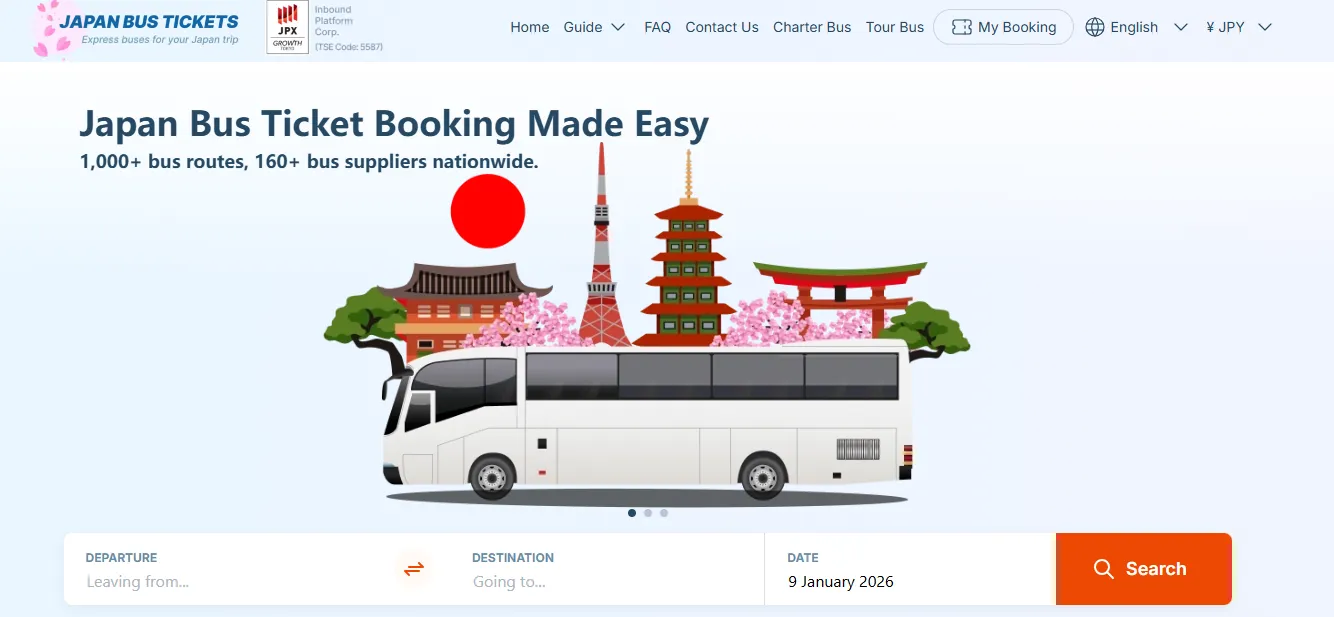
Japan Bus Tickets is an online booking platform where you can search for and reserve long-distance bus tickets in Japan — including highway (intercity) buses and overnight routes — all in one place. It aggregates routes from many different bus companies so you can compare schedules and prices across operators before you book.
Pros:
-
Often includes over 1,000 routes from 160+ partners, making it easier to see choices in one place.
-
Offers English site and support.
-
Same‑day and advance bookings.
-
Mobile-friendly booking flow.
Cons:
-
Third‑party seller (not the original bus company) — sometimes pricier or confusing.
-
You may have to follow their booking flow (email + confirmation).
-
Slightly less brand recognition than others.
2. Willer Travel/Express
Official Website: https://willer-travel.com/en/
Best For: Overnight journeys (e.g., Tokyo ⇄ Osaka), bus passes, and comfort options.
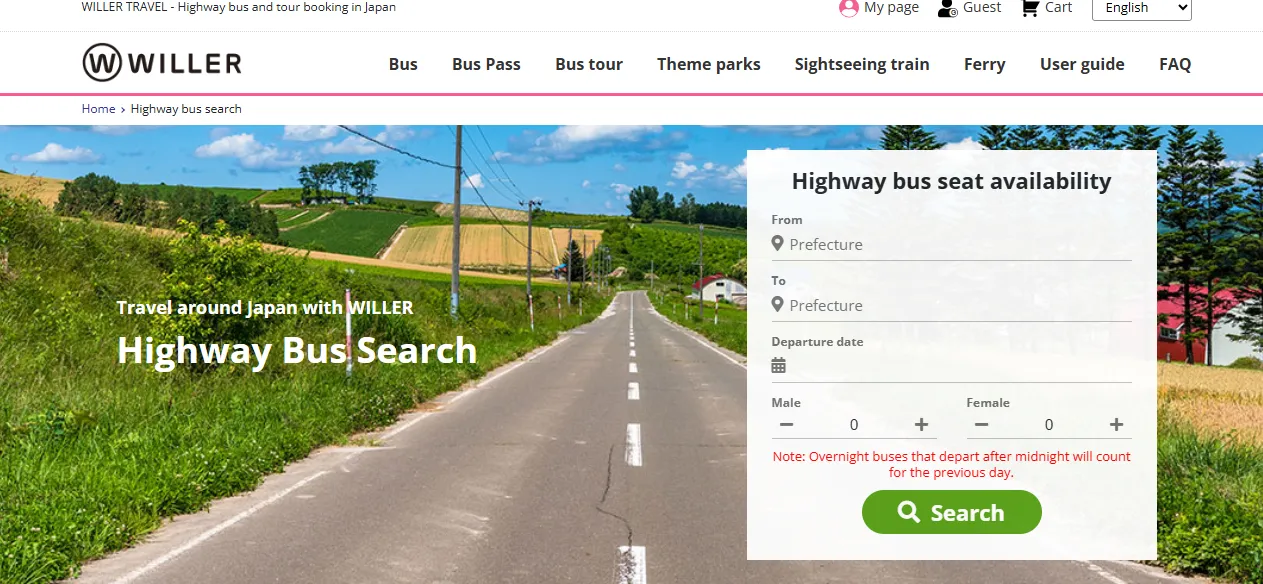
Willer Travel is a major Japanese highway bus company and booking platform, known for budget-friendly, comfortable long-distance bus travel across Japan.They run their own fleet of iconic pink buses and also act as a booking agent for others. If you want comfort, privacy, or women-only sections on overnight trips, Willer is the go-to. Willer’s night bus seats are designed for maximum comfort, with some premium options offering semi-private layouts and reclining features comparable to those found in business class seats on airplanes.They also offer a 3, 5, or 7-day pass (approx. ¥10,000–¥15,000) that allows you to take up to 3 buses a day. It is the best value for long-distance travelers.
Pros:
-
Covers most of Japan, connecting major cities like Tokyo, Osaka, Kyoto, Hiroshima, and Fukuoka.
-
Easy online reservation with English support.
-
Offers various seat types (comfort, premium, women‑only).
-
Has the Japan Bus Pass for unlimited rides over several days.
-
Dedicated mobile app available.
Cons:
- Primarily covers major cities (Tokyo, Osaka, Kyoto); less helpful for deep rural travel.
3. Japan Bus Online
Official Website: https://japanbusonline.com/
Best For: Standard intercity buses all around Japan.
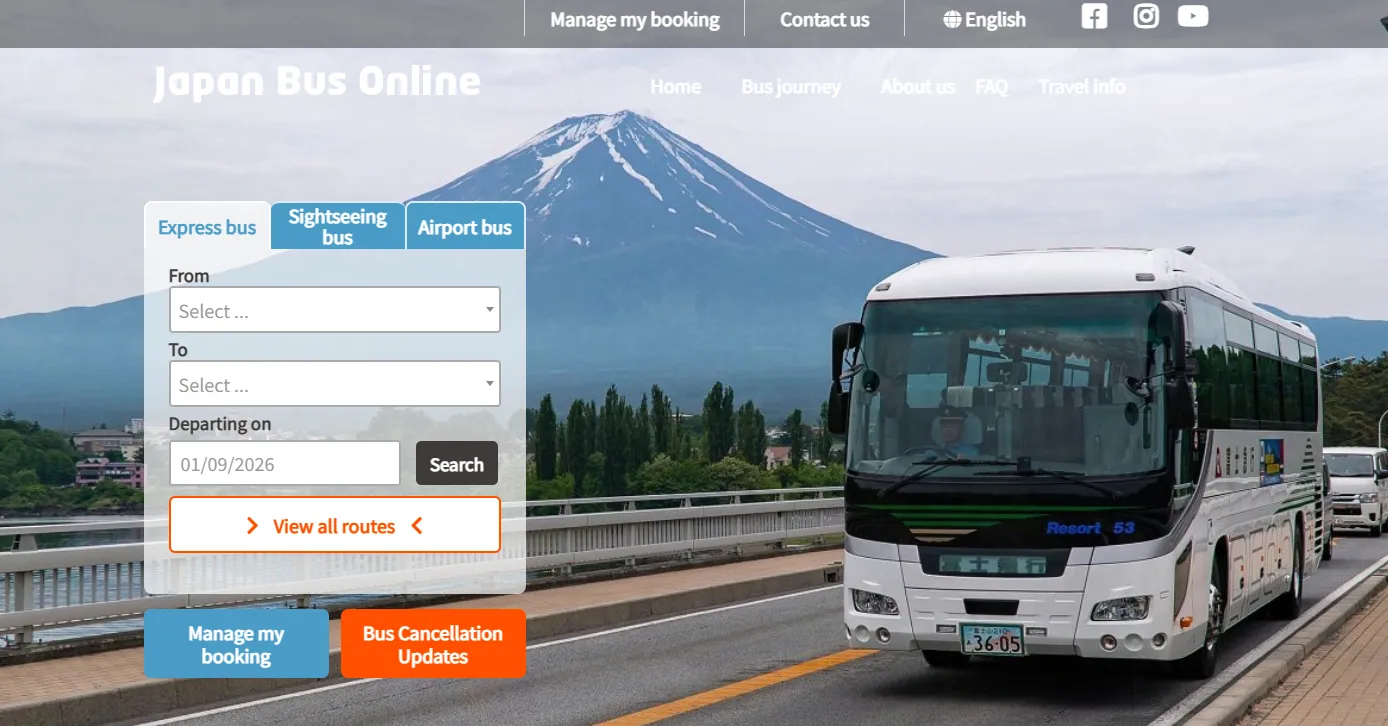
Japan Bus Online is a major English-language website for booking highway, airport, and sightseeing buses across Japan, operated by KOBO Co., Ltd. and partnering with over 120 authorized bus companies, allowing international travelers to easily compare routes, select seat types (like luxury or standard), and pay for tickets online for a seamless travel experience. This is an aggregator used by many local bus companies that don't have their own English sites. If you are trying to get to a specific national park or a remote hot spring (onsen) town, this is likely where you'll find the ticket.
Pros:
-
Full English website & customer support.
-
Wide network (Willer Express, Kosoku Bus, etc.).
-
Connects to dozens of local bus companies that don't have their own English sites.
-
Best coverage for off-the-beaten-path areas.
-
Users can choose different bus types, seat comfort levels (standard, luxury, reclining), and amenities (Wi-Fi, toilets).
-
All registered buses are authorized by Japan's Ministry of Land, Infrastructure, Transport and Tourism (MLIT).
Cons:
-
Some travelers find the interface dated or finicky with foreign cards.
-
Slightly higher fees sometimes.
-
Occasional technical glitches reported.
-
Some routes require manual pickup.
4. Highway‑Buses.jp
Official Website: https://highway-buses.jp/
Best For: Major express routes (e.g., Tokyo ⇄ Kyoto/Osaka/Nagoya).
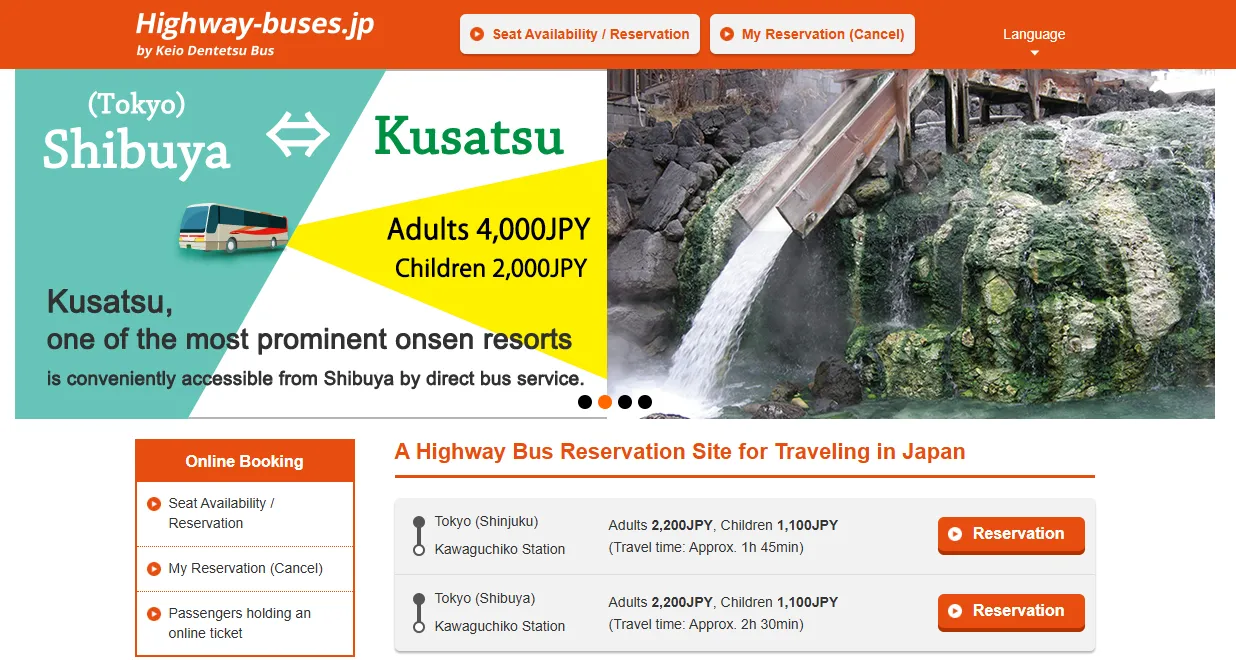
This site is operated by Keio and specifically covers the routes between Tokyo (Shinjuku) and the "Three-Star" areas: Mt. Fuji, Kawaguchiko, Matsumoto, and Takayama.It serves as a convenient portal for both domestic and international travelers, offering multilingual support to book cost-effective transport that's often cheaper than trains or flights, with amenities like reclining seats, toilets, and charging ports.
Pros:
-
Focuses on busy routes with frequent departures.
-
Aggregator site (compares prices/routes).
-
The most stable site for booking the popular "Busta Shinjuku" departures.
-
Ticket booking directly linked with real operators.
-
Shows discounts & seat availability.
Cons:
-
Narrow geographic focus (mostly Central Japan).
-
English support is limited compared to others.
-
Interface less polished.
5. Japan Bus Lines
Official Website: https://highway-buses.jp/
Best For: First‑time travelers who want simple search + English support.
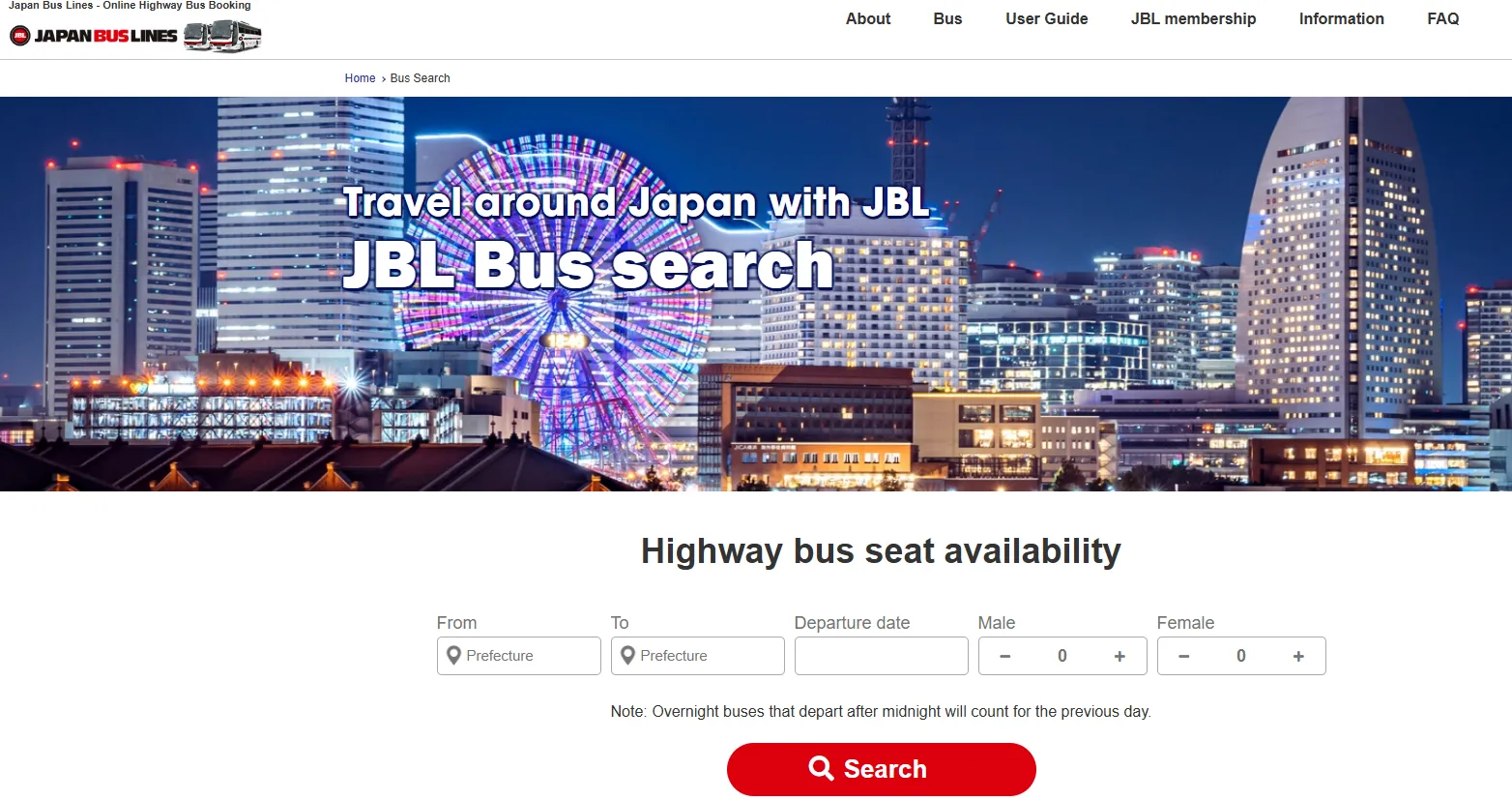
Japan Bus Lines is a major online booking platform and network connecting over 60 Japanese bus companies, offering international travelers a centralized way to find, compare, and reserve highway, airport, and sightseeing bus routes across Japan in multiple languages (English, Chinese, Korean). It's part of the larger Japan Bus Lines Council (JBL Council), aiming to provide a convenient, safe, and affordable alternative to trains, often featuring services like the JBL Pass for unlimited rides.
Pros:
-
Search and book over 100 routes from various operators like Willer Express, JR Bus, and local companies.
-
Covers highway buses (including overnight), airport shuttles, and sightseeing tours.
-
Website and customer service available in English, Chinese, and Korean for international visitors.
-
Providing unlimited-ride bus pass for designated routes, available for 3, 5, or 7 days, offering flexibility.
Cons:
- Like many aggregator platforms, not every single operator available.
6. Kosokubus.com
Official Website: https://www.kosokubus.com/
Best For: Budget travelers who prioritize lowest fares.
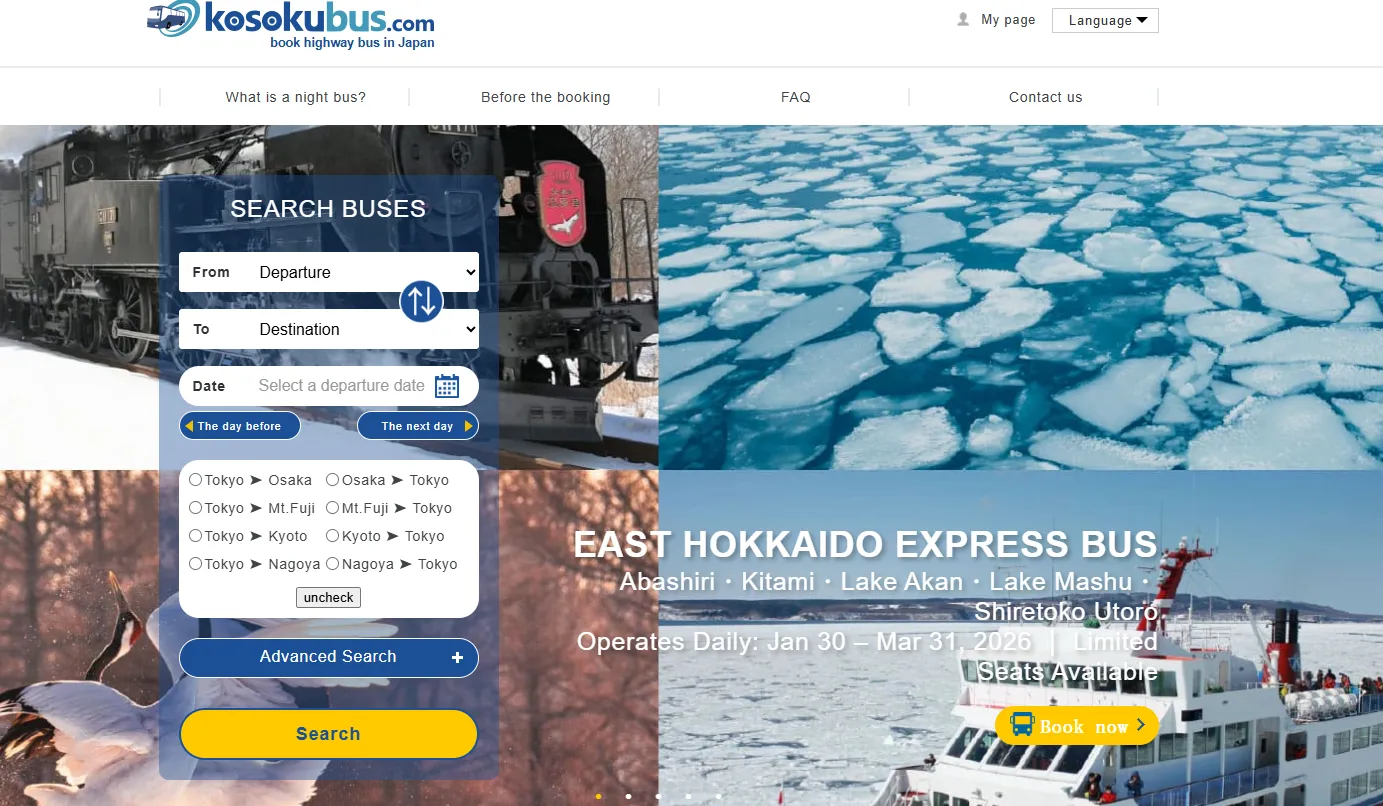
Kosokubus.com is a leading Japanese online travel agency for comparing, booking, and paying for express and overnight highway buses across Japan, offering features like seat selection, loyalty points, and an English interface for international users to find affordable nationwide bus travel. It partners with many bus companies (like Willer Express, Keisei Bus) and provides options for different seat types, onboard amenities (restrooms, outlets), and handles reservations for over 3,000 routes.It’s excellent for finding budget seats between Tokyo and Osaka for as low as ¥2,500.
Pros:
-
Aggregator site that shows multiple companies to find the lowest fare.
-
Offers different seat types and extra features info.
-
Best for finding "last-minute" deals or the absolute cheapest overnight seat.
Cons:
-
Since it's an aggregator, you are subject to the individual cancellation policies of the actual bus company, which can be confusing.
-
Booking process can sometimes redirect to Japanese pages.
7. Klook
Official Website: https://www.klook.com/
Best For: Payment reliability.It’s built for international travelers.
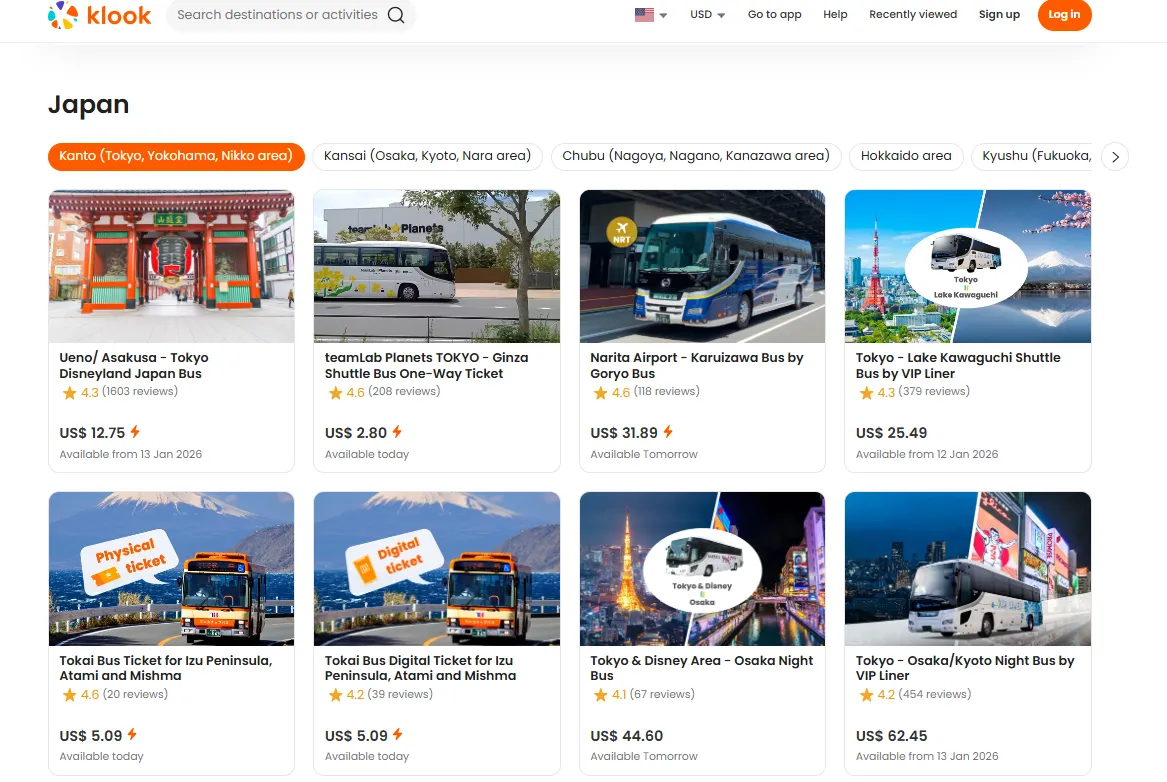
While Klook is a general travel site, they have integrated many major Japanese highway bus routes. The main advantage here is that international credit cards almost never fail, whereas Japanese-specific sites can sometimes be finicky with foreign banks.Klook offers a wide variety of bus services in Japan, from airport transfers (Narita, Kansai) and highway buses connecting major cities (Tokyo, Kyoto, Osaka) to tourist routes for places like Mt. Fuji, Kamikochi, and ski resorts (Niseko, Furano). You can book everything from direct airport limousines to overnight buses and hop-on-hop-off options, using their app for convenience to find routes, compare prices, and manage bookings.
Pros:
-
Accepts all international cards/wallets.
-
Book everything in one place, often with instant vouchers.
-
Provides details on drop-off points, schedules, and amenities like toilets.
-
Offers competitive pricing, sometimes cheaper than point-to-point train tickets.
-
Very mobile-friendly.
Cons:
-
They don't have every single route available.
-
Mainly limited to the most popular tourist corridors.
How to Buy: Step-by-Step
Step 1: Search for Routes
Enter your departure and destination cities, along with your travel date. Be sure to select your travel date carefully, as it affects seat availability and ticket price.
-
Select departure city
-
Select destination
-
Choose travel date
-
Enter number of passengers
Click Search to see available buses.
Step 2: Pick Schedule & Seat
-
The Price Ladder: You will often see different prices for the same bus. These are usually "Early Bird" discounts vs. "Standard" fares. Choose the cheapest one that is still available.
-
Seat Selection: Many English sites (like Highway-Buses.jp) now allow you to pick your specific seat from a map. If the site doesn't offer this, it will assign you a seat automatically.
Step 3: Entering Passenger Details
This is where most people get stuck.
- Name Format: Some sites require your name in ALL CAPS. If a site asks for your name in Katakana (Japanese characters), use a free "English to Katakana" converter online, or try typing your name in standard English—many modern English portals have fixed this requirement.
- Email: Use an email address you can access on your phone, as this is where your ticket will be sent.
Step 4: Payment (The Credit Card Barrier)
Most platforms accept:
-
Credit cards (Visa, Mastercard, AmEx, JCB)
-
Occasionally PayPal or local payment options
After payment, your booking is confirmed instantly or within a few minutes.
Step 5: Receiving and Using Your Ticket
-
Web Ticket vs. Mobile Ticket:
- Mobile Ticket (Recommended): You get a QR code or a link to a "Mobile Boarding Pass." You show this on your phone screen to the driver.
-
Web Ticket: Some older systems require you to print the PDF. If you don't have a printer, you can take a screenshot, but the driver may occasionally insist on a physical copy (rare for tourists now).
-
Screenshot It: Data signals can be weak at large underground bus terminals (like Shinjuku). Always take a screenshot of your ticket/QR code before arriving at the station.
🔔 Tips for Booking:
-
Book early – Prices rise as dates approach (especially weekends/holidays).
-
Night buses save time & accommodation costs.
-
Check baggage limits – usually 1-2 pieces free.
-
Use mobile tickets when possible (easier than printing).
-
Consider regional passes if exploring one area (e.g., Hokkaido, Kyushu).
-
For local/rural buses, purchase at terminals or convenience stores (like 7-Eleven). For travel in major cities (Tokyo, Kyoto), use IC cards (Suica/Pasmo) or day passes.