Osaka is a vibrant city filled with street food, neon lights, historic temples, and endless neighborhoods to explore. To truly enjoy it, understanding the city’s rail transportation is essential. With multiple lines covering major attractions, shopping areas, and business hubs, the underground network is the fastest way to travel across town.Whether you’re visiting for the first time or planning a detailed itinerary, knowing how to use trains efficiently can save both time and money. In this guide, you’ll learn how fares work, which travel cards are worth buying, how to read station layouts, and how to move smoothly across Osaka without getting lost.
Osaka Metro Overview
Osaka Metro is the primary, rapid subway system serving Osaka City, Japan, privatized in 2018 from the former municipal subway. It consists of 9 lines (8 subway lines + 1 automated guideway transit line) with over 130 stations that connect major hubs like Umeda, Namba, Shinsaibashi, Tennoji, and Osaka Castle area, plus connections to buses and BRT services.Getting around Osaka is incredibly efficient once you understand the Osaka Metro system.
📍 Key Network Features:
-
Lines & Coverage: The network includes nine lines, with the Midosuji Line (Red) being the busiest north-south artery. Other lines include the Tanimachi (Purple), Yotsubashi (Blue), Chuo (Green), and the New Tram, among others.
-
Access: It is highly efficient for tourists to reach attractions like Osaka Castle, Osaka Aquarium (via Chuo Line), and nightlife districts.
-
System Layout: The network forms a grid, covering both city center and suburban areas.
-
Accessibility: All stations are equipped with safety features like platform doors.
1. Metro Lines & Colors
The network consists of 9 lines, each color-coded and lettered for easy navigation.

-
Midosuji Line (Red): The "artery" of Osaka. It connects Shin-Osaka (Shinkansen), Umeda, Shinsaibashi, Namba, and Tennoji.
-
Tanimachi Line (Purple): Runs parallel to the Midosuji, serving many historical areas and government districts.
-
Yotsubashi Line (Blue): Links Nishi-Umeda, Hommachi, Namba.
-
Chuo Line (Green): Runs east-west. This is the line to take for the Osaka Aquarium (Kaiyukan) and the Osaka Castle area.As of late 2025, the Chuo line extended to Yumeshima Station, the site of the 2025 World Expo.
-
Sennichimae Line (Pink): East-west line through Nipponbashi, Namba, Minami-Morimachi.
-
Sakaisuji Line (Brown): Useful for reaching Nippombashi (Den Den Town) and has through-service to the Hankyu Railway for trips to Kyoto.
-
Nagahori Tsurumi-ryokuchi Line (Light Green): The first linear-motor line in Japan; it serves the Shinsaibashi shopping district and Osaka Business Park.
-
Imazatosuji Line (Orange): North-south line in eastern Osaka.
-
New Tram (Nanko Port Town Line) (Light Blue): Automated guideway to Osaka Bay area.
|
Line Name |
Color |
Letter |
Key Stops |
|
Midosuji |
Red |
M |
Shin-Osaka, Umeda, Namba, Tennoji |
|
Tanimachi |
Purple |
T |
Higashi-Umeda, Tennoji |
|
Yotsubashi |
Blue |
Y |
Nishi-Umeda, Namba |
|
Chuo |
Green |
C |
Osaka Castle, Bentencho, Yumeshima (Expo site) |
|
Sennichimae |
Pink |
S |
Namba, Tsuruhashi (Korea Town) |
|
Sakaisuji |
Brown |
K |
Nipponbashi (Den Den Town) |
|
Nagahori |
Lime |
N |
Shinsaibashi, Kyobashi |
‼️Station Numbering: Every station has a code (e.g., M16 for Umeda). Look for these on signs if you find Japanese names difficult to read.
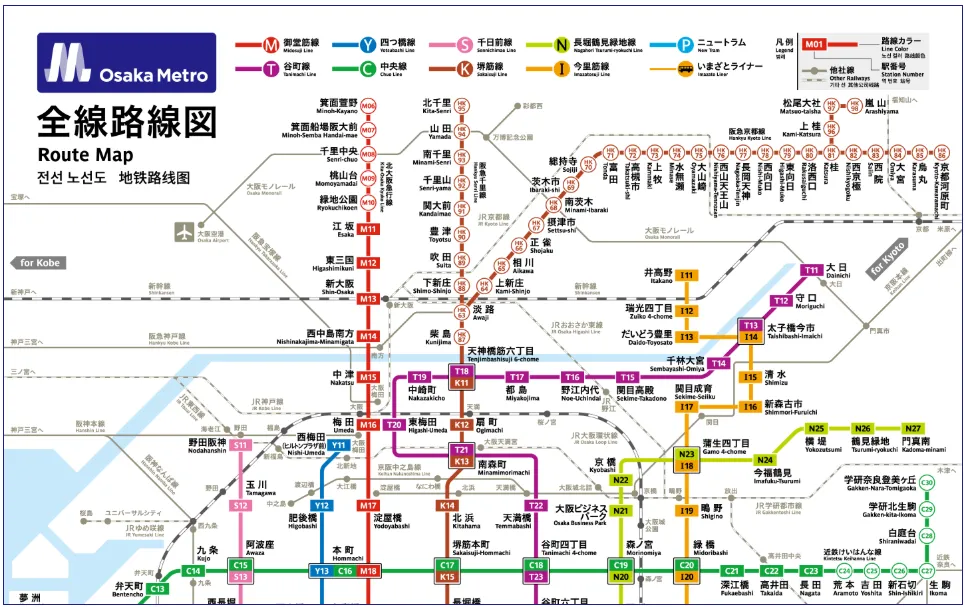
Maps clearly show all lines and station codes (e.g., M for Midosuji, T for Tanimachi), which are very helpful when using ticket machines and route finders.
2. Timetable & Operating Hours
While schedules vary slightly by line, the general operating hours for the Osaka Metro are:
-
First trains: Approximately 5:00-5:30 AM (varies by line/station).
-
Last trains: Approximately 11:30 PM-12:30 AM.
-
Frequency: 3-10 minutes during daytime, longer intervals early/late.
Osaka Metro doesn’t publish a single static timetable PDF for every line — instead: use the official timetable search tool to look up times by route and station.For precise times, use the official timetable search or apps like Google Maps (iOS / Andriod), Japan Transit Planner by Jorudan (iOS / Andriod) or NAVITIME.The station displays also show next train arrival times
⚠️ Important Note for New Year's 2026: Unlike some previous years, the Osaka Metro generally does not run all-night service on New Year's Eve. Regular holiday schedules apply.
How to Buy the Tickets?
Depending on your travel frequency, you can choose between single tickets, rechargeable IC cards, or unlimited day passes.Choosing the right ticket can save you significant money, especially if you plan to visit multiple attractions.
|
Ticket Type |
Best For |
Approx. Price (Adult) |
|
Single Ticket |
One-off trips |
¥190 – ¥390 (distance-based) |
|
IC Cards |
General flexibility |
¥2,000 (incl. ¥500 deposit) |
|
Enjoy Eco Card |
Sightseeing (1 Day) |
¥820 (Weekdays) / ¥620 (Weekends/Holidays) |
|
26-Hour / 48-Hour Digital Pass |
Flexible timing |
¥1,000 (26h) / ¥1,700 (48h) |
|
Osaka Amazing Pass |
Transit + Attractions |
¥3,500 (1 Day) / ¥5,000 (2 Days) |
🔹 Single Ticket
How to Buy: You can purchase from machines near station entrances — English menus are usually available.
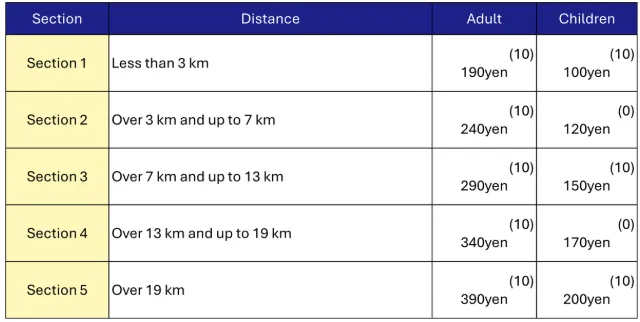
Price:
-
Fares are distance-based: roughly ¥190 for short rides up to ¥390 for longer rides (adult one-way).
-
Children (6–12) pay about half price; infants under 1 may ride free.
🔹 IC Cards
ICOCA, Suica/PASMO etc. can be used for seamless tap-in/tap-out. These are the easiest for frequent riders or visitors.You can also add Suica or ICOCA to your Apple/Google Wallet for seamless entry.
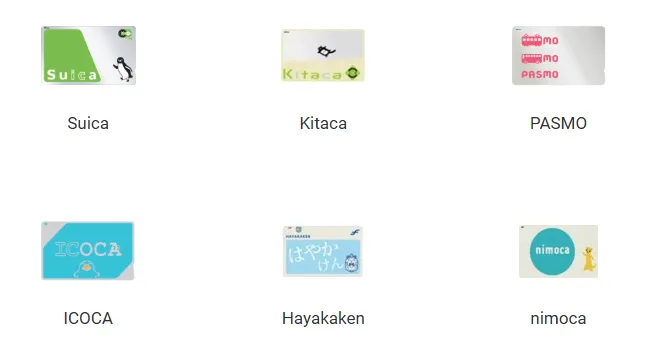
How to Buy: Purchase from ticket vending machines at any major station.
Card Price:
-
Standard Suica/PASMO: ¥2,000 (includes a ¥500 refundable deposit and ¥1,500 usable credit).
-
Welcome Suica: ¥1,500 (This is a tourist-only card with no deposit; the full ¥1,500 is usable credit).
🔹 Enjoy Eco Card
The most popular choice for tourists. It offers unlimited rides on all Osaka Metro lines and city buses for one calendar day. It also provides discounts at ~30 attractions like Osaka Castle and the Umeda Sky Building.
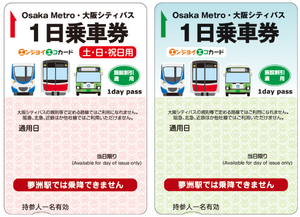
How to Buy: Any Osaka Metro ticket vending machine.
Price: 820 yen (Weekdays) / 620 yen (Weekends & Holidays).
🔹 26-Hour / 48-Hour Digital Pass
The 26-Hour and 48-Hour Digital Passes are modern, smartphone-based tickets introduced to offer more flexibility than the traditional "calendar day" passes.The biggest advantage of these passes is that they operate on a rolling clock. Unlike the "Enjoy Eco Card" (which expires at midnight), these stay active for the exact number of hours from your first scan.The pass also includes discounts at roughly 20+ attractions (like Osaka Castle and the Umeda Sky Building) just by showing the digital ticket screen.
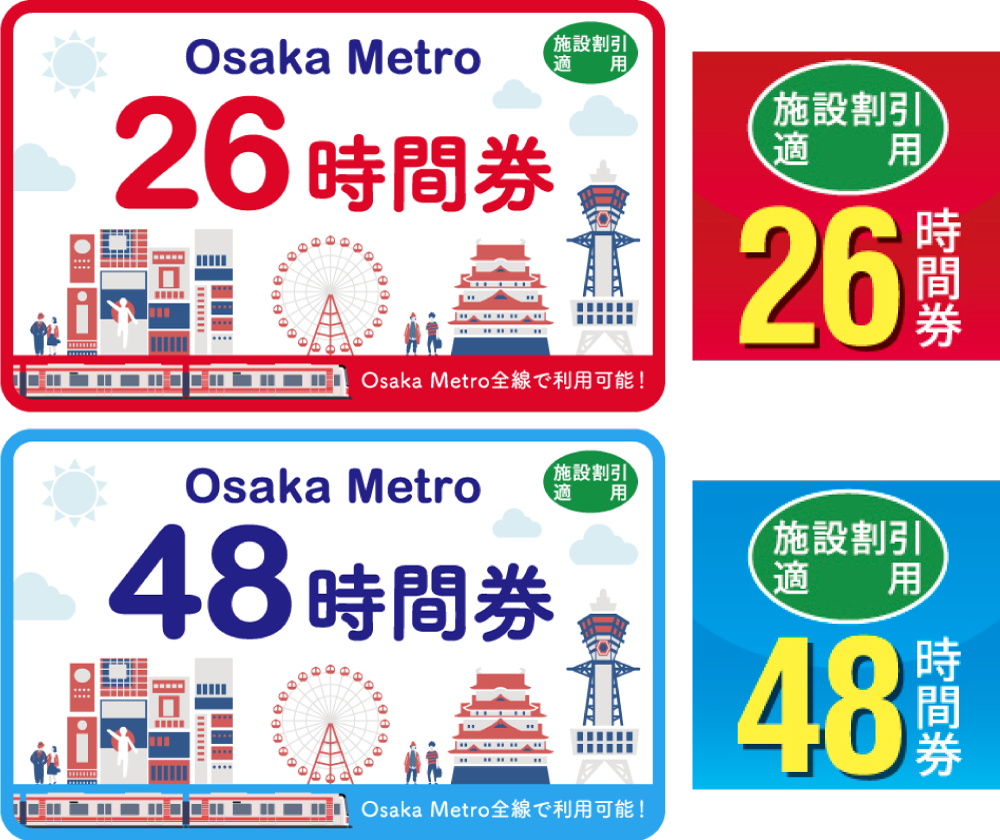
How to Buy: You can buy them via the official Osaka Metro website or third-party platforms like Klook, Rakuten Travel.
Price:
-
26-Hour Pass: ¥1,000 (Adult) / ¥500 (Child)
-
48-Hour Pass: ¥1,700 (Adult) / ¥850 (Child)
⏱️ Key Differences: Digital vs. Standard:
|
Feature |
26/48-Hour Digital Pass |
Standard 1-Day Pass (Enjoy Eco) |
|
Validity |
26 or 48 hours from first use |
Calendar day (expires at midnight) |
|
Best For |
Afternoon arrivals / Late-night explorers |
Early morning starts |
|
Format |
QR Code on your phone |
Physical paper ticket |
|
Buses |
Excluded (Metro trains only) |
Included (Osaka City Bus) |
🔹 Osaka Amazing Pass
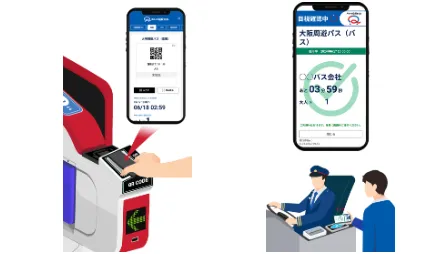
The Osaka Amazing Pass is essentially the "VIP Ticket" for tourists. While other passes only cover trains, this one bundles unlimited transport with free entry to over 40 of the city's top attractions.As of 2026, the pass has shifted entirely to a Digital QR Code format (no more physical cards).
What's Included:
The pass is famous for "paying for itself" if you visit at least 3 major sites in a day.
|
Free Entry to 40+ Attractions |
Some of the heavy hitters included are:
|
|
Unlimited Transportation |
|
How to Buy: You buy it online (via the official site, Klook, etc.) and scan the QR code at the special "QR-enabled" ticket gates.
Price:
The price is the same for both adults and children (there is no specific child rate, as many attractions are already free or cheaper for kids).
-
1-Day Pass: ¥3,500
-
2-Day Pass: ¥5,000 (Must be used on two consecutive days)
How to Ride: Step-by-Step
Step 1: Find Your Station
Look for the Osaka Metro logo (the stylized "M" that looks like a moving wave).
-
Station Numbers: Every station has a letter and a number (e.g., M19 for Namba).
-
Line Colors: Follow the color of your line (Red for Midosuji, Green for Chuo, etc.) on the floors and walls.
Step 2: Choose Your Payment Method
You have three main ways to pay in 2026:
-
Contactless (Credit/Debit/Phone): You can now tap your Visa/Mastercard or phone (Apple Pay/Google Pay) directly at the gates marked with a contactless reader.
-
IC Cards (ICOCA/Suica): Tap your card on the glowing blue sensor at any gate.
-
Digital/QR Passes: Open your QR code on your phone and hold it over the QR scanner at the specialized ticket gates.
-
Paper Tickets: If you bought a single ticket or an Enjoy Eco Card from a machine, insert it into the yellow slot. Don't forget to grab it as it pops out of the other side!
Step 3: Find the Correct Platform
Once through the gates, look for the yellow and blue overhead signs:
-
Yellow Signs: Lead you toward Exits.
-
Blue Signs: Lead you toward Train Lines.
-
Check the destination on the platform displays. Trains are frequent (every 3–5 minutes on major lines), so don't feel the need to sprint if you hear the bells.
Step 4: Boarding Etiquette
-
Queue Up: Stand behind the yellow tactile paving and line up in the marked areas (usually two lines).
-
Let Them Out: Always wait for passengers to exit the train completely before you step on.
-
The "Osaka Stand": On escalators, stand on the right and walk on the left.
-
Backpacks: On crowded trains, it is polite to wear your backpack on your front or place it on the overhead racks.
Step 5: Exiting
-
Check the Yellow Map: Before you exit the gates, look for the large yellow "Station Neighborhood Map." It lists landmarks and which Exit Number (e.g., Exit 14 for Dotonbori) will get you there without crossing busy streets.
-
Tap/Insert Out: Tap your card/phone or insert your paper ticket.
⚠️Note: Single-trip paper tickets are "eaten" by the machine at your final destination.
Osaka Metro: Quick Q&A
Q: Can I bring large suitcases on the train?
A: Yes, but it is highly discouraged during rush hour (7:30–9:00 AM). Most cars have overhead racks for medium bags, but for large suitcases, you'll need to stand with them. If you have very heavy luggage, consider using a Takkyubin (luggage delivery service) between hotels.
Q: Are stations wheelchair and stroller-friendly?
A: Yes. Osaka Metro has completed "One-Route" accessibility for all 133 stations. This means there is at least one elevator-only path from the street level all the way to the train platform. Look for the elevator icon on station maps.
Q: What if I lose my ticket or my IC card has insufficient funds?
A: Look for the Fare Adjustment Machines (usually yellow) near the exit gates. Insert your ticket or tap your card, and the machine will tell you exactly how much more you need to pay. If you lost your ticket entirely, speak to the station staff in the glass booth.
Q: I left something on the train! Where is the Lost & Found?
A: The main Osaka Metro Lost & Found Center is located at Namba Station (near the Yotsubashi Line entrance).
-
Phone: 050-3355-8208 (8:00 AM – 8:00 PM)
-
Tip: Items are usually kept at the station where they were found for the first day before being sent to the central center.
Q: Does the Metro run 24 hours?
A: No. Trains stop around midnight and resume at 5:00 AM. If you miss the last train, you will need to take a taxi (which are plentiful but much more expensive at night).
Q: How do I know which exit to take?
A: Osaka stations are huge. Always look for the Yellow Signage before passing through the exit gates. These signs list major landmarks (e.g., "Exit 1 for Osaka Castle") so you don't end up on the wrong side of a 6-lane highway.
Q: I’m going to USJ (Universal Studios Japan). Which subway station do I use?
A: Osaka Metro does not go directly to USJ. Take the Midosuji Line (Red) to Umeda Station, then transfer to the JR Yumesaki Line bound for Universal City Station (about 10-15 min). Your IC card works for this entire journey.
Q: What happens if I get on the wrong train or go the wrong direction?
A: Don’t panic. Get off at the next station. You can usually cross the platform to get a train going the opposite direction at no extra charge, as long as you don’t exit the ticket gates. If you exit the gates, the fare will be adjusted (sometimes with a small fee) at the fare adjustment machine or with the station attendant.