For anyone looking to streamline their urban commute without overspending, the Manaca prepaid card is the ultimate solution. Designed to eliminate transit friction, this rechargeable IC card not only speeds up your daily travel but also doubles as electronic money for quick stops at local shops. But how do you get one, and more importantly, how do you manage the balance efficiently? From the initial purchase to topping up with ease, and finally securing your deposit refund, this guide covers everything you need to master your transit expenses today.
What is Manaca Card?
Manaca (マナカ) is a rechargeable IC transportation card used for public transit and small purchases in the Nagoya region of Japan.It works similarly to Suica or PASMO in Tokyo—just tap the card on the reader to pay for rides or shopping.Its name comes from mannaka (center), as Nagoya is located in the center of Japan.
♦️Key Details & Features:
-
Validity: The card remains active for 10 years from the last date of use.
-
Ease of Use: Just touch and go. It automatically calculates and deducts the fare, even if you travel beyond your commuter pass zone.
-
Multi-function: Can be used for both transportation and as e-money at convenience stores, vending machines, and other shops displaying the manaca logo.
-
Mileage Points: Unlike Suica, manaca earns "Mileage Points" based on how often you use it on Nagoya's city buses and subways. You can convert these points into credit at station machines.
-
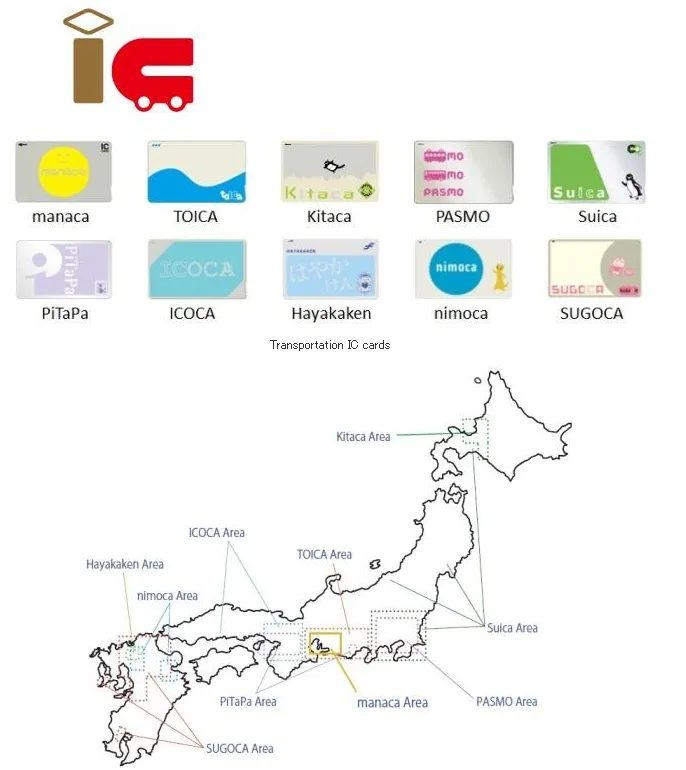
Nationwide Compatibility: manaca is part of the nationwide IC card mutual usage system. It can be used in TOICA areas and other participating transit networks across Japan, and you can also use other major IC cards (like Suica or Pasmo) in the manaca area.
-
Transfer Discounts: If you transfer between a Nagoya city bus and the subway (or another bus) within 90 minutes, you get an automatic ¥80 discount.
Where Can You Use It?
1. Transportation
Manaca is valid on:
-
Meitetsu trains (Nagoya Railroad)
-
Nagoya Municipal Subway
-
Most buses in Nagoya
-
Many regional rail lines in Aichi Prefecture
It is also compatible with Japan’s nationwide IC network, meaning you can use it in cities like:
Tokyo (Suica / PASMO area)
Osaka (ICOCA area)
Fukuoka (Hayakaken area)
⚠️Note: It does not work for Shinkansen bullet trains unless linked to a special service.
2. Shopping
You can also use Manaca at:
-
Convenience stores (7-Eleven, Lawson, FamilyMart)
-
Vending machines
-
Some restaurants and shops displaying the IC logo
Look for the "IC" logo at convenience stores (7-Eleven, Lawson, FamilyMart), vending machines, and some restaurants.
Types of Manaca Cards
The Manaca IC card system offers several card types depending on your needs.Here is a more detailed breakdown of the differences between them to help you decide which one to choose:
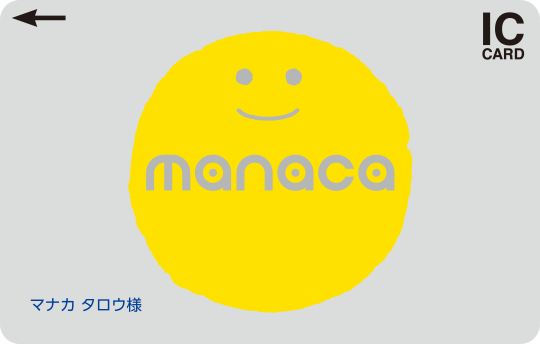
1. Registered Manaca (For adults)
This card is registered to a specific individual. It offers the security of being able to recover your balance if the card is lost or stolen.
-
Who it’s for: Residents or frequent visitors.
-
Features:
-
Registered with your name and basic details.
-
Can be reissued with remaining balance if lost.
-
Requires ID when applying.
-
Refundable (handling fee applies).
-
💡 Recommended if you plan to live in Nagoya or commute regularly.
2. Unregistered Manaca
This is the standard, no-strings-attached card. It is perfect for tourists or short-term visitors who just need a convenient way to pay for transit and small purchases.
-
Who it’s for: Residents or frequent visitors.
-
Features:
-
No personal information required.
-
Can be purchased at ticket machines.
-
Rechargeable (cash only at most machines).
-
Refundable, but cannot be reissued if lost.
-
💡 Simple and convenient for tourists staying in the Nagoya area.
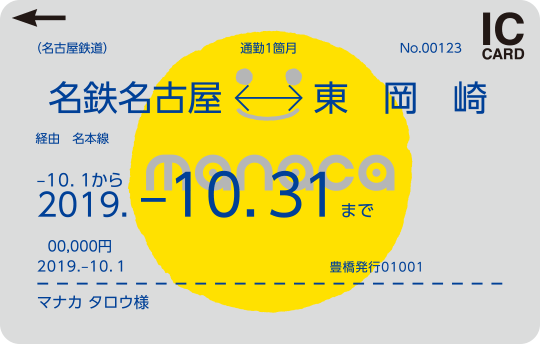
3. Manaca Commuter Pass
This is a specialized version of the Personal manaca. It functions exactly like a Personal manaca but has a commuter pass (定期券 teikiken) for a specific route loaded onto it.
-
Who it’s for: Daily commuters.
-
Features:
-
Combines a prepaid IC card + commuter pass.
-
Valid for unlimited travel between designated stations.
-
Available for 1, 3, or 6 months.
-
Can be registered for loss protection.
-
💡 Ideal for students and workers traveling the same route every day.
Where to Buy and Cost?
You can purchase a manaca card at most major transportation hubs in Nagoya.
-
Locations: Ticket vending machines at all Nagoya Municipal Subway stations.
-
Meitetsu (Nagoya Railroad) station ticket machines and counters.
-
Aonami Line and Linimo ticket machines.
-
Central Japan International Airport (Centrair) Meitetsu station.
-
-
Initial Cost: JPY1,000, JPY2,000, JPY3,000, JPY5,000 and JPY10,000. (Sale prices include JPY500 deposit.)
-
Card Types:
-
Unregistered: Can be used by anyone; cannot be replaced if lost.
-
Registered: Tied to your name/phone number; can be reissued if lost (requires a small fee).
-
Commuter Pass: A registered card with a fixed-route discount loaded onto it.
-
How to Use & Recharge?
-
At Gates: Tap the card on the blue illuminated reader at the ticket gate. A single "beep" confirms success.
-
On Buses: For most Nagoya City buses, tap when entering at the front.
-
For some Meitetsu buses, you may need to tap both when entering and exiting.
-
-
Recharging (Charging):
-
Machines: Use the yellow or pink ticket machines at any station. Select "English" → "Charge" → Insert cash.
-
Convenience Stores: Ask the clerk "Chā-ji onegaishimasu" (Charge, please) at 7-Eleven, Lawson, or FamilyMart.
-
Bus Drivers: You can ask a bus driver to charge your card when the bus is stopped (usually in ¥1,000 increments).
-
Manaca Mileage Points
How You Earn Points?
One of the best things about the Manaca card—and why locals choose it over a Suica—is the Mileage Points system. It’s essentially a frequent-flyer program for your daily commute.
Points are earned automatically every time you use your SF (Stored Fare) balance to pay for rides on the Nagoya Subway, Nagoya City Bus, Aonami Line, or Meitetsu lines.
1. Basic Points (Monthly Usage)
The more you spend in a single calendar month, the higher your "rebate" percentage.
-
Spend ¥2,000–¥5,000: 1% back
-
Spend ¥5,000–¥10,000: 2% back
-
Spend ¥10,000–¥15,000: 3% back
-
Spend ¥15,000+: 4% back
2. Bonus Points (The Real Value)
This is where the points really add up. If you travel during off-peak hours, you get a massive boost:
-
Weekday Daytime Bonus: If you ride between 10:00 AM and 4:00 PM on weekdays, you earn an additional 20% to 30% of that fare back in points.
-
Weekend/Holiday Bonus: Similar bonuses often apply to travel on Saturdays, Sundays, and national holidays.
How to "Collect" Your Points?
Points are not added to your card balance immediately. They are calculated at the end of the month and become available on the 10th day of the following month.
To turn points into usable cash:
Go to a yellow or blue ticket vending machine or a recharge machine at any subway station.
-
Insert your Manaca card.
-
Look for the button that says "Points" (ポイント) or "Point Resolution" (ポイント還元).
-
The machine will show you how many points you’ve earned. Press "Confirm" to transfer them to your card.
-
Your points are now "Stored Fare (Points)" and will be used first (before your cash balance) the next time you pass through a gate.
⚠️Important: Points expire if you don't "collect" them within one year. For example, points earned in April 2025 must be moved to your card balance by the end of April 2026.
Returning the Card
If you no longer need your card,refunds are available at issuing company counters.Returning your Manaca card is a straightforward process, but it must be done within the Nagoya region. You cannot return a Manaca card at stations in Tokyo (JR East), Osaka (JR West), or Kyoto.
Where to Return It
You must go to a physical ticket office or "Station Master’s Office" (Ekicho-shitsu) belonging to the companies that issue Manaca.
-
Nagoya Subway Stations: Most station offices (excluding very small ones).
-
Meitetsu Stations: Major stations like Meitetsu Nagoya, Kanayama, or Chubu Centrair Airport.
-
Service Centers: Transportation Bureau Service Centers (located at major subway hubs like Sakae or Nagoya Station).
The Refund Calculation
When you return the card, you receive the Remaining Balance plus your ¥500 Deposit, but there is a small catch regarding the handling fee.
|
Item |
Amount |
|
Handling Fee |
¥220 |
|
Deposit |
¥500 (Always returned in full) |
⁉️How it works in practice:
-
Scenario A (Balance > ¥220): If you have ¥1,000 on the card, they subtract the ¥220 fee and add the ¥500 deposit. You get back ¥1,280.
-
Scenario B (Balance < ¥220): If you have ¥100 on the card, the fee "eats" the balance, but you are not charged extra. You simply get your ¥500 deposit back.
-
Scenario C (Balance is ¥0): You get exactly ¥500 back.
💡Smart Tip: To get the most money back, try to use your balance down to as close to ¥0 as possible at a convenience store (like FamilyMart or Lawson) before returning the card. This way, you avoid losing the ¥220 handling fee!
What You Need
-
The Card: Hand it to the attendant.
-
ID: If you have a Registered Manaca (with your name on it), you must show your Passport to prove you are the owner. Unregistered cards do not require ID.
-
Phrase to use: You can say: "Manaca no harai-modoshi o onegaishimasu" (I would like a refund for this Manaca, please).
Frequently Asked Questions
Can tourists buy Manaca?
Yes. No ID is required for the regular version.
Can I use Manaca in Tokyo or Osaka?
Yes, thanks to nationwide IC interoperability.
Does Manaca expire?
It remains valid as long as it is used at least once every 10 years.
Is Manaca better than other IC cards?
Functionally, most major IC cards work the same. The best choice usually depends on where you start your trip.
Can I add Manaca to my iPhone or Android?
No. Unlike Suica, PASMO, or ICOCA, Manaca does not have a digital version for Apple Wallet or Google Wallet.
Can I use it for the Shinkansen (Bullet Train)?
Not directly. You cannot simply tap a Manaca card to board a Shinkansen.
-
The Exception: If you use the Smart EX app or website to book your Shinkansen tickets, you can "link" your Manaca card’s ID number to your reservation. Then, you can tap your Manaca at the Shinkansen gates to enter.
What happens if I lose my card?
-
If it’s a "Blank" (unregistered) card: The money is gone. There is no way to track or block it.
-
If it’s a "Registered" card: You can go to a station office with your ID (Passport). They can "freeze" the old card and issue a replacement with your remaining balance for a small fee (usually around ¥1,000 including the new card deposit).
Can two people use one card?
No. Every passenger must have their own IC card to enter and exit the gates. You cannot "tap" someone in and then pass the card back.
-
Exception: On City Buses, you can tell the driver, "Two people, please," and they will adjust the machine so you can tap once for two fares.