Traveling between Nagoya and the Japanese Alps? The Limited Express Hida is one of the most scenic and convenient train routes in central Japan, connecting major cities with the historic town of Takayama and the mountain landscapes of Gifu. Whether you're planning a countryside escape or adding Shirakawa-go to your itinerary, understanding how this train works can save you time and stress.In this guide, you'll learn everything you need to know about fares, seat options, booking methods, onboard layout, and baggage policies—so you can ride with confidence and make the most of your journey through rural Japan.
What is Limited Express Hida?
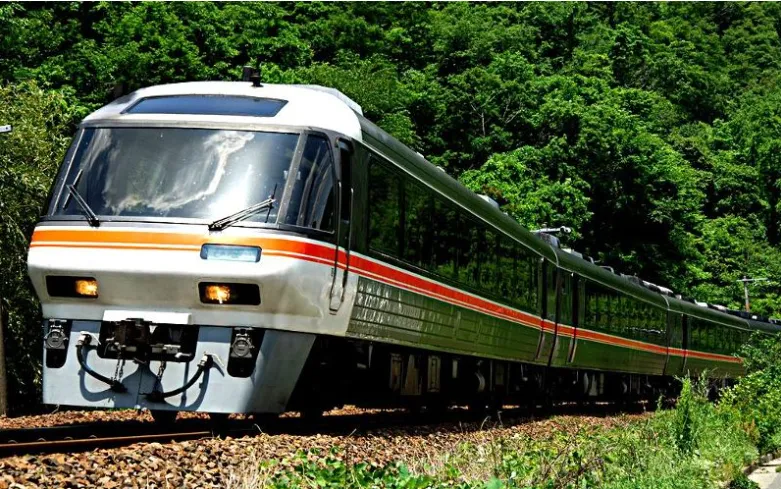
The Limited Express Hida is a scenic, diesel-hybrid train service operated by JR Central connecting Nagoya and Osaka to the Hida region (Takayama/Toyama) via Gero. Utilizing the HC85 series, it offers large panoramic windows for mountain views, traveling along the Hida River.It is the primary way to reach the historic town of Takayama and the Gero Onsen hot spring resort.It’s a popular choice for tourists traveling to the Japanese Alps because it’s fast, comfortable, and scenic.
✨Key Features of the Hida:
-
Route: It runs primarily between Nagoya and Takayama, with many services continuing north to Toyama. A single daily round trip also connects Osaka and Kyoto directly to Takayama.
-
Operator: It is run by JR Central (Central Japan Railway Company).
-
Purpose: It serves as the primary rail link for tourists and locals alike to access the popular sightseeing areas of the Hida region, including Takayama, Shirakawa-go (via bus from Takayama), and the famous Gero Onsen hot springs.
-
Experience: It's famous for its panoramic views, following the clear waters of the Kiso and Hida Rivers through deep valleys and offering glimpses of the Northern Japan Alps.
1. Route & Destinations
The Limited Express Hida's route is your ticket to the Japanese Alps, connecting major cities with charming mountain towns and UNESCO World Heritage sites. Its main line runs from Nagoya to Takayama and on to Toyama, with a single daily service also connecting Osaka and Kyoto directly to Takayama
➤ Main Hub: Most trains depart from Nagoya Station.
➤ Key Stops: Nagoya → Gifu → Gero (Onsen) → Takayama → Hida-Furukawa → Toyama.
➤ Special Daily Service: There is one round-trip daily that starts/ends at Osaka Station, stopping at Kyoto before joining the main route at Gifu.
Primary Route: Nagoya to Takayama/Toyama
This is the standard route, with trains departing roughly every hour.
-
Nagoya: The main starting point (Platform 11).
-
Gifu: The train reverses direction here.
-
Gero: Famous for its "Top 3" historic hot springs.
-
Takayama: The main tourist hub and terminus for many Hida services.
-
Hida-Furukawa: A quiet, beautiful town (famous as a setting in the film Your Name).
-
Toyama: The final northern terminus, connecting to the Hokuriku Shinkansen.
Special Daily Route: Osaka to Takayama
Only one round-trip operates daily on this extended route (Hida No. 25/36). It is highly popular with travelers staying in the Kansai region.
|
Segment |
Key Stops |
|
Kansai Leg |
Osaka → Shin-Osaka → Kyoto |
|
Connection |
Kusatsu → Maibara → Ogaki → Gifu |
|
Mountain Leg |
Joins the Nagoya train at Gifu and continues to Takayama. |
🔸The Gifu Coupling: If you take the train from Osaka, you will witness a "coupling" at Gifu Station. Your train will physically attach to a second set of cars arriving from Nagoya, and they will climb the mountains together as one long train.
🏘️Top Destinations at a Glance:
-
Gero Onsen: One of Japan’s three most famous hot spring towns. Most ryokans are within walking distance of the station.
-
Takayama: Known for its "Old Town" (Sanmachi Suji) and morning markets. It is also the gateway to Shirakawa-go (via a 50-minute bus).
-
Hida-Furukawa: Less crowded than Takayama, famous for its white-walled storehouses and the koi carp swimming in the canals.
-
Toyama: Famous for its world-class seafood (Glass Shrimp and Yellowtail) and as the starting point for the Tateyama Kurobe Alpine Route.
2. The Train Itself
The Limited Express Hida uses a unique and recognizable train: the HC85 series. This is a modern diesel multiple unit (DMU), notable for being the world's first hybrid diesel train to enter mass production and commercial service.
-
Design: The trains have large windows designed specifically for sightseeing, ensuring passengers have a great view of the landscapes.
-
Amenities: Every seat (both Green and Standard) has a power outlet and access to free Wi-Fi.
-
Nano-Museum: Look for the small display cases on the decks between cars; they showcase traditional local crafts like Gifu fans and woodcarvings.
-
The "Wide View": The train features oversized windows specifically designed for sightseeing.
-
Direction Change: At Gifu Station, the train changes direction. Don't be surprised if you spend the first 20 minutes of your trip from Nagoya sitting "backward"—most passengers wait until the train leaves Gifu to rotate their seats.
3. Seat Type
The Limited Express Hida (HC85 Series) offers two main classes of service: Standard and Green Car. Because this is a "Wide View" train, both types feature elevated floors and massive windows to maximize the mountain scenery.
🟢Green Car (First Class)
The Green Car is typically located in Car 1. It offers a quieter, more spacious environment with a premium feel.
-
Seating Layout: 2+2 configuration (Standard on most Hida trains, though some older configurations or specific sets may feel more spacious).
-
The "Front View": If you are traveling towards Toyama/Takayama, the Green Car is at the very front of the train. If you book the front row, you get a panoramic view through the driver’s cabin.
-
Amenities: Thicker, motor-adjustable leg rests.
-
Deeply reclining seats with high-quality fabric.
-
Increased seat pitch (more legroom) compared to standard.
-
Individual reading lights.
-
⚪Standard Car (Reserved & Non-Reserved)
Standard cars make up the bulk of the train (Cars 2, 3, and 4). The quality is very high for a standard class, often rivaling Shinkansen comfort.
-
Seating Layout: 2+2 configuration.
-
Reserved vs. Non-Reserved:
- Reserved: You have a guaranteed seat number. Highly recommended for the Nagoya–Takayama leg.
-
Non-Reserved: Usually Car 4. It’s first-come, first-served. If you board at Nagoya, arrive 20 minutes early to line up on the platform.
-
Amenities:
- Comfortable reclining seats with adjustable headrests.
-
Fold-down tray tables (large enough for a laptop or ekiben).
-
Drink holders.
💡Which seat should you pick?
-
For the Best View: Request the D-side seat (e.g., 5D, 6D). This side faces the Hida River for the majority of the scenic mountain climb.
-
For the "Driver's View": Book Row 1 in the Green Car (when heading North) or Row 1 in the last car (when heading South).
-
For Families/Groups: You can pull a lever under the seat to rotate the entire row 180° so you can face each other.
Tickets & Reservations
1. Tickets & Pricing
To ride the Hida, you need two things: a Basic Fare Ticket and a Limited Express Ticket.
-
Basic Fare Ticket (Joshaken): Covers the distance of the trip.
-
Limited Express Ticket (Tokkyuken): Covers the "speed" and "service" of the express train.
Where to Buy:
You can book your limited express ticket in several ways:
-
Online Reservation Services: Sites like Japan Travel by NAVITIME allow you to search for trains, select seats, and pay with credit card, Apple Pay, or Google Pay . You will receive a QR code to pick up your physical paper tickets at the station
-
Ticket Machines at Stations: You can purchase tickets at self-service machines (Kiosks) at major stations along the route, including Nagoya, Gifu, Gero, Takayama, and Toyama
-
JR Ticket Offices (Midori-no-Madoguchi): You can also buy tickets in person at JR ticket offices at the station.
Booking online in advance is recommended, especially during peak travel seasons, as the train can be busy.
Ticket Pricing:
Estimated One-Way Fares (Standard Reserved Seat):
-
Nagoya to Takayama: ~¥6,140
-
Nagoya to Toyama: ~¥7,790
-
Osaka to Takayama: ~¥8,340
Rail Pass Coverage:
-
JR Pass (National): Fully covered. Seat reservations are free.
-
JR Central Tourist Pass (Takayama-Hokuriku Area): Fully covered.
-
JR West Pass: Only covered for the section between Osaka and Kyoto/Maibara (depending on the specific pass).
2. Reservations
Reservations are highly recommended, especially during the autumn foliage season, the Takayama Festival (April/October), and New Year holidays.Making a reservation for the Limited Express Hida is straightforward, whether you are using a rail pass or buying individual tickets.
If you have a Japan Rail Pass (or Tourist Pass):
If you already have your physical rail pass, seat reservations are free.
-
At the Station (Recommended): Go to any JR "Midori-no-Madoguchi" (Ticket Office) or use a Reserved Seat Vending Machine. Look for the machines with a passport/QR reader. You can scan your pass, enter your passport number, and select your seats on a digital map.
-
Online: You can only reserve online via the official JR Pass website if you purchased your pass directly from that site. If you bought your pass through a third-party agency (like Klook or JTB), you generally have to wait until you are in Japan to make reservations at a machine or counter.
If you are buying individual tickets (No Pass):
-
Online (Best Option): Use the JR-West Online Train Reservation (e5489) system. Despite being a JR West site, it allows you to book Hida trains departing from Nagoya (JR Central).
-
How it works: Search for your route (e.g., Nagoya to Takayama), select "Limited Express Hida," and pay by credit card.
-
Pickup: You will receive a QR code. When you arrive at the station (Nagoya, Osaka, etc.), scan this code at a ticket vending machine to print your physical tickets.
-
-
Third-Party Apps: Sites like NAVITIME or Klook also offer booking services, usually for a small convenience fee, and provide a QR code for easy pickup.
If you prefer talking to a human or have a complex request (like wanting a specific "view" side), visit the JR Ticket Office at any major station.
The Luggage Rules
Unlike some Shinkansen (bullet train) services, the Limited Express Hida does not have a reserved luggage system for oversized items . However, you can still bring your luggage on board.
-
Overhead Racks: Standard suitcases (up to 160 cm total dimensions) fit easily in the overhead racks.
-
Oversized Luggage (160 cm – 250 cm): Unlike the Shinkansen, you do not currently need a specific "oversized luggage" reservation for the Hida. However, space at the ends of cars is limited.
-
Storage Areas: The HC85 series has designated luggage racks at the ends of some cars for large suitcases.
-
Weight Limit: Up to 2 pieces of luggage, max 30 kg each.
Frequently Asked Questions
Do I need to book my seats in advance?
Usually, no—you can use the non-reserved car (Car 4). However, in 2026, there are "All-Reserved" periods where you must have a reservation to board.
2026 All-Reserved Dates:
-
Golden Week: April 24 – May 6
-
Obon: August 7 – August 16
-
Silver Week: September 18 – September 23
-
New Year: December 25 – January 5, 2027
Which side of the train has the best view?
For the journey from Nagoya to Takayama, the Right Side (D seats) is generally considered the best as it follows the Hida River closely. However, the track crisscrosses the river many times, so you’ll see scenery on both sides!
Is there food or coffee service on the train?
No. There are no food trolleys or vending machines on the HC85 trains. You should buy your "Ekiben" (station lunch box) and drinks at Nagoya or Takayama Station before boarding.
Can I use the Japan Rail Pass?
Yes, the Hida is fully covered. You can make free seat reservations at any JR ticket machine or window by scanning your pass.
Does the train have Wi-Fi and power outlets?
Yes. Every seat on the new HC85 series has an individual universal power outlet (in the armrest) and access to free JR-Central Wi-Fi.
What happens at Gifu Station? Why is the train going backward?
The Hida reverses direction at Gifu to join the Takayama Main Line. For the first 20 minutes from Nagoya, you will travel "backward." At Gifu, you can use the foot pedal to rotate your seat 180° to face forward for the rest of the mountain climb.
Can I get off and explore towns along the way?
Absolutely! In fact, that's one of the best ways to experience the region. You can buy a ticket to a final destination but break your journey at intermediate stops like Gero Onsen. Just be aware that your ticket is only valid for the specific date, and you'll need to catch a later train that day to continue your journey.
How do I get to Shirakawa-go from the Hida?
The train doesn't go directly to Shirakawa-go. You take the Hida to Takayama Station. From there, you can catch a direct highway bus to the Shirakawa-go village. It's a very popular and easy connection.
How long does it take from Nagoya to Takayama?
About 2 hours 20 minutes from Nagoya Station to Takayama Station.Some trains continue to Toyama Station, which takes around 4 hours total from Nagoya.
What’s the difference between Hida and Shinkansen?
-
Hida: Limited Express train to the Japanese Alps (mountain route, scenic).
-
Shinkansen: High-speed bullet train between major cities.
There is no Shinkansen to Takayama — the Hida is the fastest direct train option.