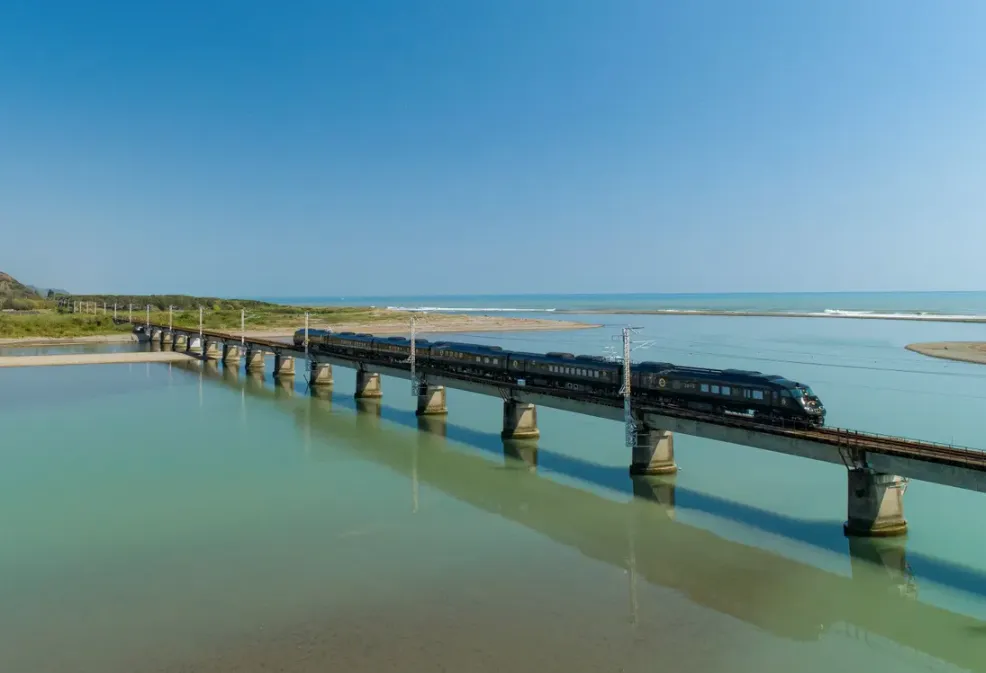
Kyushu is a region best explored at a slower, more intentional pace, and there is no better way to do it than aboard one of Japan’s most unique "D&S" (Design & Story) trains. The 36+3 scenic train offers a brilliant blend of modern luxury and traditional craftsmanship, wrapping the entire island in a stunning five-day loop. But navigating the booking process, seat classes, and regional itineraries can feel overwhelming. Whether you are trying to figure out how to book a private tatami mat compartment or wondering if your regional transport ticket covers the journey, this comprehensive Kyushu luxury train guide breaks down everything you need to know. We’ll cover current schedules, booking strategies, hidden surcharges, and clever ways to maximize your rail pass for an unforgettable journey.
What Is the JR Kyushu 36+3?
Operated by the Kyushu Railway Company (JR Kyushu), the 36+3 (Sanju-Roku Plus San) is one of the most uniquely designed luxury daytime trains in the world. Remodeled by the legendary industrial designer Eiji Mitooka—the mastermind behind the ultra-exclusive Seven Stars in Kyushu sleeper train—this jet-black Series 787 express functions as a rolling cultural salon.
Remodeled by the legendary industrial designer Eiji Mitooka—the mastermind behind the ultra-exclusive Seven Stars in Kyushu sleeper train—this jet-black Series 787 express functions as a rolling cultural salon.
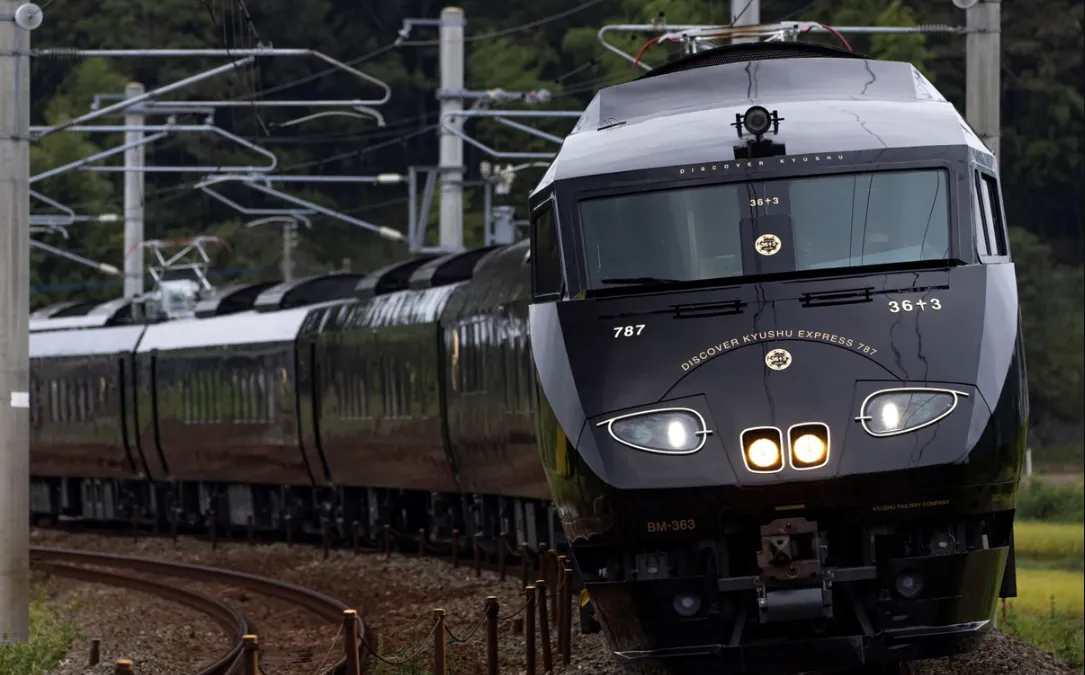
This train is designed for travelers who wish to enjoy the journey itself, not just rush between destinations. Unlike the high-speed shinkansen, the 36+3 moves at a relaxed pace, allowing you to fully appreciate Kyushu's natural beauty from lush mountains to stunning coastline.
1. The 5 Days, 5 Colors, 5 Routes (The Kyushu Loop)
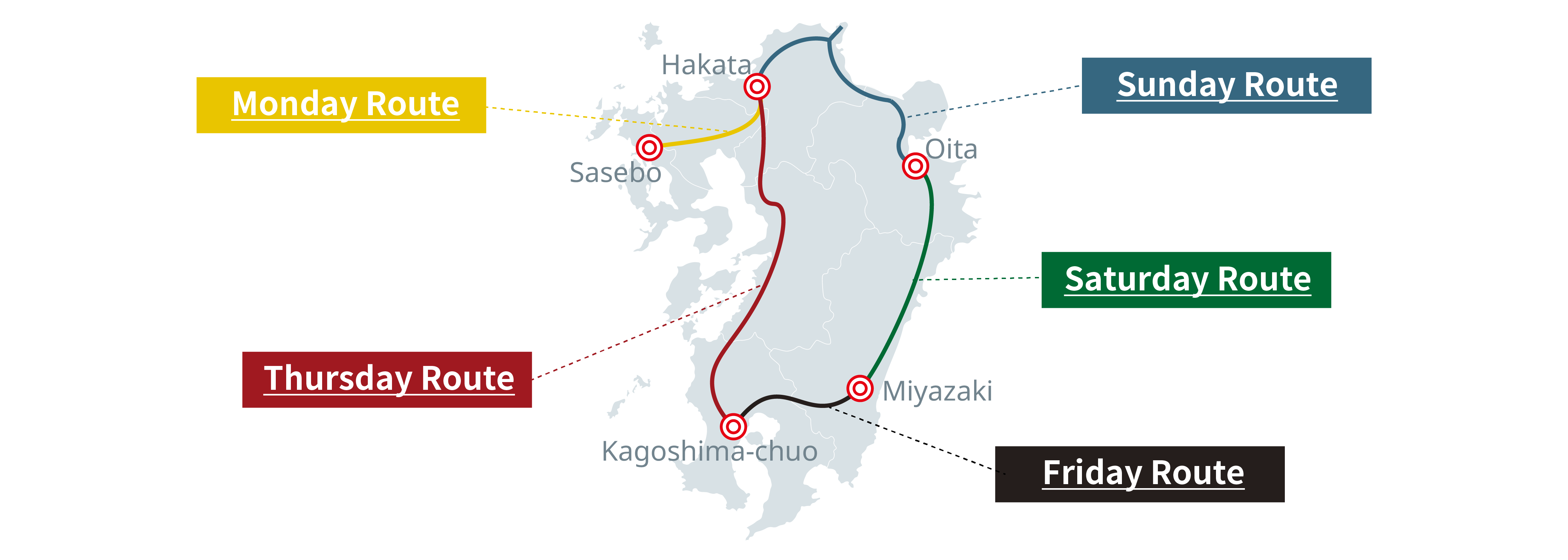
The "36+3" does not run a single line; instead, it completes a massive circle around the periphery of Kyushu over five days (running Thursday through Monday). Each day features a distinct geographic route associated with a local color theme and special culinary/hospitality stops.
|
Day |
Route Color |
Route |
Notes |
|
|
Thursday |
Red |
Hakata (Fukuoka) → Kagoshima-Chuo |
Travels along Kyushu's scenic western coast |
|
|
Friday |
Black |
Kagoshima-Chuo → Miyazaki |
Explore the southern volcanic region |
|
|
Saturday |
Green |
Miyazaki Airport/Miyazaki → Oita/Beppu |
A loop route in the Miyazaki area |
|
|
Sunday |
Blue |
Oita/Beppu → Kokura/Hakata |
Visit the famous hot spring cities |
|
|
Monday |
Gold |
Hakata ⇄ Sasebo (Round trip) |
A shorter route exploring northern Kyushu |
|
🔴 Thursday Route: The "Red Road"
-
Journey: Hakata (Fukuoka) ➔ Kagoshima-Chuo
-
Sights: Follows the dramatic western coastline, cruising directly along the scenic Hisatsu Orange Railway tracks with sweeping views of the East China Sea.
-
Notable Stops:
-
Tamana Station (20 min): Meet local vendors on the platform selling seasonal Kumamoto agricultural goods.
-
Ushinohama Station (20 min): Step off the train to buy fresh coastal delicacies right next to the sea wall.
-
⚫ Friday Route: The "Black Road"
-
Journey: Kagoshima-Chuo ➔ Miyazaki (via the Nippo Main Line)
-
Sights: Rides past active volcano Sakurajima standing majestic in the middle of Kinko Bay, before climbing through the mountainous core of Southern Kyushu.
-
Notable Stops:
-
Kirishima-Jingu Station (25 min): The spiritual gateway to the famous mountain shrine.
-
Osumi-Okawara Station (45 min): A tranquil rustic station tucked deep in the woods where you can enjoy local tea under a gigantic ginkgo tree.
-
🟢 Saturday Route: The "Green Road"
-
Journey: Miyazaki Airport / Miyazaki ➔ Oita / Beppu
-
Sights: Traces the rugged eastern coast of the island along the Hyuga-nada Sea.
-
Notable Stops:
-
Sotaro Station (10 min): A legendary hikyo (extremely secluded/isolated mountain station) beloved by train enthusiasts.
-
Shigeoka Station (20 min): A tiny mountain community that welcomes the train with regional sweets and handmade crafts.
-
🔵 Sunday Route: The "Blue Road"
-
Journey: Oita / Beppu ➔ Mojiko ➔ Hakata
-
Sights: Travels along the northern coast overlooking Beppu Bay, heading to the historic port town of Mojiko before ending in Fukuoka.
-
Notable Stops:
-
Mojiko Station (80 min): A long layover allowing you to exit and explore the beautifully preserved, retro Meiji-era station building and historic port area.
-
🟡 Monday Route: The "Gold Road"
-
Journey: Hakata ➔ Sasebo (Morning Outbound) / Sasebo ➔ Hakata (Evening Inbound)
-
Sights: Winds through Saga Prefecture, showcasing the historic sake breweries of Hizen-Hama and the ancient pottery kilns of Arita.
-
Notable Stops:
-
Hizen-Hama Station (50 min): Home to the famous Sake Brewery Street. Passengers can participate in local sake tastings right at the station.
-
Kami-Arita Station (15 min): An elegant, historic station serving as the gateway to ceramic country.
-
2. Train Layout & Seating
The train consists of six elegantly designed cars, each with a unique purpose.

-
Cars 1 to 3 (Private Compartments): Intimate semi-private rooms that can only be booked as a "Meal Plan" package deal.
-
Car 3 (The Bar Counter): A gorgeous sake and snack counter selling local Kyushu specialties, craft beers, and souvenirs.
-
Car 4 (Shared Lounge Car): A community space open to all passengers that hosts onboard cultural events (like kompeito candy tastings or shichimi spice blending).
-
Cars 5 & 6 (Standard Green Car Seats): Classic 2x1 open seating configurations. Car 6 uniquely features authentic tatami mat flooring—passengers must take off their shoes before entering the cabin.
|
Car No. |
Type |
Seat Layout / Capacity |
Access & Booking Method |
|
Car 1 |
Green Private Compartments |
4 rooms (3–4 people) |
Bookable only via Lunch Plan Package |
|
Car 2 |
3 rooms (3–6 people) + Wheelchair space |
||
|
Car 3 |
6 rooms (1–2 people) |
||
|
Car 3 |
Bar Counter |
Sake tasting, regional snacks, train merchandise |
Open to all passengers on board |
|
Car 4 |
Multi-Car Lounge |
Shared relaxation area, cultural workshops |
Open to all passengers on board |
|
Car 5 |
Regular Green Seats |
30 seats (2+1 luxury layout with carpet) |
Ticket-Only / Pass Holder accessible |
|
Car 6 |
Premium Compartments (New) |
10 rooms (1–2 people with wood floors) |
Bookable only via Premium Lunch Plan |
All seats are Green Car (First Class) only. You cannot board the train without reservations.Any customers with a reserved seat can freely use the Bar counter and the Lounge Car.
⚠️ Important 2026 Notice: JR Kyushu announced renovation work affecting Car No. 6 from May 12, 2026 until September 3, 2026. Travelers planning trips during this period should verify operating schedules before booking.
3. Operation Schedule & Timetable
The official operation timetable for the DISCOVER KYUSHU EXPRESS "36+3" is meticulously synchronized across 5 distinct day-trips.
A unique feature of this schedule is the Hospitality Stops (marked with ★). These are not standard train stops where you quickly jump off; the train deliberately parks for 15 to 80 minutes so local vendors can set up markets directly on the platform exclusively for passengers.
[Thursday Route] Hakata ⇒ Kagoshima-chuo
|
For Kagoshima-chuo |
Hakata Lv. |
Tamana ★ |
Kumamoto Lv. |
Ushino-hama ★ |
Kagoshima-chuo Av. |
|
36+3 (Thursday Route) |
10:00 |
11:10~ (20 min) |
12:02 |
14:25~ (20 min) |
16:26 |
[Friday Route] Kagoshima-chuo ⇒ Miyazaki
[Saturday Route] Miyazaki-airport / Miyazaki ⇒ Oita/Beppu
[Sunday Route] Oita/Beppu ⇒ Kokura/Hakata
[Monday Route] Hakata ⇒ Sasebo
[Monday Route] Sasebo ⇒ Hakata
Click here for connection information.
⚠️ Note: Timetables may remain valid for only a few months.
How to Make Reservations?
All seats on the 36+3 are reserved seats only.You cannot simply board using a pass without a reservation.There are two distinct ways to book a seat on the 36+3, depending on whether you want a curated dining experience or just the train ride:
1. The Meal Plan (Lunch/Dinner Packages)
This all-inclusive plan secures your seat (or a private compartment in Cars 1–3) and a high-end bento box prepared by renowned local Kyushu chefs.
-
Where to Book: Must be reserved well in advance through the official JR Kyushu website or verified travel booking partners (like Klook). It cannot be covered by a rail pass.
-
Who it's for: Travelers who want a private compartment (Cars 1, 2, or 3) and a seamless luxury culinary experience.
-
Pricing: Starts at around $¥27,700 per person (depending on the route).
-
Booking Window: Closes 5 to 10 days before departure.
2. Seat-Only Booking (Green Car Tickets)
If you just want the train journey without the provided meal, you can purchase standard tickets for the Green Seats in Cars 5 and 6.
-
Where to Book: JR-Kyushu Train Reservation online system or at any JR Ticket Office (Midori-no-Madoguchi) in Japan.
-
Who it's for: Budget-conscious travelers, solo travelers, and JR Pass holders.
-
Booking Window: Opens exactly 1 month prior to the travel date at 10:00 AM JST.
⚠️ The Hisatsu Orange Railway Fee: If you take the Thursday route between Hakata/Kumamoto and Kagoshima-Chūō, the train utilizes tracks owned by a private local railway company. All passengers—including rail pass holders—must pay an additional sector fee of ¥2,670 out of pocket.
JR Pass Hacks & Cost Optimization
Can you use a rail pass on this ultra-luxury train? Yes, but it is not completely free. Because the "36+3" is an all-Green Car limited express train, special rules apply.
Both the Nationwide Japan Rail Pass (Ordinary Class) and the regional JR Kyushu Rail Passes (All-Kyushu, Northern, or Southern depending on the daily route) can be used.With a JR Pass, you can only reserve seats in Cars 5 and 6 (Green Seat / Standard seating). You CANNOT book private rooms in Cars 1–3 using a JR Pass.
What JR Passes Cover vs. What You Pay Extra
|
Fee Component |
Covered by JR Pass? |
Notes |
|
Basic fare (transportation) |
✅ YES |
JR Pass covers the distance traveled on JR lines |
|
Green Car Limited Express Ticket |
❌ NO |
You MUST purchase this separately |
|
Meal/Plan charges |
❌ NO |
Meal-inclusive plans require additional payment |
|
Hisatsu Orange Railway fee (Thursday) |
❌ NO |
¥2,670 extra (not a JR line) |
When using JR Kyushu Rail Pass or JR Pass (including Green Pass), only the JR section fare is recognized — you must purchase a Green Limited Express Ticket separately.
How to Reserve 36+3 with JR Pass?
Method 1: JR KYUSHU RAIL PASS Online Booking (Recommended)
-
You can reserve seats online BEFORE exchanging your voucher for the actual pass.
-
Visit: kyushurailpass.jrkyushu.co.jp (operates 05:30–23:00 JST).
-
You will need your pass purchase information.
Method 2: After arriving in Japan
-
Exchange your JR Pass voucher at a JR Kyushu station.
-
Go to a Green Window (Midori no Madoguchi) or a Reserved Seat Ticket Machine.
-
Request a seat reservation for 36+3 — specify Car 5 or Car 6.
Crucial Hidden Fee Warnings
1. The Hisatsu Orange Railway Fee (Thursday Route Only)
If you ride the Thursday (Red) Route between Hakata and Kagoshima-Chuo, the train passes through the Hisatsu Orange Railway (a private, non-JR line).
-
The Extra Cost: $¥2,670 per person.
-
Note: This fee is not covered by the National JR Pass or any JR Kyushu Pass. You must pay this cash or card at the ticket window when exchanging/purchasing your tickets in Kyushu.
2. Regional Pass Boundary Limits
If you are using the cheaper regional JR Kyushu passes, you must ensure the route matches your pass's boundary:
-
Northern Kyushu Pass: Valid for the Monday (Sasebo) and Sunday (Mojiko) routes. Valid on the Thursday route only between Hakata and Kumamoto.
-
Southern Kyushu Pass: Valid for the Friday (Miyazaki) route. Valid on the Thursday route only between Kumamoto and Kagoshima-Chuo.
-
All Kyushu Pass / National JR Pass: Valid across all routes (subject to the surcharges).
Tips for a Flawless Ride
-
Book Car 5 Immediately: Since Car 6 is closed for renovations for most of 2026, the available "Seat Only" capacity is cut in half. Book your seat exactly 1 month out at 10:00 AM JST.
-
Dress Smart-Casual: While there is no strict dress code, most passengers dress in smart-casual attire to match the elegant interior woodcrafts and design of the train.
-
Bring Cash: Although the bar counter accepts IC cards (Suica/Sugoca) and credit cards, some of the tiny local station vendors selling fresh fruit, sake, and crafts during the 20–50 minute stopovers only accept cash.
-
Collect your Stamp: Head to Car 4 to get your commemorative ink-stamp on a postcard, a classic Japanese train hobby!