Japan’s rail network is often ranked among the most efficient in the world, connecting major cities, cultural landmarks, and hidden regional destinations with remarkable speed and reliability. For many international visitors, the Japan Rail Pass is one of the most cost-effective and flexible ways to explore multiple cities by train. From high-speed bullet trains to scenic regional routes, this pass can unlock seamless journeys across the country.However, understanding who can buy the pass, where to purchase it, how seat reservations work, and whether it’s still worth the price in 2026 can be confusing for first-time travelers. In this guide, you’ll learn everything you need to know—from eligibility and purchasing options to practical tips for planning efficient rail itineraries throughout Japan.
What Is the Japan Rail Pass?
The Japan Rail Pass (often called the "JR Pass") is a special train pass designed exclusively for foreign tourists visiting Japan. It allows unlimited travel on most trains operated by the JR Group, including local trains, rapid services, limited express trains, and many Shinkansen routes.Since the JR Pass was first created, the shinkansen (bullet train) network has greatly expanded, and now it's possible to ride the shinkansen all the way from Hokkaido to Kyushu.
1. How It Works?
The pass is available only to foreign tourists entering Japan under the "Temporary Visitor" visa status. You choose a duration (7, 14, or 21 consecutive days) and a class (Ordinary or Green Car/First Class).Once you have the physical pass, you don't buy individual tickets. You simply:
-
Insert your pass into the automatic ticket gates.
-
Board any covered train.
-
Make free seat reservations at ticket machines or offices.
2. What Is Covered?
The JR Pass isn't just for one city; it’s for the whole country.
-
The Shinkansen (Bullet Trains): High-speed travel between major cities like Tokyo, Kyoto, Osaka, and Hiroshima.
-
Limited Express Trains: Fast trains connecting airports (like the Narita Express) and regional hubs.
-
Local JR Lines: Commuter trains within cities (like the Yamanote Line in Tokyo).
-
JR Buses & Ferries: Includes the JR Miyajima Ferry and certain local JR bus routes.
❌What is NOT covered:
-
Private Subways/Railways: It won't work on the Tokyo Metro, Kyoto City Subway, or private lines like Kintetsu or Hankyu.
-
The Fastest Bullet Trains (Nozomi/Mizuho): These are the top-tier Shinkansen. You can ride them with the pass, but only if you pay an additional "supplemental" fee. Most pass holders just take the Hikari or Sakura trains instead, which are free with the pass and only slightly slower.
Most of the JR trains have ordinary (economy class) cars and many of the long-distance trains have Green (first class) cars. With a Green Car PASS, you can use both ordinary and Green cars without paying additional fees, and you can use the ordinary cars with an Ordinary Car PASS without paying additional fees. For the trains, cars and facilities available, please see the table below.
|
Trains |
Accommodations |
Green |
Ordinary |
|
“NOZOMI” and “MIZUHO” trains on the Tokaido, Sanyo and Kyushu Shinkansen |
Green Car |
★ |
× |
|
Ordinary Car |
★ |
★ |
|
|
“HIKARI”, “SAKURA”, “KODAMA” and “TSUBAME” trains on the Tokaido, Sanyo and Kyushu Shinkansen lines and all trains on the Tohoku, Yamagata, Akita, Hokkaido, Joetsu, Hokuriku and Nishi Kyushu Shinkansen lines |
GranClass |
* |
* |
|
Green Car |
○ |
* |
|
|
Ordinary Car |
○ |
○ |
|
|
Ordinary private Compartment |
* |
* |
|
|
Limited express and ordinary express |
Green Car |
○ |
* |
|
Ordinary Car |
○ |
○ |
|
|
Green private Compartment |
* |
* |
|
|
Ordinary private Compartment |
* |
* |
|
|
Sleeping Car |
* |
* |
|
|
Local and rapid trains |
Green Car |
○ |
* |
|
Ordinary Car |
○ |
○ |
-
Train cars marked with ○ can be used with a JAPAN RAIL PASS.
-
Additional fee will be required when using train cars marked with *.
-
★ Only when an [ONLY WITH JAPAN RAIL PASS] NOZOMI MIZUHO Ticket is purchased separately before boarding the train and used together with a valid JAPAN RAIL PASS, a "NOZOMI" or "MIZUHO" train can be used for the section and facility indicated on the purchased ticket. Please see here for details.
3. Types and Prices
A. Official JR Pass Prices
The Japan Rail Pass is categorized by duration and seat class. It is available for 7, 14, or 21 consecutive days.
|
Duration |
Ordinary (Standard) |
Green Car (First Class) |
|
7-Day |
¥50,000 |
¥70,000 |
|
14-Day |
¥80,000 |
¥110,000 |
|
21-Day |
¥100,000 |
¥140,000 |
-
Child Rates (Ages 6–11): Exactly 50% of the adult price.
-
Infants (Under 6): Ride free if they sit on an adult's lap. If they need their own seat, you must purchase a child pass.
- Green Car: Offers more legroom, 2+1 seating (instead of 3+2), and a quieter atmosphere.
Please see here for details.
B. The "Nozomi" & "Mizuho" Supplement
While the pass covers most Shinkansen (like the Hikari and Sakura), the fastest trains—the Nozomi and Mizuho—require a special supplemental ticket. If you choose to use these instead of the covered trains, expect to pay these additional fees per leg:
|
Main sections |
Price (yen) |
|
Tokyo - Nagoya |
4,180 |
|
Tokyo - Kyoto |
4,960 |
|
Tokyo - Shin-Osaka |
4,960 |
|
Tokyo - Hiroshima |
6,500 |
|
Shin-Osaka - Hakata |
4,960 |
|
Hakata - Kagoshima-Chūō |
5,150 |
How to Buy the Japan Rail Pass?
The process for buying the Japan Rail Pass is divided into two main paths. The choice you make determines how early you can book seats and where you can pick up the physical pass.
Option 1: The Official JR Website (Recommended)
Buying directly through the Official JAPAN RAIL PASS Reservation site is the most seamless method.
-
Best For: Travelers who want to reserve all their Shinkansen seats online before landing in Japan.
-
The Process:
1. Purchase the pass using your credit card (must match your passport name).
2. Immediate Seat Booking: You can immediately log back into the portal to book free seat reservations for your entire trip.
3. Digital Confirmation: You receive a confirmation number via email.
4. Pick-up: Once in Japan, go to a JR Ticket Office or a vending machine with a passport reader (new for April 2026) at major airports or stations to collect your pass.
Option 2: Authorized Third-Party Agencies
You can also buy from licensed vendors or travel agents in your home country, such as Klook, JRPass.com, etc.
-
Best For: Travelers who might find a slight discount (due to exchange rates) or want to bundle the pass with other items like a SIM card or Pocket Wi-Fi.
-
The Process:
-
You pay the agency, and they mail you a physical Exchange Order (MCO) or send a digital voucher.
-
The Wait: You cannot book seats online ahead of time. You must wait until you are physically in Japan to exchange the voucher for the actual pass.
-
Exchange: You must visit a staffed JR Exchange Office at an airport or major station, show your passport (with the "Temporary Visitor" stamp), and hand over your voucher to get the pass.
-
Please see here for details.
🔸Summary: Which should you choose?
|
Feature |
Official JR Website |
Third-Party Agency |
|
Seat Reservations |
Online (before you arrive) |
In-person (after you arrive) |
|
Collection |
Machines or Counters |
Staffed Counters Only |
|
Price |
Fixed in Yen (¥) |
Fluctuates with local currency |
|
Flexibility |
Easier to modify/cancel |
Depends on agency policy |
‼️Crucial Buying Rules:
-
❶ The 90-Day Window: You cannot buy the pass more than 90 days before your intended exchange date.
-
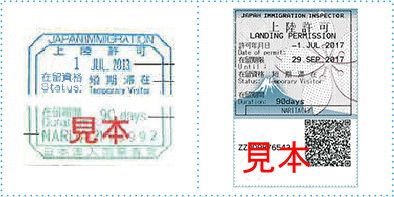
❷ Temporary Visitor Status: You must enter Japan on a tourist visa. If you enter on a student, work, or military visa, or as a Japanese national (with rare exceptions), you cannot use the pass even if you have already paid for it.
-
❸ The "Stamp" Requirement: Even if you use an automated gate at the airport, you must ask an officer for a physical "Temporary Visitor" stamp/sticker in your passport. You cannot collect your pass without it.
-
❹ In-Person Purchase (Limited): While it is possible to buy the pass at some major stations in Japan, it is highly recommended to buy it online first to avoid long queues at the airport counters.
How to Use Your Pass & Reserve Seats?
1. How to Use Your Pass at the Station
Your physical JR Pass is a small, magnetic-strip ticket.
-
Automatic Gates: Simply insert your pass into the slot at the automatic ticket gates (the same way a local would insert a regular ticket). Walk through and remember to grab your pass as it pops out on the other side.
-
Manned Gates: If you have an oversized pass or are at a smaller station without modern gates, show your pass (and your passport, if requested) to the staff at the glass window.
-
The "IC Only" Rule: Do not try to use the gates marked "IC Only"—these are specifically for Suica/Pasmo cards and do not have a ticket slot.
2. How to Reserve Seats (Free)
While you can sit in "Non-Reserved" cars just by showing your pass, reserving a seat is free and highly recommended for long trips.
Method A: The Online Portal (Best for Planning)
If you bought your pass on the Official JR Website, you can reserve seats on your phone or laptop.
-
Log into your account.
-
Search for your route and select your preferred train.
-
Once in Japan, you must pick up your physical "Reserved Seat Ticket" at a ticket machine or counter before boarding.
Method B: Reserved Seat Ticket Machines (Fastest)
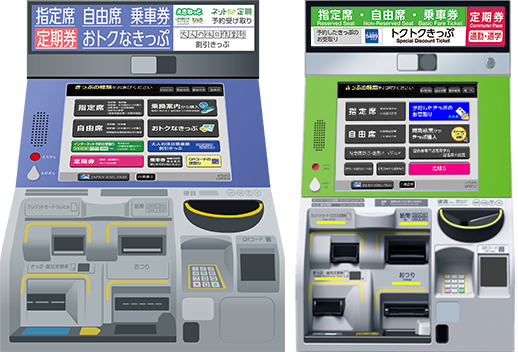
Look for the green vending machines (often labeled Midori-no-kenbaiki).
-
Select English and choose "Reserved Seat."
-
Scan the QR code on your physical JR Pass.
-
Enter your Passport Number.
-
Select your destination, train, and even your specific seat from a map.
-
The machine will print a separate seat ticket. Keep this with your JR Pass—you may need to show it to the conductor on board.
Method C: Ticket Offices (Midori-no-madoguchi)
If you prefer a human touch or have a complex request, go to the ticket office. Show your pass and tell them: "Kyoto to Tokyo, tomorrow at 10:00 AM, please."
Please see here for more details.
Best Japan Rail Pass Itineraries
The strategy for using a Japan Rail (JR) Pass has shifted. Because of the pricing update to ¥50,000 for a 7-day pass, a simple round-trip between Tokyo and Kyoto is no longer enough to "break even."
To get your money’s worth, you need an itinerary that covers long distances or includes multiple high-speed day trips. Here are the best-value itineraries for 2026.
A. The "Golden Route Extension" (7 Days)
This is for fast-paced travelers who want to see the "Big Three" but add enough distance to make the pass profitable.
-
Route: Tokyo -> Kanazawa -> Kyoto/Osaka -> Hiroshima -> Tokyo.
-
Why it works: A standard Tokyo-Kyoto-Tokyo loop costs ~¥28,000. By adding Kanazawa (the "Little Kyoto") and Hiroshima, your total travel value jumps to ~¥58,000, saving you nearly ¥8,000 with the pass.
-
Tip: Activate the pass on the day you leave Tokyo for Kanazawa to maximize the 7-day window.
B. The "Three Islands" Grand Tour (14 Days)
For those who want to see the diverse landscapes of Honshu, Kyushu, and even a glimpse of Shikoku.
-
Route: Tokyo -> Kyoto -> Okayama -> Hiroshima -> Fukuoka (Kyushu) -> Takamatsu (Shikoku) -> Tokyo.
-
Why it works: The 14-day pass (¥80,000) is easier to justify because the "daily cost" is lower than the 7-day version. This massive loop covers over 2,000km of track, which would cost well over ¥110,000 in individual tickets.
-
Bonus: Use the pass for the JR Ferry to Miyajima in Hiroshima.
C. The "Northern Frontier" (7 or 14 Days)
Hokkaido and Tohoku offer some of the most expensive Shinkansen legs, making the pass highly valuable here.
-
Route: Tokyo -> Sendai -> Aomori -> Hakodate -> Sapporo -> Tokyo (Fly back or return by rail).
-
Why it works: The one-way trip from Tokyo to Sapporo via Shinkansen and Limited Express is roughly ¥30,000. A round trip alone pays for the 7-day pass.
⚠️Note: In 2026, the Hokkaido Shinkansen extension toward Sapporo is still under construction, so you will transfer to the Hokuto Limited Express at Hakodate.
🔸Summary Comparison
|
Itinerary |
Estimated Ticket Cost |
2026 JR Pass Cost |
Verdict |
|
Tokyo -> Kyoto |
~¥28,000 |
¥50,000 |
Not Worth It |
|
Tokyo -> Kanazawa -> Kyoto -> Tokyo |
~¥42,000 |
¥50,000 |
Barely Worth It |
|
Tokyo -> Kyoto -> Hiroshima -> Tokyo |
~¥52,000 |
¥50,000 |
Worth It |
|
Tokyo -> Kyushu -> Tokyo |
~¥65,000 |
¥50,000 |
High Value |
JR Pass Tips for First-Time Travelers
-
Oversized Baggage: If your suitcase's total dimensions exceed 160cm, you must reserve a specific "Oversized Baggage Seat" on the Shinkansen. These seats are located at the very back of each car. They are free to reserve with your pass but limited in number, so book them as soon as you know your travel time.
-
IC Cards: The JR Pass does not cover city subways (like the Tokyo Metro) or private buses. You should still get a Suica or Pasmo card (or use them on your iPhone/Apple Watch) for local travel.
-
Strategic Reservations: For popular routes (like Tokyo to Kyoto) during peak seasons (Cherry Blossom or Golden Week), reserve your seats as early as possible—up to 30 days in advance if you use the official website.
-
Value Check: Use a "JR Pass Calculator" online before your trip. If your planned travel doesn't exceed ¥50,000 for 7 days, it is cheaper to buy individual tickets or regional passes.
-
Use City Passes for Local Transit: The JR Pass is for intercity travel. For getting around within a city, buy separate, inexpensive passes like the Tokyo Subway Ticket (24/48/72 hours), Kyoto City Bus & Subway Pass, or the Osaka Amazing Pass, which bundles transport with free entry to attractions.
-
Arrive Early for Popular Trains: Even with a reservation, arriving at the platform a few minutes early is good practice, especially for scenic limited express trains where you might want a specific window seat.
FAQs
Can tourists buy the Japan Rail Pass in Japan?
Yes, some major JR stations sell the pass directly, though availability is limited.
Can I ride Shinkansen with the JR Pass?
Yes, most Shinkansen trains are included, except certain services like Nozomi and Mizuho without additional tickets.
Do I need seat reservations?
No, but reservations are free and recommended for busy routes.
Can I change the pass start date?
You can choose a start date within one month when exchanging the voucher, but it cannot be changed after activation.
When does the JR Pass validity period start?
The validity period begins on the start date you choose when activating the pass at a JR exchange office. The pass is then valid for 7, 14, or 21 consecutive days depending on the type you purchased.
Is it Worth It?
Before buying, use a JR Pass Calculator online.
-
Buy it if: You are visiting 3+ distinct regions (e.g., Kanto, Kansai, and Chugoku) within the pass window.
-
Skip it if: You are only doing Tokyo -> Kyoto. In this case, buy individual tickets or look at Regional Passes (like the Hokuriku Arch Pass or JR East Pass), which were updated in March 2026 with better coverage for specific zones.
What happens if I lose my JR Pass?
Unfortunately, lost or stolen JR Passes cannot be replaced or refunded, so it is important to keep the pass safe during your trip.
Can I get a refund if my plans change?
-
Before Activation: You can usually get a refund (minus a 10–15% handling fee) if you haven't exchanged your voucher yet.
-
After Activation: Once the pass has been validated and the start date has passed, no refunds are possible, even if there are train cancellations due to weather.