Traveling around Fukuoka and Kyushu becomes much easier when you have the right transit card in hand. Instead of buying single tickets every time, many visitors choose a prepaid IC card to move smoothly between trains, buses, and even shops. Hayakaken is one of the most useful options for getting around the region, offering fast access, cashless payments, and wide compatibility with Japan’s transport network.In this guide, you’ll learn everything you need to know about using Hayakaken as a traveler — from where to get one and how it works to recharging, refunds, and smart tips to avoid common mistakes during your trip.
What Is Hayakaken?
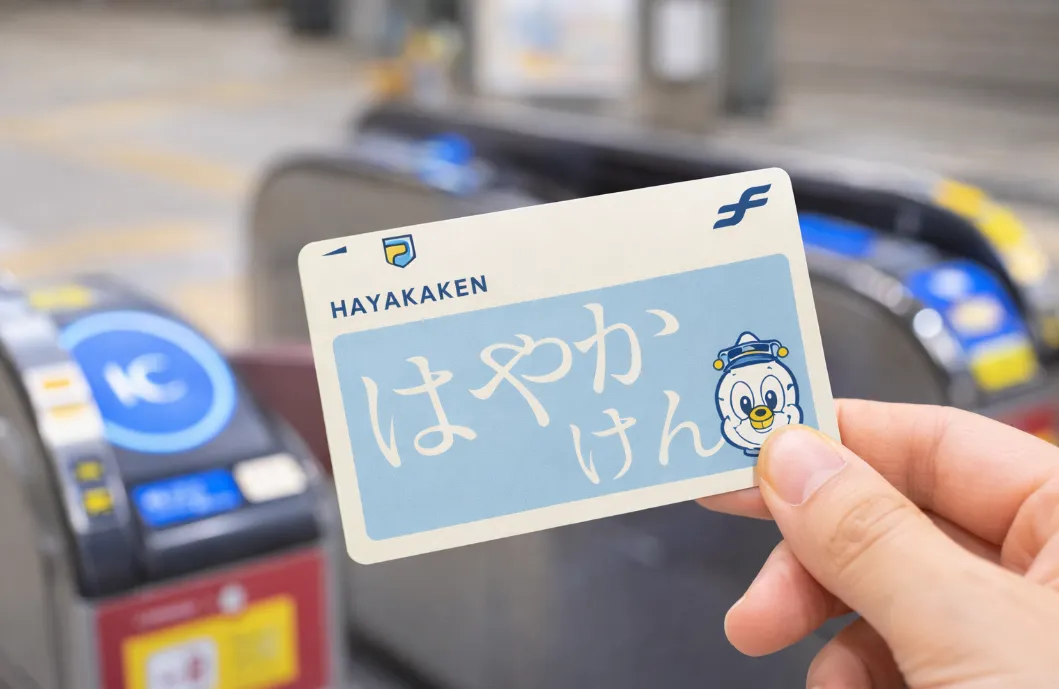
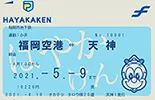
The Hayakaken Card (はやかけん) is a rechargeable contactless smart card (IC card) primarily used for public transportation within Fukuoka City, Japan, introduced by the Fukuoka City Transportation Bureau in 2009. The name derives from "quick," "friendly," "comfortable," and "ticket," while in the local Hakata dialect, it also means "because it's quick".It functions as a digital wallet for subways, buses, and trains, and can be used for electronic payments at stores across Japan. While it is issued by the Fukuoka City Transportation Bureau primarily for the Fukuoka City Subway, it is part of Japan’s nationwide mutual usage network, meaning it is much more versatile than just a local subway pass.Whether you’re exploring downtown Fukuoka, riding JR Kyushu, or hopping on buses, Hayakaken keeps your journey smooth.
|
Item |
Details |
|
Card Type |
Rechargeable IC card |
|
Issuer |
Fukuoka City Subway |
|
The Mascot |
A prairie dog named Chikamaru. |
|
Price |
¥1,000 to ¥10,000 (includes a refundable ¥500 deposit) |
|
Validity |
10 years after the last use |
|
Nationwide Use |
Compatible with Suica, PASMO, ICOCA, etc. |
|
Payments |
Transport + shopping |
Core Functions & Features:
1. Public Transportation:
-
Trains: Works on the Fukuoka City Subway (all three lines), the Nishitetsu Tenjin-Omuta Line, and the JR Kyushu lines within the designated area.
-
Buses: Can be used on most Nishitetsu buses in Fukuoka and the greater region.
-
Ferries: Can be used on the Nishitetsu Ferry to travel between Fukuoka and Shikanoshima Island.
Simply tap the card on the reader at ticket gates when entering and exiting stations or when boarding/exiting buses. The correct fare is automatically deducted.
2. Electronic Money (e-Money):
The card has an integrated "Nimoca" or "WAON" e-money function (depending on the card type/version). This allows you to make cashless payments at:
-
Convenience stores (7-Eleven, FamilyMart, Lawson, etc.)
-
Supermarkets
-
Vending machines
-
Taxis
-
Many shops and restaurants (look for the Nimoca or WAON logo at the register).
3. Nationwide Interoperability:
Even though it’s a "Fukuoka card," you can use it in Tokyo, Osaka, Kyoto, Sapporo, and other major cities. It works on almost any train, bus, or subway line that displays the "IC" logo (including JR lines).
4. Point System:
One unique benefit of using a Hayakaken on the Fukuoka Subway (specifically) is that you can earn "Hayakaken Points" based on your usage, which can later be converted back into card balance.
-
Points are added on the 10th of the following month according to the total amount of your subway travel fare in the month (from the 1st to the end of each month).
-
Accumulated points can be used for passenger fares or electronic money in specified areas around Japan when points are charged.
-
The period of validity for points is from the month when points are earned to the end of the month the following year. Accumulated points will become invalid unless points are charged within the validity period.
Types of Hayakaken Cards
While all Hayakaken cards feature the same basic "contactless" technology, they come in several different types depending on who is using them and what level of protection you want.
|
Unregistered Hayakaken
|
Registered Hayakaken
|
Hayakaken Commuter Pass
|
|
|
Identity Required |
None (Anonymous) |
Name, DOB, Phone Number |
Name, DOB, Phone, Specific Route |
|
Lost Card Recovery |
❌ |
✔️ Balance can be recovered |
✔️ Pass & Balance recovered |
|
Pricing Model |
Pay-as-you-go |
Pay-as-you-go |
Fixed price for unlimited travel |
|
Refundable? |
Yes (at Subway Office) |
Yes (at Subway Office) |
Yes (Calculation is prorated) |
|
Best For |
Short-term tourists |
Long-term tourists / Residents |
Daily commuters (Students/Workers) |
⚠️ Note: A Commuter Pass still allows "Pay-as-you-go" travel for any trips you take outside your designated route.
1. Unregistered Hayakaken
This is the "grab and go" option. You walk up to a machine, put in your cash, and a card pops out.
-
The "Catch": Because your name isn't attached to it, anyone who finds it can use it. If you lose it with ¥5,000 on it, that money is effectively gone.
-
Transferability: You can lend this card to a friend or family member because it isn't tied to you.
2. Registered Hayakaken (My Hayakaken)
This is identical to the unregistered card in price, but it has your name printed on the front.
-
The Recovery Process: If you lose it, you go to a Fukuoka Subway station office. They will "freeze" the old card and issue a new one with your balance intact. You will have to pay a replacement fee (approx. ¥1,020) which covers the card deposit and handling.
-
The "Catch": Only you are legally allowed to use it.
3. Commuter Pass (Teikiken)
This is a "layer" added onto a Registered Hayakaken. You choose a specific "A-to-B" route (e.g., Meinohama Station to Tenjin Station).
-
Cost Efficiency: You pay a flat fee upfront for 1, 3, or 6 months. If you travel that specific route more than about 20 days a month, it becomes cheaper than paying per ride.
-
Flexibility: You can get off at any station between your two points for free.
-
The "Catch": If you travel to a station outside your route, the card will automatically deduct the extra fare from your charged balance.
⁉️ Which should you choose:
-
Staying 1–3 days: Go Unregistered. It’s the fastest way out of the station.
-
Staying a week or more: Go Registered. It takes 60 seconds longer at the machine but protects your money.
-
Working or studying in Fukuoka: Go Commuter Pass. It will save you a significant amount of money on your daily travel.
Where to Buy Hayakaken?
Buying a Hayakaken card is very straightforward once you arrive in Fukuoka. Since it is issued by the Fukuoka City Subway, you will find them at every subway station in the city.
1. Where to Buy (Physical Locations)
-
Ticket Vending Machines (All Stations): This is the most common way. Every Fukuoka City Subway station (Airport Line, Hakozaki Line, and Nanakuma Line) has multi-language machines.
-
Fukuoka Airport Station: Located right at the domestic terminal arrival level.
-
Hakata Station: The main rail hub where the Subway connects to the Shinkansen and JR lines.
-
Tenjin Station: The central shopping district.
-
-
Customer Service Centers / Commuter Pass Counters: If you need a Child Card, a Commuter Pass,, you must go to a staffed window. These are located at:
-
Hakata Station
-
Tenjin Station
-
Nishijin Station
-
Meinohama Station
-
Kaizuka Station
-
Befu Station (Nanakuma Line)
-
2. Step-by-Step: How to Buy at a Machine
-
Find the Machine: Look for the ticket machines that have the Hayakaken logo (the blue-and-white card with the prairie dog).
-
Select Language: Tap the "English" button in the top or side corner.
-
Choose Card Type:
-
Select "Purchase IC Card" (or similar wording).
-
Choose between "Unregistered" (Blank) or "Registered" (My Hayakaken).
-
-
Insert Cash:
-
Standard cards usually cost ¥2,000.
-
This includes a ¥500 deposit (you get this back if you return the card later) and ¥1,500 of pre-loaded travel credit.
-
-
Collect Card: Your new card will pop out of the slot.
🔔 Quick Tips for New Buyers:
-
Cash Only: Ticket machines in Japan rarely accept credit cards for IC card purchases. Make sure you have Japanese Yen on hand.
-
Airport Strategy: If you land at Fukuoka Airport, the subway station is in the Domestic Terminal. If you arrive at the International Terminal, you’ll need to take the free shuttle bus (about 10–15 mins) to the Domestic Terminal to reach the subway entrance and the machines.
-
No "Mobile" Hayakaken: Unlike Suica or PASMO (Tokyo cards), you cannot currently add a "Hayakaken" directly to Apple Wallet or Google Pay as a native card. However, you can use a Mobile Suica in Fukuoka without any issues.
-
Alternative Options: If you already have a nationwide IC card (like Suica, PASMO, ICOCA) or are using mobile wallet cards, you don’t need to buy Hayakaken — existing IC cards work fine on Fukuoka transit too.
Topping Up (Charging) Your Card
To top up your Hayakaken card, you have several convenient options. Because it is part of Japan’s nationwide mutual usage network, you can recharge it almost anywhere in the country, not just in Fukuoka.
1. At Subway & Train Stations
This is the most common method. You can use:
-
Ticket Vending Machines: Look for machines with the Hayakaken or IC logo. Insert your card, select "Charge" (チャージ), choose the amount (usually ¥1,000 to ¥10,000), and insert your cash.
-
Fare Adjustment Machines: Located inside the ticket gates. These are perfect if you arrive at a station and realize your balance is too low to exit.
-
Station Counters: You can ask staff at the ticket office to top up your card for you.
2. At Convenience Stores
You can top up at almost any convenience store in Japan (7-Eleven, Lawson, FamilyMart, etc.).
-
At the Register: Tell the clerk, "IC Card Charge, please" (or simply say "Charge" while pointing to your card). You tell them the amount, pay with cash, and tap your card on the reader when prompted.
-
At 7-Bank ATMs: Most 7-Elevens have ATMs where you can place your card on the reader and follow the English menu to add funds.
3. On Buses
Most local buses in Fukuoka (like Nishitetsu buses) allow you to top up while on board.
-
How to do it: When the bus is stopped, ask the driver: "Charge, please." You insert a ¥1,000 bill into the machine next to the driver and tap your card.
⚠️ Note: Bus drivers can usually only change ¥1,000 bills, so don't try to top up with a ¥5,000 or ¥10,000 note.
‼️ Important Rules for Topping Up:
|
Feature |
Rule |
|
Payment Method |
Cash Only (You cannot use a credit card to top up physical IC cards). |
|
Maximum Balance |
¥20,000. |
|
Increments |
Usually ¥1,000, ¥2,000, ¥3,000, ¥5,000, or ¥10,000. |
|
Validity |
The card (and its balance) is valid for 10 years from the last use. |
Refund & Deposit
When you are done with your Hayakaken card, you can return it to get back your ¥500 deposit. However, there are specific rules regarding where you can do this and how the fees are calculated.
1. Where to Get a Refund
Because Hayakaken is issued by the Fukuoka City Subway, you can only refund it at Fukuoka City Subway locations.
-
Station Offices: You can go to the station master's office at almost any Fukuoka subway station.
-
Customer Service Centers: Major hubs like Hakata Station, Tenjin Station, and Fukuoka Airport Station have dedicated counters for this.
⚠️ Crucial Note: You cannot refund a Hayakaken card in Tokyo (JR East), Osaka (JR West), or any other city. If you leave Fukuoka with the card, you’ll have to keep it for your next trip or keep it as a souvenir.
2. How the Refund is Calculated
The amount you get back depends on how much balance (Stored Fare) is left on the card. There is a handling fee of ¥220.
|
Scenario |
Calculation |
What you receive |
|
Balance is ¥1,000 |
(¥1,000 - ¥220 fee) + ¥500 deposit |
¥1,280 |
|
Balance is ¥100 |
(¥100 - ¥100 fee*) + ¥500 deposit |
¥500 |
|
Balance is ¥0 |
(¥0 fee) + ¥500 deposit |
¥500 |
If your balance is less than ¥220, the subway office will simply take whatever is left as the fee and give you back your full ¥500 deposit. To get the most value, try to spend your balance down to ¥0 at a convenience store before returning the card.
3. Summary of the Deposit
-
Amount: ¥500 (This was included in the initial price you paid).
-
Purpose: To encourage people to return the cards for recycling rather than throwing them away.
-
Validity: If you don't refund it, the card remains valid for 10 years from the last time you used it.
4. What You Need
-
For Unregistered Cards: Just the card itself.
-
For Registered/Child/Commuter Cards: You will need to show identification (like your passport) because your name is officially tied to the card record.
Quick FAQ
Is Hayakaken only for Fukuoka?
No. It’s issued in Fukuoka but works nationwide.
Can tourists buy it?
Yes, anyone can buy it.
Can I get a refund?
Yes, at Fukuoka subway service centers (deposit + remaining balance, minus a small fee).
Does it work on JR Kyushu?
Yes, on most JR Kyushu lines.
Can I use Hayakaken for the Shinkansen (Bullet Train)?
Generally, no. You cannot just tap it at the Shinkansen gates. You must buy a separate paper ticket or link your card to the Smart EX app to use it for Shinkansen travel.
What happens if I lose my card?
-
Unregistered: You lose the balance.
-
Registered: You can get a replacement at a subway office. They will lock the old card and transfer the balance to a new one for a total fee of ¥1,020 (¥520 handling + ¥500 new deposit).
Can I use it on Nishitetsu Buses?
Yes. Even though Nishitetsu issues its own card (nimoca), they accept Hayakaken on all their buses and trains.
Can I use one card for two people?
No. Every traveler must have their own individual card to pass through the ticket gates.
My card balance is negative. What happens?
If your balance goes negative (e.g., you take a long ride with insufficient funds), you cannot enter any station or bus until you settle the debt. Go to the station office (Fare Adjustment Office), pay the owed fare plus any adjustment fee, and top up your card.
What happens if my balance is too low at the gate?
You’ll be guided to a nearby machine to top up before exiting.
Do I need Hayakaken if I already have Suica or ICOCA?
No. Other major IC cards work perfectly in Fukuoka.