Arriving at Narita International Airport (NRT) is the exciting start of any Tokyo adventure, but navigating the 70-kilometer journey to the neon-lit streets of Shinjuku can be daunting. Should you take a direct airport train, transfer to a cheaper commuter route, or ride a comfortable airport bus? Each option comes with different travel times, ticket prices, and luggage considerations. This guide compares the most practical ways to reach Shinjuku, including travel time, cost, luggage convenience, and booking tips, so you can choose the option that fits your itinerary.
At a Glance: Comparison Table
Traveling from Narita International Airport to Shinjuku Station is one of the most common routes for visitors arriving in Tokyo. Shinjuku is a major transportation hub and hotel district, so getting there efficiently after a long flight is important.Depending on whether you prioritize speed, your wallet, or a stress-free arrival, here are the three best ways to make the trip.
|
Method |
Best For |
Travel Time |
One-Way Cost (Approx.) |
Transfers |
Key Features |
|
Narita Express (N'EX) |
Overall / Easiest – Comfort, direct route |
70-90 min |
¥3,250 |
No (Direct) |
Reserved seats, power outlets, large luggage storage, free Wi-Fi |
|
Keisei Skyliner + JR Yamanote Line |
Fastest – Speed above all |
65-80 min |
¥2,800 |
Yes (at Nippori) |
High-speed, comfortable reserved seats, frequent departures |
|
Airport Limousine Bus |
Best with Luggage – No stairs, easy |
90-120 min (subject to traffic) |
¥3,600 |
No (Direct to hotels/station) |
Direct drop-off at major hotels, plenty of luggage space, easy boarding |
1. The Easiest (Most Popular): Narita Express (N’EX)
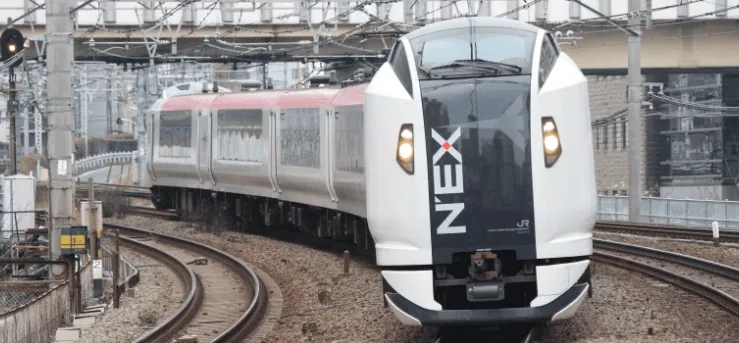
For most travelers, especially first-time visitors, the Narita Express (N'EX) offers the perfect balance of comfort, convenience, and reliability. It is a direct, high-speed train that takes you straight into the heart of Shinjuku Station without any transfers.
The N'EX is designed with travelers in mind. All seats are reserved, ensuring you'll have a place to sit . The trains feature spacious luggage storage areas, power outlets at every seat, and free Wi-Fi, allowing you to relax and charge your devices after your flight.
✔️Pros:
-
Direct train to Shinjuku.
-
Comfortable reserved seating.
-
Reliable travel time.
❌Cons:
- More expensive than other options.
Key Details:
-
The Route: Board at the airport and get off at Shinjuku Station.
-
Travel time: about 70–90 minutes
-
Price: about ¥3,250 (one way)
-
Transfers: none
-
Departure frequency: approximately every 30 to 60 minutes
🔔Pro Tip: If you are returning to Narita within 14 days, buy the N’EX TOKYO Round Trip Ticket for ¥5,200. It brings the cost down to about ¥2,600 per leg, making it both easy and fairly economical.
How to Book:
1) At the Airport (Best for the "Round Trip" Discount)
If you want the N’EX TOKYO Round Trip Ticket, you generally need to buy it in person after you land because it is exclusive to foreign passport holders.Go to the JR East Travel Service Center or the JR Ticket Office (Midori-no-Madoguchi) located on the B1 level of Terminal 1 or Terminal 2/3.You can also use the Reserved Seat Ticket Vending Machines (look for the red JR machines with passport scanners) to avoid the long counter lines.
2) Online via JR East (Best for Advance Planning)
For a guaranteed seat, you can also book online in advance via the JR-East reservation site (Eki-Net) .Choose your time and seat, pay with a credit card, and you'll receive a QR code.When you arrive at Narita, scan your QR code at a ticket vending machine to print your physical ticket.
3) Third-Party Platforms
If the official JR site feels a bit clunky, platforms like Klook, Japan Travel by NAVITIME, KKday are official partners.You can buy the ticket on the website or app in your home currency.Then you will receive a voucher/QR code that you must exchange for a physical ticket at the airport machines.
‼️Important Things to Remember:
-
❶ Mandatory Reservations: All seats on the N’EX are reserved. You cannot just hop on with a standard Suica card; you must have a seat assignment.
-
❷ Boarding: Look for the Red JR Signs. Do not follow the blue Keisei/Skyliner signs, as that is a different company.
2. The Fastest: Keisei Skyliner + JR Yamanote Line
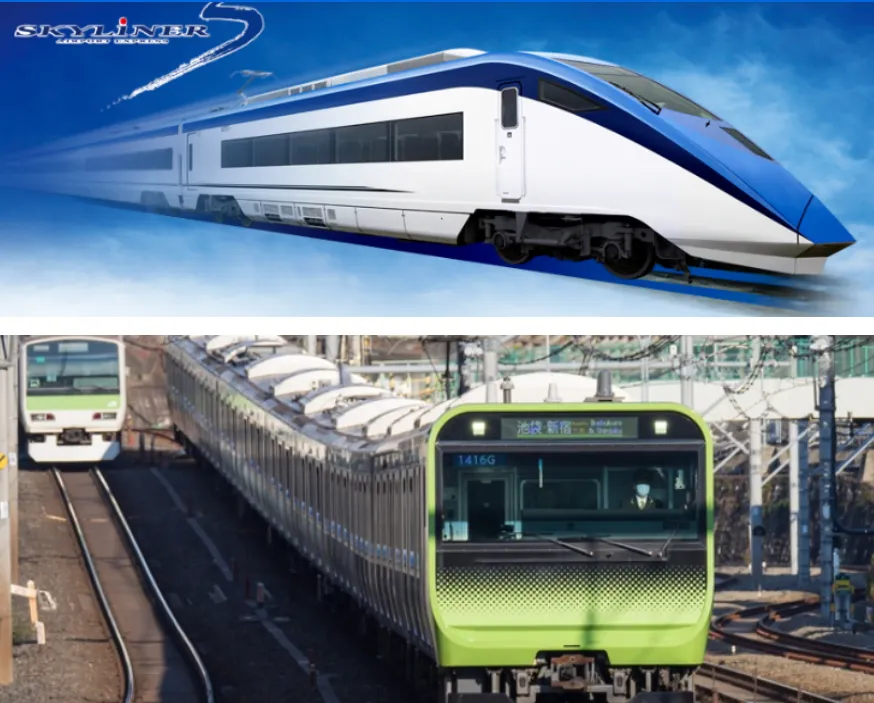
If your top priority is getting to Shinjuku in the shortest possible time, the private Keisei Skyliner is the way to go. While it doesn't go directly to Shinjuku, its speed makes the one-transfer journey the quickest overall.The Skyliner whisks you from the airport to Nippori Station in just 45-50 minutes . From there, you'll make a quick and easy transfer to the JR Yamanote Line (a loop line) for the final 10-15 minute ride to Shinjuku Station.
It's a premium, comfortable train with all reserved seats and plenty of luggage space . While the single transfer at Nippori is very straightforward, it's something to be aware of if you are traveling with a lot of luggage or are feeling overwhelmed after a long flight.
✔️Pros:
-
Fastest overall route.
-
Slightly cheaper than Narita Express.
-
Frequent departures.
❌Cons:
-
Requires a transfer.
-
Less convenient with heavy luggage.
Key Details:
-
The Route: Take the Keisei Main Line (Commuter train) to Nippori Station, then transfer to the JR Yamanote Line to Shinjuku.
-
Travel time: about 65–80 minutes (40 mins on Skyliner + 20 mins on Yamanote Line + transfer time)
-
Price: about ¥2,800 total (¥2,580 for Skyliner + ¥200 for JR)
-
Transfers: 1 (at Nippori)
-
Departure frequency: approximately every 20-40 minutes
How to Book:
To book the Skyliner + JR Yamanote Line combo, you are essentially dealing with two different train companies: Keisei (Skyliner) and JR East (Yamanote Line).The most efficient way to handle this is a "hybrid" approach.
1) Book the Skyliner Ticket (First Leg)
The Skyliner requires a reserved seat. Buying it online in advance is highly recommended as it saves you about ¥270.
-
Official Keisei Website: Use the Keisei Skyliner e-ticket site. You’ll receive a QR code.
-
Third-Party (Klook/KKday): Often has similar discounts. You also get a QR code.
-
At Narita: You can use the blue Keisei ticket machines or the "Skyliner & Keisei Information Center."
2. Prepare for the JR Yamanote Line (Second Leg)
The JR Yamanote Line is a local loop line. It does not have reserved seats and you cannot "book" it in advance. You simply pay as you go.
-
The Best Way: Use a digital Suica, PASMO, or ICOCA on your phone (Apple Wallet/Google Pay).
-
Alternative: Buy a physical Suica/PASMO at Narita Airport or a single paper ticket for ¥200 at the transfer station.
3) The Transfer at Nippori Station (The Critical Step)
This is where most people get confused. You don't need to exit the station to switch trains; you use a Transfer Gate.
-
Arrive at Nippori: Get off the Skyliner and follow the yellow "JR Lines" signs.
-
The Gate: You will reach a row of ticket gates that connect the Keisei and JR platforms.
-
The Action:
- If you have a paper Skyliner ticket + IC Card: Insert your paper ticket into the slot first, then immediately tap your Suica/PASMO on the reader. The gate will swallow your Skyliner ticket and "start" your JR journey on your phone.
-
If you have two paper tickets: Insert both into the slot together.
-
Board JR: Head to the platform for the JR Yamanote Line (for Ikebukuro/Shinjuku).
🔔Pro Tips:
-
❶ Skip the Paper: If you buy the Skyliner ticket online, you can now use QR Code ticket machines at Narita to print your seat assignment in seconds, rather than waiting in the long manned counter lines.
-
❷ Face Check-in Go: Keisei has introduced facial recognition boarding on some routes—if you register your face during the online purchase, you can breeze through specific gates without even pulling out your phone.
-
❸ Luggage: The Skyliner has large luggage racks; the Yamanote Line does not. If you have huge bags, try to avoid the Yamanote Line during rush hour (8:00–9:30 AM).
3. The Best Choice with Luggage: Airport Limousine Bus
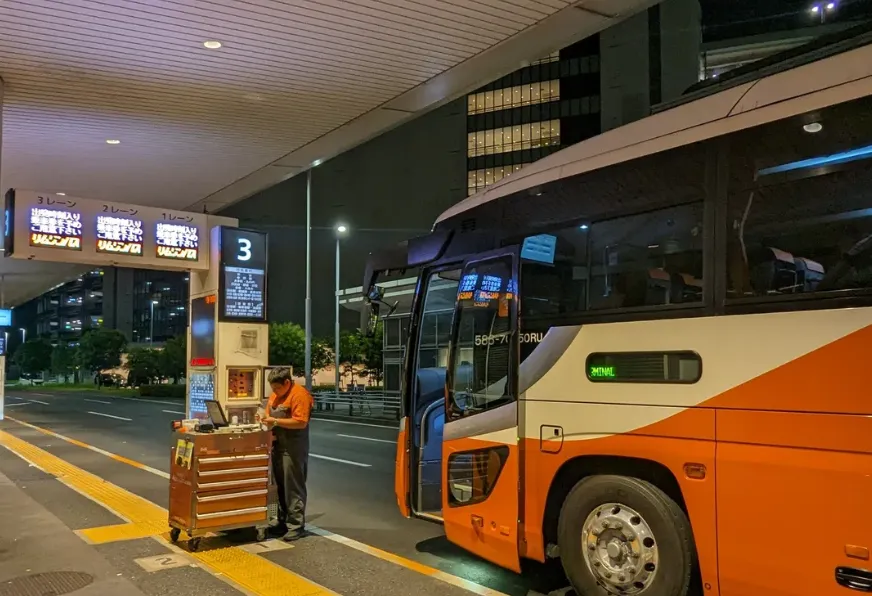
The Airport Limousine Bus (Tokyo) runs direct services from Narita Airport to major hotels and transportation hubs in Shinjuku.The bus is popular because it drops passengers near major hotels and luggage is handled by staff. While it is the most expensive and subject to traffic, it is the only option that drops you directly at the door of major Shinjuku hotels. If you have three suitcases and a toddler, this is often the "real" easiest way.
✔️Pros:
-
No transfers.
-
Easy with large luggage.
-
Direct hotel stops.
❌Cons:
-
Slower during rush hour.
-
Traffic delays possible.
Key Details:
-
The route: Buses depart directly from each airport terminal and take you to Shinjuku Station West Exit or, more conveniently, directly to the entrance of many major hotels in the area, such as the Keio Plaza Hotel, Shinjuku Washington Hotel, and others.
-
Travel time: about 90–120 minutes,depending on Tokyo traffic
-
Price: about ¥3,200–¥3,600
-
Transfers: none
-
Departure frequency: Buses run frequently from early morning until late at night
How to Book:
1) Online via "LimoBus Web"
The official Limousine Bus Reservation site is the most flexible option.You can book from one month in advance up until 5 minutes before departure.You will receive a QR code. You do not need to print a paper ticket; just show the QR code to the staff at the bus stop or scan it at the boarding gate.
2) Via Third-Party Platforms
This is often the preferred method for international travelers because it’s usually slightly cheaper and uses your home currency.In 2026, many Klook/KKday tickets are now Direct Entry QR codes. Check your voucher—if it says "Direct Boarding," you can go straight to the bus stop. If not, you’ll need to scan it at a ticket machine in the airport arrival hall to get your physical seat assignment.
3) At the Airport
If you aren't sure how long immigration and customs will take, just wait until you land.Look for the bright orange "Limousine Bus" counters in the arrival lobby of Terminals 1, 2, or 3.There are automated machines right next to the counters that take credit cards and IC cards (Suica/PASMO).Tell the staff your hotel name or "Shinjuku Station." They will give you a ticket with a specific departure time and the number of the bus stop (usually right outside the door).
💡A Few Important Reminders:
-
❶ Luggage Allowance: Be mindful of the luggage limits. Each passenger is typically allowed two suitcases with a total weight under 30kg and maximum dimensions of 50 x 60 x 120 cm.
- ❷ Peak Travel Times: If you are traveling during Japanese holidays or peak seasons, it is highly recommended to book online in advance, as buses can fill up quickly.
Pro Tips for a Smooth Arrival
-
Beat the Crowds: If possible, try to avoid arriving during Tokyo's rush hours (weekdays from 7:30-9:00 AM and 5:30-7:30 PM). Trains, especially the JR Yamanote Line, can become incredibly crowded.
-
Get an IC Card: Purchase a rechargeable IC card like Suica or PASMO at the airport. These cards can be used to pay for almost all trains, subways, and buses, and even at convenience stores. It will save you the time and hassle of buying individual tickets.
-
Ship Your Luggage: Consider using a "Takkyubin" (luggage delivery) service. For around ¥2,000 per bag, you can have your suitcases delivered directly from the airport to your hotel. You can then travel to Shinjuku unencumbered, with just a daypack. Your luggage will likely arrive at your hotel by evening.
-
Stay Connected: Ensure you have internet access upon landing. You can rent a pocket Wi-Fi device, purchase a prepaid SIM card at the airport, or get an eSIM before you travel. This is invaluable for using Google Maps or transit apps to navigate.