Navigating Japan's vibrant Kansai region doesn't have to break the bank. If you're planning to explore the historic temples of Kyoto, the neon-lit streets of Osaka, and the scenic slopes of Mt. Koya, the Kansai Railway Pass might be your most valuable travel companion. Unlike traditional rail passes, this flexible transport ticket offers unlimited rides on private railways and subways over non-consecutive days, allowing you to tailor your itinerary to your own pace. In this article, you’ll discover how Kansai rail passes work, who they’re best for, and how to maximize value while exploring western Japan.
What is the Kansai Railway Pass?
➤ Validity: Available as 2-day or 3-day options, which can be used on non-consecutive days.
➤ Eligibility: Foreign tourists visiting Japan with a "Temporary Visitor" entry status (stamp or sticker in passport).It can also be purchased by certain Japanese nationals living abroad under specific conditions.
➤ Coverage: Unlimited, non-JR, non-Shinkansen travel throughout the Kansai region, including, but not limited to: Kintetsu, Nankai, Hankyu, Hanshin, Keihan, and Osaka/Kyoto/Kobe subways.
➤ Benefits: Discounts at select tourist attractions, shops, and facilities.
The Kansai Railway Pass (launched in April 2024 as the successor to the famous Kansai Thru Pass) is a special discount rail pass offered by JR West (West Japan Railway Company) for foreign tourists visiting Japan on a temporary visitor visa.It offers unlimited travel on many private railway lines and subways within the Kansai region (including major cities like Osaka, Kyoto, Kobe, Nara, Himeji, Wakayama, and Shiga), typically for 2 or 3 days of your choice within the validity period.It excludes JR lines but offers discounts at over 350 attractions. The defining feature of this pass is its flexibility: unlike most JR passes, it can be used on non-consecutive days (e.g., Monday, Wednesday, and Friday) within its validity period.
1. Key Features & Coverage
-
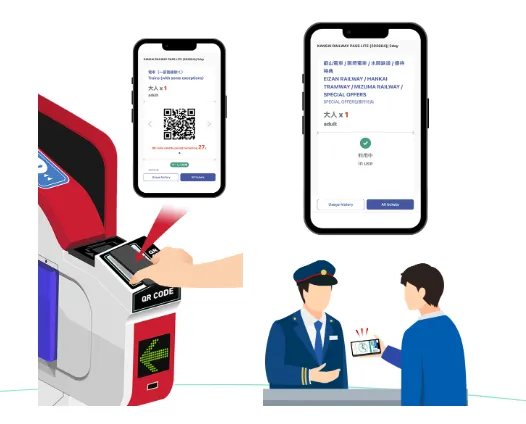
The pass is all you need to enjoy all metro and private railways across Kansai. You do not need to purchase a ticket every time and transit is also easy.
-
The pass comes with special offers at major facilities and stores along the railways.
-
The pass can be used from Nankai Railways' Kansai Airport Station, on arrival at the Kansai International Airport. (A separate fee is required for express train Rapi:t.)
✅ Major Covered Routes & Destinations:
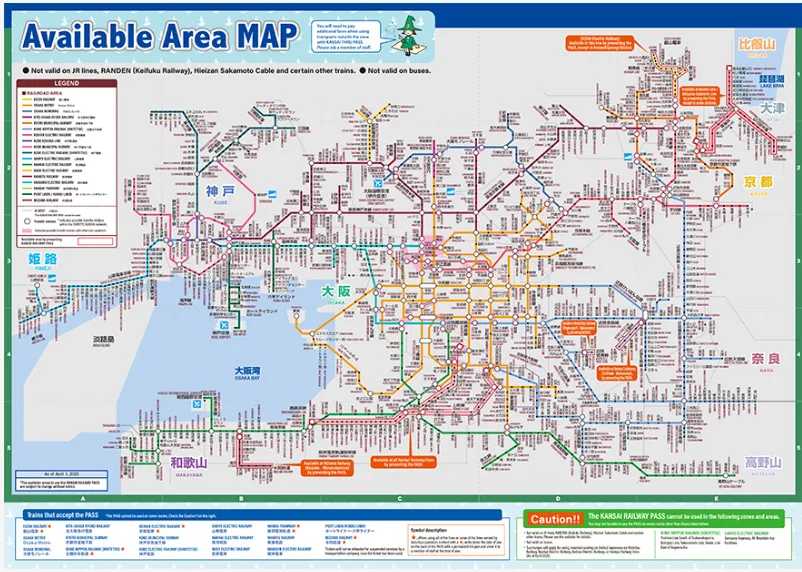
The pass is primarily for non-JR lines. It covers about 80% of the rail network in the region.
-
Osaka Metro (All subway lines)
-
Hankyu Railway (Osaka ↔ Kyoto ↔ Kobe)
-
Hanshin Railway (Osaka ↔ Kobe)
-
Keihan Railway (Osaka ↔ Kyoto/Uji)
-
Kintetsu Railway (Osaka ↔ Nara ↔ Kyoto)
-
Nankai Railway (Osaka ↔ Kansai Airport ↔ Koyasan)
-
Sanyo Railway (Kobe ↔ Himeji)
-
Osaka Monorail & Kobe Municipal Subway
❌ NOT Covered:
-
JR, RANDEN (KEIFUKU RAILROAD),HIEIZAN SAKAMOTO CABLE and some other trains are not available.
-
Buses are not available.
-
Shinkansen: High-speed bullet trains are never covered by this pass.
Available Are Map
2. Pass Types & Prices
The pass is sold for two durations:
|
Price |
Sales period |
Validity |
|
|
2-Day Pass |
Adult / 5,200 yen |
March 25, 2026 |
April 1, 2026 |
|
3-Day Pass |
Adult / ¥ 6,500 yen |
-
As long as the pass has not expired, it can be used on non-consecutive days. (For instance, you can use the 3-day PASS for three days on Monday, Wednesday, and Friday.)
-
In Japan, each person can purchase up to three passes.
How to Buy the Pass?
You can purchase the Kansai Railway Pass either online before you arrive or in person once you are in Japan. Because it is a tourist-only pass, you must have your passport (with a "Temporary Visitor" stamp) ready for both purchase and redemption.
1. Purchase Online (Recommended)
Buying online is often the easiest way to secure the pass.Many travel platforms like Klook and other online ticket sellers offer the pass for purchase before you arrive in Japan and sometimes offers a slight discount compared to the "in-person" price.After payment, you’ll receive an e-voucher with a QR code via email.
-
Where to buy: Official partners include Klook, KKday, Rakuten Travel Experiences, WAUG or Japan Experience.
-
Process:
-
Book your pass and receive a QR code voucher via email.
-
Once you arrive in Japan, take that QR code and your passport to a designated exchange counter (see below) to get your physical ticket.
-
2. Purchase In-Person (In Japan)
If you prefer to wait, you can buy the pass directly at several locations across the Kansai region.You must show your passport at purchase.
-
Airports:
-
Kansai International Airport (KIX): Kansai Tourist Information Center (Terminal 1, 1F).
-
Osaka Itami Airport: Information counters.
-
-
Major Stations:
-
Osaka/Umeda: Hankyu Tourist Center or Osaka Metro Commuter Pass sales counters.
-
Namba: Osaka Metro Commuter Pass counters or the EDION Namba Main Store (8th Floor).
-
Kyoto: Kyoto Tower (Kansai Tourist Information Center) or the Bus Information Center near Kyoto Station.
-
-
Retail Stores: Selected Don Quijote stores (Dotonbori, Umeda) and BicCamera locations also sell the physical pass.
‼️ Important Reminders:
-
Passport Required: You cannot buy or exchange this pass with just a copy of your passport; they need to see the physical document and your entry sticker.
-
Limits: Each traveler is allowed to purchase up to three passes at a time (e.g., three 3-day passes for a long trip).
-
Non-JR: Remember, you cannot buy or exchange this at JR Ticket Offices (Midori no Madoguchi). Look for the private railway or tourist information signs instead.
How to Use the Pass?
🚉 Using the Pass for Train & Subway Rides
Using the Kansai Railway Pass is straightforward, but it works differently than the tap-to-pay IC cards (like Suica or Icoca) you might be used to. Because it is a magnetic paper ticket, you will be inserting it rather than tapping it.
-
Insert the pass in the ticket gate with the arrow on the front pointing forward.
-
The day of travel and the name of the station where you begin your travel will be printed on the back of the pass. One day is counted as the duration from the first train to the last train in a day (not for 24 hours from the first use).
-
Insert the ticket in the ticket gate when exiting. Be sure to take your pass with you once you have passed.
-
Some ticket gates are not automated. In such a case, please note the date of use on the back of the pass with a permanent ink pen and show it to an attendant.
-
If the pass becomes unusable due to magnetic strip failure during the journey, the following stations will reissue a new pass.
Stations where the pass can be reissued:
|
Osaka Metro |
All stations |
|
Osaka Monorail |
Osaka-Airport Station |
|
Kita-Osaka Kyuko Railway |
Senri Chuo Station |
|
Kyoto Municipal Subway |
AII subway staitons / Bus Ticket Center in front of Kyoto Station |
|
Kintetsu |
Osaka Namba Station / Osaka Uehommachi Station / Tsuruhashi Station / Yamato Yagi Station / Kintetsu Nara Station / Kyoto Station / Tenri Station / Osaka Abenobashi Station |
|
Keihan Electric Railway |
Yodoyabashi Station / Kyobashi Station / Hirakatashi Station / Sanjo Station / Demachiyanagi Station / Biwako-Hamaotsu Station |
|
Kobe Municipal Subway |
Sannomiya Station / Shin-Kobe Station |
|
Kobe Electric Railway |
Sannomiya Station / Shin-Kobe Station |
|
Nankai Electric Railway |
Namba Station / Shin-Imamiya Station / Kishiwada Station / Wakayamashi Station / Kansai Airport Station / Sakai Higashi Station / Kawachi Nagano Station / Koyasan Station |
|
Hankyu Railway |
Osaka-Umeda Station / Kobe-sannomiya Station / Kyoto-Kawaramachi Station |
|
Hanshin Electric Railway |
Osaka-Umeda Station / Amagasaki Station / Koshien Station / Mikage Station / Kobe-sannomiya Station / Shinkaichi Station |
|
Sanyo Electric Railway |
Itayado Station / Sanyo Tarumi Station / Sanyo Akashi Station / Sanyo Himeji Station |
🚉 Using the Pass for Special Offer at Facilities
To use the 350+ discounts at shrines, museums, and shops, you don't "swipe" the card. You simply show the physical pass to the staff at the ticket counter or register.Many people forget this part, but it can save you 100–500 yen at almost every major temple in Kyoto!
-
The special offers from facilities are valid only on the day the pass is used.
-
Special offers are valid for only one person per pass.
-
For more details, such as business hours, contact the facilities of the special offer.
>>Guide to facilities offering perks
Is the Pass Worth for You?
This pass is ideal if your itinerary focuses on city-hopping and you want to avoid the "consecutive day" pressure of other passes. To make the 3-day pass (¥7,000) pay off, you need to spend about ¥2,333 per day on trains.
✅ Best for:
-
Koyasan Trips: The Nankai line and cable car to Mt. Koya are expensive; the pass covers most of this.
-
Himeji Day Trips: Taking the Sanyo railway from Osaka/Kobe to Himeji is a long, pricey haul that makes the pass value soar.
-
Multi-City Days: If you plan to visit Nara in the morning and Kyoto in the evening, the flexibility is excellent.
❌ Not for:
-
Staying within one city: If you are only staying in Osaka, a simple ¥820 "Enjoy Eco Card" (day pass) is much cheaper.
-
Speed lovers: JR Special Rapid trains are often 15-20 minutes faster than private lines for the Osaka-Kyoto route.
⚠️ Note: If you plan on traveling long distances quickly (like to Himeji or Okayama), a JR Kansai Area Pass might be better, as it allows you to use the faster JR Special Rapid trains and the Haruka Express.
Quick Q & A
How do I activate a travel day?
The first time you use the pass on a day, the date gets stamped/printed. That counts as one travel day.
Do the travel days run 24 hours?
No. Travel days are based on calendar days — from your first train of the day until the last train that same day.
Can I use it on JR trains?
No. The pass does not include JR lines like the Osaka Loop Line or Haruka Airport Express — you’d need a JR pass or separate ticket for those.
Can I use it to get to the airport?
Yes. You can use it on the Nankai Railway from Kansai Airport (KIX) to Osaka (Namba).
-
Standard Express: Fully covered.
-
Rapi:t (Limited Express): Covered for the base fare, but you must pay an extra 520 yen for the reserved seat.
Is there a child version?
Yes. Children aged 6–11 can purchase the pass for exactly half the adult price. Children under 6 usually travel for free on Japanese trains as long as they don't occupy a reserved seat.
Can I go to Universal Studios Japan (USJ)?
Technically no. The station for USJ (Universal City Station) is only served by JR. You would have to take a private line or subway to the nearest non-JR station (like Nishikujo or Sakurajima) and pay a small extra fare for the final JR leg.
‼️In a Nutshell:
The Kansai Area Pass is a cost-effective, consecutive-day pass for unlimited travel on JR West trains around the Kansai region, ideal for tourists making intercity journeys over a few concentrated days.Before buying, always map out your planned trips on a fare calculator to see if the pass price is less than the sum of individual ticket costs.