Let's be honest—train travel in Japan can put a serious dent in your wallet. For savvy explorers looking to stretch their yen without sacrificing comfort, the country’s intercity coach system is the ultimate game-changer. More than just a budget hack, riding these long-distance coaches offers a window into everyday Japanese life that you won’t find on a rail pass.Whether you’re planning a night transfer or a scenic daytime ride, understanding how the system works can save both time and money. This guide breaks down reservation methods, luggage rules, and key operators, ensuring that your next journey between cities is as smooth as the asphalt below—without the premium price tag of the railway.
What is Highway Bus?
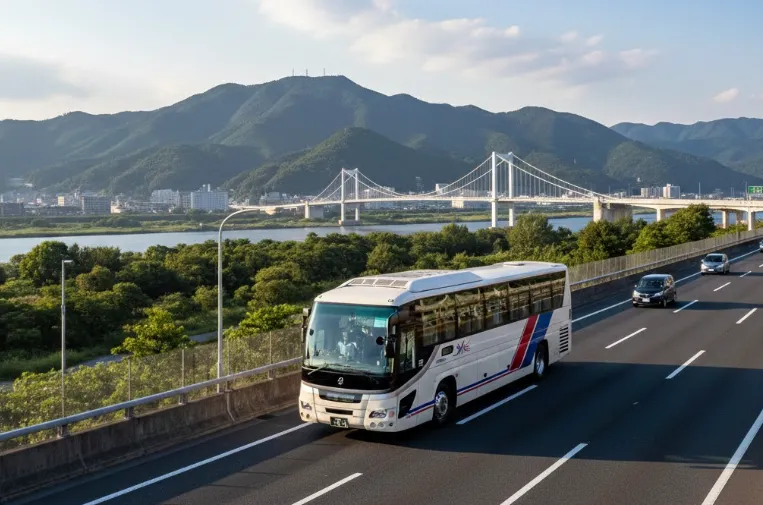
Highway buses in Japan, known as kōsoku bus (高速バス), are an integral part of the country's transportation network. These buses primarily operate on Japan's extensive expressway system, offering both daytime and overnight services. With the significant price increases for the Japan Rail (JR) Pass, highway buses have become the most cost-effective way to travel between Japanese cities. Despite being much slower than express trains, highway buses are considerably cheaper, with discount fares available on competitive routes. Moreover, overnight buses offer the added benefit of saving on a night's accommodation. Imagine falling asleep in one city and waking up at your destination, ready to start your day of exploration. This dual-purpose travel can be particularly appealing for those looking to maximize their time and budget in Japan.
Highway Bus vs City Bus
|
Feature |
Highway Bus |
City Bus |
|
Distance |
Long-distance |
Short-distance |
|
Stops |
Few |
Many |
|
Seat Reservation |
Required |
Not required |
|
Luggage Storage |
Yes |
Limited |
|
Comfort Level |
High |
Basic |
Unlike city buses that stop frequently, highway buses:
-
Travel longer distances (100–1,000+ km)
-
Use expressways for faster travel
-
Have fewer stops
-
Offer reserved seating
-
Provide more comfortable seats
Key Features of Highway Bus
1. Long-Distance Travel
Highway buses connect major cities and regions, such as:
Tokyo ↔ Osaka
Tokyo ↔ Kyoto
Osaka ↔ Fukuoka
Nagoya ↔ Takayama
They bypass local traffic by using high-speed toll roads. They only stop at major transport hubs (like Shinjuku "Busta" or Tokyo Station) and specialized "Bus Stops" located directly on the highway.
2. Comfortable Seating
Since journeys can last 3 to 10 hours, these buses are built for comfort. Even "Standard" buses have reclining seats, and "Premium" buses can feel like first-class airplane pods.Compared to regular city buses, highway buses usually include:
-
Reclining seats
-
Footrests
-
Power outlets (on many routes)
-
Overhead luggage space
-
Under-bus storage for large suitcases
-
Some premium buses offer:
-
3-seat layouts for extra space
-
Privacy curtains
-
Onboard toilets
3. Reserved Tickets
Seats are typically reserved in advance. You can book online, at bus terminals, or sometimes at convenience stores.
4. Day & Overnight Options
There are two main types:
-
Daytime Buses: Best for shorter trips (2–5 hours). You get to see the Japanese countryside and save money compared to local trains.
-
Overnight Buses: Best for long distances (e.g., Tokyo to Hiroshima).
-
Pros: Saves you the cost of one night’s hotel; arrives early in the morning so you don’t waste a day traveling.
-
Cons: Can be difficult to sleep if you aren't used to it; limited legroom in "Standard" 4-seat row buses.
-
Overnight services are popular for saving hotel costs.
5. Female-Friendly Features
Japan is world-class in making bus travel feel safe for solo female travelers:
-
Women-Only Rows: On many 4-row buses, the back half is reserved for women. Even if not a dedicated row, the booking system will always pair a female passenger with another female in the adjacent seat.
-
Ladies-Only Buses: Some routes consist entirely of "Ladies-Only" vehicles with extra-large powder rooms and mirrors.
Pros and Cons of Highway Bus Travel in Japan
Choosing a highway bus over the Shinkansen is a classic trade-off between time and money. While it’s the most cost-effective way to traverse Japan, it requires a bit more physical stamina and planning.Here are the pros and cons to help you decide for your trip:
|
Pros |
Cons |
|
Unbeatable Savings: Bus fares are often 30–60% cheaper than Shinkansen tickets.You can often travel from Tokyo to Osaka for ¥3,000–¥5,000, whereas the Shinkansen is consistently ¥14,500+. |
The Time Sink: A 2.5-hour Shinkansen trip takes 8–10 hours by bus. If your trip to Japan is short (e.g., 7 days), spending 20% of your time on a bus might not be worth the savings. |
|
Extensive Route Coverage: Many regional cities and tourist destinations have direct bus connections even if they lack Shinkansen access. |
Sleep Quality: Even with "luxury" seats, sleeping on a moving vehicle is difficult for many. You may arrive at your destination feeling "bus-lagged" and exhausted. |
|
Direct Access: Buses often go directly to spots that trains don't serve well, like Kawaguchiko (Mt. Fuji), Shirakawa-go, or specific theme parks like Universal Studios Japan. |
Traffic & Weather Risks: Unlike the Shinkansen, which is 99% on time, buses are subject to highway traffic and accidents. During winter, mountain passes can close, and during Golden Week (late April/early May), 10-hour trips can turn into 15-hour crawls. |
|
Overnight Travel Option: Taking an overnight bus saves you the cost of one night’s hotel. You go to sleep in one city and wake up at your destination at 6:00 or 7:00 AM, ready to start your day. |
Rigid Schedule: Most buses have only 1–2 departure times for specific routes, whereas the Shinkansen runs every few minutes. |
|
Flexible Seat Options: From standard 4-seat rows to luxury private-seat layouts. |
Luggage Restrictions: Most companies strictly limit you to one large suitcase in the trunk. If you are a heavy shopper, the train is much more forgiving. |
|
Modern Amenities: Most include free Wi-Fi, power outlets/USB ports, blankets, and onboard toilets. |
|
|
High-End Comfort Options: Forget cramped school buses. Many Japanese buses offer "3-row independent seats" with privacy curtains, charging ports, and even "Full-Flat" sleeper pods (like the new FLATON service launched in 2026). |
Seat Types & Comfort Levels
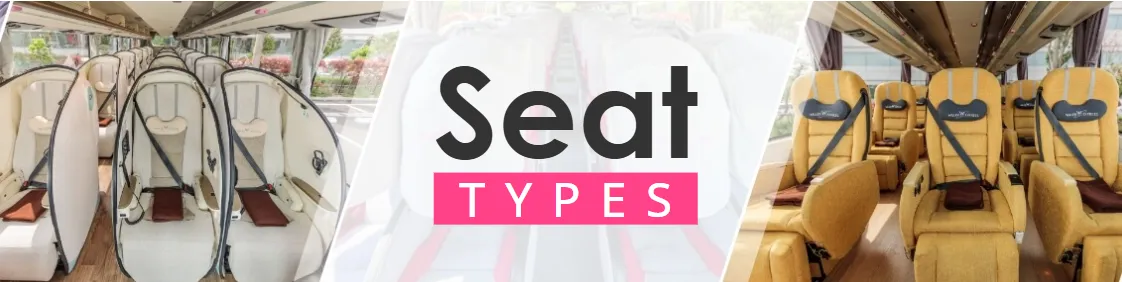
In Japan, highway bus seat types are as varied as airline cabin classes.Choosing the right "seat map" is crucial for a good night's sleep.Here is the breakdown of what to expect from your seat and the bus environment.
1. The Economy Tier: 4-Row Standard
-
The Setup: 2+2 configuration (two seats on each side of a single aisle).
-
Best For: Budget-conscious travelers and daytime trips under 4 hours.
-
Comfort: Similar to a standard economy seat on a plane. Legroom can be tight for those over 180cm.
-
Key Features: Reclines about 120°, usually has a USB/power outlet and a footrest.
🔔Tip: Look for "Extra Legroom" 4-row buses; they have fewer rows (9–10 instead of 11–12), offering significantly more pitch.
2. The Smart Choice: 3-Row Independent (1-1-1)
-
The Setup: Three separate columns of seats with two aisles in between.
-
Best For: Solo travelers and overnight journeys.
-
Comfort: Since each seat is independent, you don't have a neighbor. You can access the aisle from either side.
-
Privacy: Most include floor-to-ceiling curtains that wrap around your seat, turning it into a semi-private pod.
-
Recline: Usually deep, around 140°.
3. The "Business Class": Specialty Shell Seats
Companies like Willer Express have patented unique seat designs that are famous across Japan:
-
The "Relax" Seat: A 4-row seat featuring a Canopy (Hood). It’s a literal dome you pull over your head to hide your face while you sleep—highly popular with female travelers.
-
The "Reborn" Seat: A 3-row seat enclosed in a hard shell. When you recline, the seat slides forward inside the shell so you never bother the person behind you. These offer a near-flat 155° recline and a retractable table.
4. The "First Class": Premium Sleeper Pods
These are essentially "moving hotels" and can sometimes cost more than a Shinkansen ticket.
-
Dream Sleeper: Offers 11 completely private rooms with actual doors. Features include "zero-gravity" reclining, high-end headphones, and a dedicated powder room.
-
Grace Liner / VIP Liner Premium: Features include high-res monitors, massage functions, and memory foam seating.
🔸Comfort Breakdown Comparison:
|
Seat Type |
Space |
Recline |
Privacy |
Sleep Comfort |
Best Use |
|
4-Row Standard |
Normal |
Basic |
No |
⭐☆☆☆☆ |
Short / budget trips |
|
3-Row Independent (1-1-1) |
Above average |
Good |
Partial |
⭐⭐☆☆☆ |
Medium trips |
|
The "Business Class" |
Spacious |
Strong |
Yes |
⭐⭐⭐⭐☆ |
Long / overnight |
|
The "First Class" |
Extra-spacious |
Very deep |
Yes |
⭐⭐⭐⭐⭐ |
Overnight / top comfort |
Major Highway Bus Companies
There exist dozens of highway bus companies in Japan, including the former state-run JR Bus companies, many regional bus companies and discount bus operators.All buses have air con/heaters, comfortable seats, and space for at least one suitcase (luggage policy depends on the bus company).
A. Nationwide & Large Network Operators
1. JR Bus Group
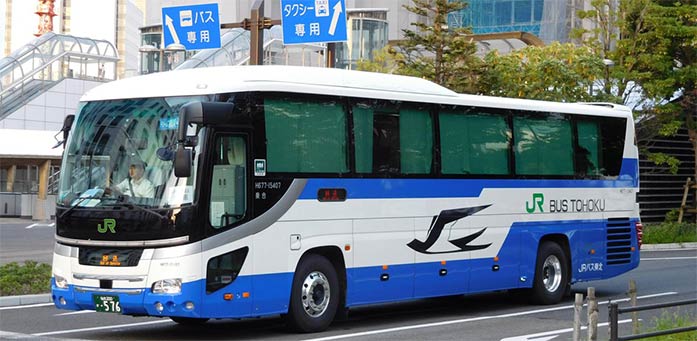
Highway bus network operated by regional JR Bus companies (e.g., JR Bus Kanto, JR Hokkaido Bus, JR Tokai Bus, West Japan JR Bus / 西日本ジェイアールバス). They offer many intercity routes linked to major JR stations.While not as inexpensive as discount buses, JR buses still offer relatively affordable fares compared to express trains. Ticket purchases for many routes are available at JR railway stations across Japan and some routes also provide online English reservation options.
-
Best For: Reliability and convenience. They always depart from major JR train stations, making transfers easy.
-
Key Feature: The "Dream Sleeper" and "Gran" class buses. While expensive, they offer private rooms or 2-column seating that rivals first-class air travel.
2. WILLER TRAVEL (Willer Express)
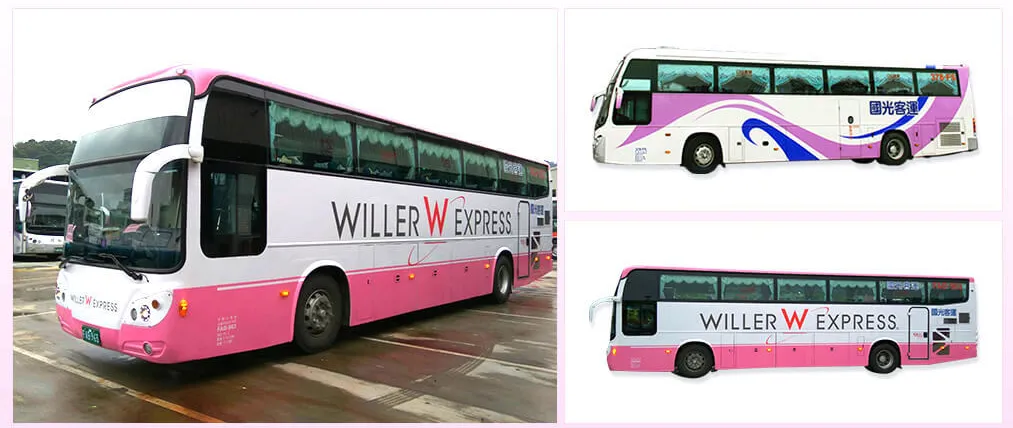
One of Japan's most recognizable private highway bus companies with routes covering much of Honshu and Kyushu. They are famous for their pink buses and traveler-friendly features.Popular with both Japanese and foreign travelers due to its English booking site and Japan Bus Pass options.
-
Best For: Solo travelers, women, and those who want a "premium" experience on a budget.
-
Key Feature: Their unique seats, like the "Relax" (with a personal hood to cover your face while sleeping) and "Luxia" (with wooden flooring and extra-wide seats).
B. Major Regional & Private Bus Companies
Many routes are dominated by companies that specialize in specific areas. These are often the only way to reach certain scenic spots.
|
Company |
Main Region / Specialty |
Key Routes |
|
Keio Bus |
Central Japan / Alps |
Shinjuku to Mt. Fuji, Matsumoto, and Takayama. |
|
Alpico Kotsu |
Nagano / Japanese Alps |
The primary operator for hikers going to Kamikochi or Hakuba. |
|
Meitetsu Bus |
Nagoya & Chubu |
Dominates the routes around Nagoya and central Japan. |
|
Nishitetsu Bus |
Kyushu |
Operates one of the world's most extensive bus networks centered in Fukuoka. |
|
Keisei Bus |
Chiba & Tokyo |
Famous for the "Airport Limousine" and budget buses to Narita Airport. |
Main Highway Bus Routes & Approx. Prices
Here’s a guide to the main highway bus routes in Japan with typical price ranges and travel times — useful for planning your intercity travel. Because highway bus fares vary by operator, season, seat type, and booking timing, these are approximate ranges.
1. The "Golden Route" (Kanto to Kansai)
These are the most competitive routes in Japan, with dozens of departures daily.
|
Route |
Duration |
Typical Fare (Standard) |
Premium/Sleeper Fare |
|
Tokyo ↔ Osaka |
8–9 hours |
¥3,200 – ¥5,500 |
¥10,000 – ¥18,000 |
|
Tokyo ↔ Kyoto |
7–8 hours |
¥3,200 – ¥5,000 |
¥9,000 – ¥15,000 |
|
Tokyo ↔ Nagoya |
5–6 hours |
¥2,400 – ¥4,500 |
¥7,000 – ¥9,000 |
2. Popular Day Trips from Tokyo
These routes are usually serviced by frequent daytime buses and are great for travelers without a rail pass.
-
Tokyo ↔ Kawaguchiko (Mt. Fuji): ¥2,200 flat rate. Takes about 1h 45m.
-
Tokyo ↔ Hakone: ¥2,000 – ¥2,500.
-
Tokyo ↔ Nikko: ¥2,500 – ¥3,500.
-
Tokyo ↔ Narita Airport: ¥1,300 – ¥1,500 (via the "Low-Cost Bus" services).
3. Regional Hub Connections
If you are exploring beyond the main cities, these routes offer massive savings over the Shinkansen.
|
Route |
Duration |
Typical Fare |
|
Tokyo ↔ Sendai |
5.5 hours |
¥3,000 – ¥4,500 |
|
Tokyo ↔ Kanazawa |
7.5 hours |
¥3,900 – ¥6,000 |
|
Tokyo ↔ Hiroshima |
12 hours |
¥5,500 – ¥9,000 |
|
Osaka ↔ Hiroshima |
5 hours |
¥2,800 – ¥4,500 |
|
Osaka ↔ Fukuoka |
9 hours |
¥3,900 – ¥7,000 |
|
Nagoya ↔ Takayama |
2.5 hours |
¥3,500 |
🔔Summary Tips:
-
Book 30 Days Early: Most operators offer "Early Bird" discounts that can save you an additional 20%.
-
The "Friday Night" Surcharge: Weekend night buses (departing Friday or Sunday evening) are often double the price of a Tuesday night bus.
-
Check "Busta Shinjuku": For almost any route departing Tokyo, this is your primary terminal. It’s located directly above Shinjuku Station's New South Exit.
How to Book Tickets?
Booking a highway bus in Japan is straightforward once you know which "lane" to take. You can book online (recommended), at a ticket counter, or even at a convenience store.
A. Online Booking (Best for Travelers)
Online booking is the standard. Most sites allow reservations from one month in advance.Several platforms offer streamlined English interfaces and international credit card support.
|
Operator / Site |
Best For |
Features |
|
Foreign tourists & Comfort |
English site, unique seat designs (hoods for privacy), and their own "Willer Terminals." |
|
|
Nationwide coverage |
Aggregates many local and JR bus lines. Excellent for off-the-beaten-path routes. |
|
|
Mt. Fuji & Central Japan |
The go-to for Shinjuku to Kawaguchiko or Matsumoto. |
|
|
Reliability |
Operated by Japan Railways. You can often buy these at JR station ticket counters. |
The Process:
-
Select your route, date, and seat type.
-
Pay via Credit Card (Visa, Mastercard, JCB, Amex).
-
You will receive an e-ticket via email.
🔔Tip: Some companies require you to print the PDF "Web Ticket," while others accept a "Mobile Ticket" on your screen. Check the email carefully!
B. At Ticket Counters (Best for Last-Minute)
If you prefer to pay in cash or want to speak to a human, head to a major bus terminal.
-
Where to go: Look for the "Highway Bus" window at major hubs like Busta Shinjuku (Tokyo), the JR Highway Bus Terminal near Tokyo Station, or the Umeda Ticket Center (Osaka).
-
How it works: You can buy tickets for immediate departure (if seats are available) or for a future date. Most counters accept credit cards and IC cards (Suica/Pasmo) in addition to cash.
C. Convenience Stores (The "Local" Way)
You can book and pay at 7-Eleven, Lawson, and FamilyMart using their multi-media terminals (like Loppi or FamiPort).
-
Pros: Great if you want to pay cash for an online reservation.
-
Cons: The machines are often Japanese-only.
-
How to do it: If you reserved online and chose "Convenience Store Payment," you’ll get a Payment Code. Take that code to the machine, print a slip, and pay the cashier within 30 minutes. The cashier then hands you your actual ticket.
🔸Key Booking Tips:
-
Dynamic Pricing: Bus prices now fluctuate based on demand. Booking a Tuesday trip three weeks early will be much cheaper than a Friday night departure booked the same day.
-
The "Convini" Trap: If you pay at a convenience store and later need a refund, it can be very difficult for travelers because many companies will only refund to a Japanese bank account. Stick to credit card payments for easier refunds.
-
Check the Terminal: "Tokyo Station" has multiple bus stops on different sides of the station (Yaesu vs. Marunouchi). Always check the specific map provided in your confirmation email.
How to Board a Highway Bus in Japan?
Boarding a highway bus in Japan is a very orderly process, but it can be intimidating the first time because of how precise it is. Here is exactly what you need to do to ensure you don't miss your ride.
1. Locate Your Terminal
Major cities have massive bus hubs. Don't just go to "the station"; check your ticket for the specific terminal name.
-
Tokyo: Usually Busta Shinjuku (4th floor) or the Tokyo Station Yaesu Exit terminals.
-
Osaka: Usually Willer Terminal Umeda or OCAT (Namba).
-
Arrival: Aim to be at the terminal 20 minutes before departure. Buses do not wait for late passengers—even by 30 seconds.
2. Find Your Gate/Platform
Inside the terminal, look at the digital departure boards (usually available in English).
-
Find your Bus Name (e.g., Willer Express 502) and Destination.
-
Note the Platform Number.
-
Pro-Tip: If you are at a large hub like Busta Shinjuku, there are color-coded zones (A, B, C, D). Make sure you’re in the right color zone!
3. Check-In & Luggage
There is no "check-in counter" like at an airport. You check in directly with the driver at the bus door.
-
The Line: Wait in the designated queue for your platform.
-
Trunk Luggage: As the bus pulls up, the driver or staff will open the luggage bays. Hand over your large suitcase. They may give you a luggage tag—keep this until you arrive!
-
The Ticket: Show the driver your ticket.
-
Mobile/QR: Show your phone screen.
-
Paper: Hand over the ticket or receipt.
-
Confirmation Email: Sometimes they just check your name against a printed manifest.
-
4. Onboard Etiquette
Once you step on the bus, the "quiet zone" begins.
-
Find Your Seat: Seats are assigned. Look for the number on the overhead rack or the side of the seat.
-
Phone Silence: Put your phone on silent. Talking on the phone is a major social faux pas on Japanese buses.
-
Shoes: On some ultra-premium buses (like Dream Sleeper), you may be asked to remove your shoes and put them in a plastic bag/locker at the front.
-
Reclining: If you are on a standard bus (not a "shell" seat), it is polite to give a small nod or say "Sumimasen" (Excuse me) to the person behind you before reclining.
5. During the Journey
-
Rest Stops: Every 2–3 hours, the bus will stop at a Service Area (SA) for 15–20 minutes.
-
The Card Trick: The driver will often place a card on the dashboard or a small sign near the door with the Departure Time. Look at this before you get off so you know when to be back!
-
Identification: Take a photo of your bus or its license plate. Service areas can have 50 identical-looking buses; don't get on the wrong one.
6. Arriving
-
The driver will announce the stops. If you aren't sure, follow the GPS on your phone or look for the digital sign at the front of the bus.
-
Once the bus stops, wait for the driver to open the luggage bay before asking for your suitcase. Hand back your luggage tag if you were given one.
The Luggage Rules
1. Trunk Luggage (Checked)
Most companies allow one large suitcase per person to be stored in the cargo hold.
-
Size Limit: Usually a total linear dimension (Length + Width + Height) of 155cm to 160cm.
-
Weight Limit: Generally 10kg to 30kg (varies by operator; JR and Willer tend to be stricter at 10–20kg).
-
Multiple Bags: Some premium services or specific lines (like VIP Liner) offer a "Double Luggage" option for an extra fee, but the standard is strictly one bag.
2. Carry-on Luggage
You are allowed one small bag to take into the cabin (backpack, laptop bag, or small tote).
-
Constraint: It must fit either in the overhead rack or at your feet without obstructing the aisle.
-
Note: Overhead racks on Japanese buses are much smaller than those on airplanes. A standard "carry-on" suitcase often will not fit and must go in the trunk.
3. Prohibited & Restricted Items
Highway buses have much tighter restrictions than trains for "bulky" items:
-
Bicycles: Generally prohibited, even if folded or in a rinko bag, unless you are using a specific "cycle-bus" service.
-
Skis/Snowboards: Usually allowed only on designated winter "Ski Buses." Standard highway buses may refuse them.
-
Musical Instruments: Large instruments (cellos, double basses) are often prohibited. Small ones (guitars in hard cases) may be allowed depending on the trunk space.
-
Valuables: Never put cash, passports, or fragile electronics in the trunk. The companies explicitly state they are not liable for damage or theft from the cargo hold.
🔸Luggage Rules by Major Operator:
|
Company |
Max Bags in Trunk |
Max Linear Dimensions |
|
Willer Express |
1 (sometimes 2 if small) |
155cm (Total) |
|
JR Highway Bus |
1 |
155cm (Total) / 10kg |
|
Keio / Alpico |
1 |
Standard Suitcase Size |
|
Airport Limousine |
2 |
160cm per bag / 30kg |
Essential Etiquette & Tips
Japanese bus culture is strictly focused on "not bothering others" (meiwaku).
-
Punctuality: Buses leave exactly on time. Arrive at the terminal at least 15–20 minutes early. Large terminals like Busta Shinjuku are massive and can be confusing.
-
Reclining: Always check with the person behind you before reclining. On many night buses, the driver will signal when everyone should recline at once.
-
Silence: Phone calls are strictly prohibited. Keep your device on silent and use headphones with low volume.
-
Rest Stops: Buses stop every 2–3 hours at "Service Areas" (S.A.). These are like mini-malls with local food and clean toilets.
-
Luggage: Most highway buses allow one large suitcase (stored underneath) and one carry-on. Check the specific company's dimensions, as they are stricter than trains.
Japan Highway Bus – Q & A
Q: Is it safe for solo female travelers?
A: Extremely. Japan’s highway buses are among the safest in the world. Many operators offer "Women-Only" buses or dedicated "Ladies' Rows." Even on standard buses, booking systems are programmed to never seat a solo woman next to a male stranger.
Q: Are there toilets on every bus?
A: No. While many overnight buses have a small restroom in the back or center, daytime buses often do not. However, all buses (including those with toilets) stop every 2–3 hours at highway service areas for 15-minute breaks.
Q: What happens if I miss my bus?
A: Unlike trains, a highway bus ticket is usually only valid for that specific departure. If you miss it, your ticket is forfeited. You would need to buy a new ticket at the counter (if seats are available). Drivers are strictly punctual and will not wait for late passengers.
Q: Can I change or cancel my booking?
A: Yes, but it's easier to do before the ticket is issued/paid. Once paid, you can usually cancel via the website you used (Willer, Japan Bus Online, etc.) for a small fee (typically ¥100–¥600) up to a few hours before departure.
Q: Do I need to print my ticket?
A: It depends on the company. Willer Express and JR Bus usually accept mobile QR codes on your phone. However, some regional lines booked via Japan Bus Online may explicitly require a printed "Web Ticket." Always check your confirmation email.
Q: Is there a child fare?
A: Yes. Children aged 6–12 usually pay 50% of the adult fare. Children under 6 can travel for free if they sit on your lap, but if they occupy a seat, you must pay the child fare.
Q: Is the Wi-Fi good enough for Netflix?
A: Usually no. Most onboard Wi-Fi is free but limited in bandwidth—fine for Google Maps, WhatsApp, or emails, but it will likely lag with high-definition video streaming. Download your entertainment before boarding.
Q: Can I eat and drink on the bus?
A: Yes, but follow the "No Smell, No Noise" rule. Cold snacks like onigiri, sandwiches, and bottled water are perfect. Avoid hot fast food, heavy garlic, or loud, crunchy snacks. Alcohol is generally discouraged and strictly prohibited on some night bus lines.
Q: Are there power outlets for every seat?
A: In 2026, almost all highway buses (approx. 95%) are equipped with either a standard 100V AC outlet or a USB port (mostly USB-A, but newer buses are adding USB-C).
Q: What if I get left behind at a rest stop?
A: This is a traveler’s nightmare, but easily avoided. Drivers place a sign with the Departure Time on the dashboard. Take a photo of it and your bus’s license plate. If you do get left behind, find a service area staff member immediately; they can help contact the bus company, though you may have to pay for a taxi or wait for the next bus to the destination.