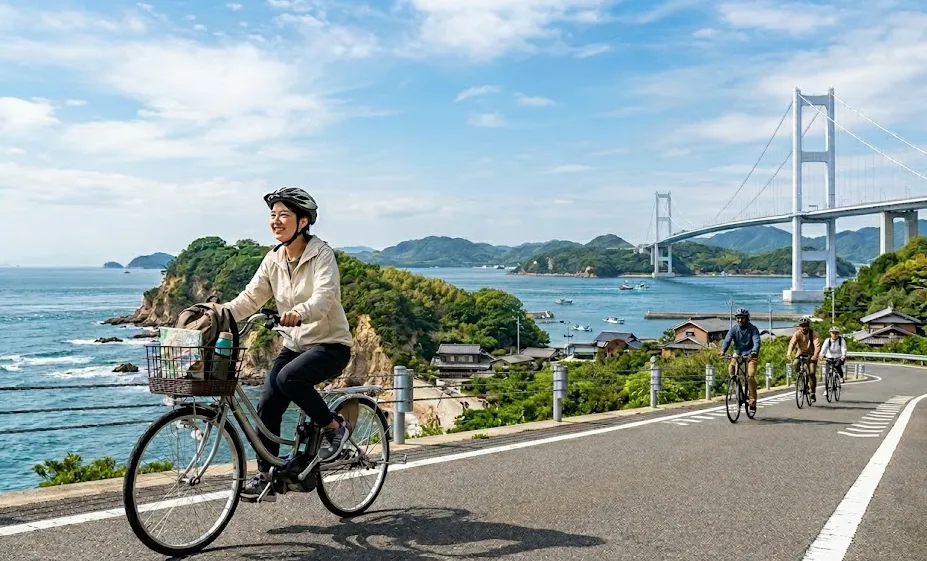
Navigating Japan’s cities and countryside doesn’t always mean relying on the famously efficient rail system. For many visitors, renting a bicycle is the most rewarding way to see the country at their own pace—especially in bike-friendly destinations like Tokyo, Osaka, and the Shimanami Kaido. But how to rent a bike in Japan? How does the rental process work? What documents do you need? And where can you find reliable shops? In this comprehensive manual, I’ll walk you through everything you need to know about securing a reliable ride, navigating local cycling laws, and finding the best rental hubs to elevate your Japanese adventure.
Why Rent a Bike in Japan?
While the Shinkansen gets you across the country and the subways get you across the city, the bicycle is the "secret key" that unlocks the real Japan. It is often the most practical, cost-effective, and immersive way to experience the landscape.
Here is why you should consider trading your train pass for two wheels:
1. The "Last Mile" Problem
Japan’s train stations are fantastic, but many of the most beautiful temples, shrines, and local cafes are a 15-to-20-minute walk from the nearest exit.
-
Efficiency: A 20-minute walk becomes a 5-minute breeze on a bike.
-
Energy: You save your legs for the actual sightseeing rather than the transit between sites.
2. Freedom from the "Tourist Track"
When you travel by bus or subway, you only see Point A and Point B. On a bike, you see everything in between.
-
The "In-Between" Moments: You’ll find quiet residential neighborhoods, tiny "jizo" statues on street corners, and vending machines in the middle of nowhere that you’d never see from a train window.
-
Spontaneity: See a cool shop? Stop. Smelled something amazing from a bakery? Pull over. You aren't beholden to a transit schedule.
3. Topography and Infrastructure
Most major Japanese cities (with the exception of Nagasaki or parts of San Francisco-esque Kobe) are remarkably flat.
-
Mama-charis: Most rentals are "Mama-charis"—sturdy city bikes with baskets and built-in locks. They are designed for comfort, not speed.
-
Safety: Drivers in Japan are generally very aware of cyclists, and many wide sidewalks are legally shared zones, making it feel much safer than cycling in many Western cities.
4. Cost-Effectiveness
In cities like Kyoto, bus lines are often overcrowded and can get stuck in traffic.
-
The Math: A one-day bus pass or multiple subway taps can easily exceed 1,000–1,500 yen.
-
The Value: A full-day bike rental usually costs about the same, provides door-to-door service, and eliminates the "sardine-can" experience of rush-hour public transport.
5. Unique Cultural Access
Some of Japan's best experiences are designed for bikes:
-
The Shimanami Kaido: You cannot experience this world-class island-hopping route any other way.
-
Riverside Paths: Cities like Kyoto (Kamogawa River) and Tokyo (Sumida River) have extensive riverside paths that offer a peaceful escape from the neon and concrete.
6. Eco-Friendly and Sustainable Travel
Cycling is one of the most environmentally friendly ways to explore:
-
Zero emissions
-
Less congestion in busy cities
-
Supports sustainable tourism
‼️A Quick Reality Check: While Japan is a cycling paradise, remember that parking is the one area where they don't mess around. You can't just lean your bike against a wall; you must find a designated "Churinjo" (parking lot), or you might return to find your bike has been towed by the city!
Types of Rental Bikes & Pricing
1. Mama-chari (ママチャリ)
The most common bicycle type in Japan and at rental shops are simple bicycles for everyday use, called Mama-chari (ママチャリ). Mama-chari are typically equipped with a basket and/or a child seat, a simple lock, a kickstand and just one gear. Models with multiple gears or electric assistance are also popular. These bikes are not designed for speed or long distances, but they are comfortable and stable for casual city exploration.
Price: ¥500–1,200 per day.
Best for: City neighborhoods, flat areas, short trips under 10 km, casual sightseeing.
2. Electric-Assist Bikes (電動自転車)
E-bikes provide motor assistance while you pedal—they don‘t ride themselves, but hills become effortless. These bikes extend your range significantly and are especially popular in hilly cities.
Price: ¥1,500–2,500 per day.
Best for: Hilly cities like Kyoto‘s temple districts, longer distances, hot weather.
3. Road Bikes and Mountain Bikes
For serious cyclists, specialized rental shops offer high-performance road bikes, mountain bikes, and hybrid bikes. These are ideal for tackling Japan’s scenic long-distance cycling routes. Some platforms, like RINCLE, partner with sports bike specialty shops across 12 prefectures to provide professional-quality rentals with expert staff guidance.
Price: ¥3,000 – ¥8,000 per day.
Best for: Long-distance touring, scenic routes like Shimanami Kaido, sport cycling.
4. Shared Bikes (Bike-Sharing Apps)
Modern app-based systems allow you to pick up and drop off bikes at different stations throughout a city. Most bikes in these systems are electric-assist, making them perfect for urban exploration.
These services are accessed via smartphone apps. After downloading the app and registering a payment method, you can find nearby stations, unlock a bike, ride, and return it to any station within the same network. Many bike share services include damage insurance in the rental fee.
Best for: Short-distance urban travel, one-way trips, spontaneous exploration.
Here are the most popular Bike-Sharing Apps in major cities like Tokyo, Osaka, and Kyoto:
1) Docomo Bike Share
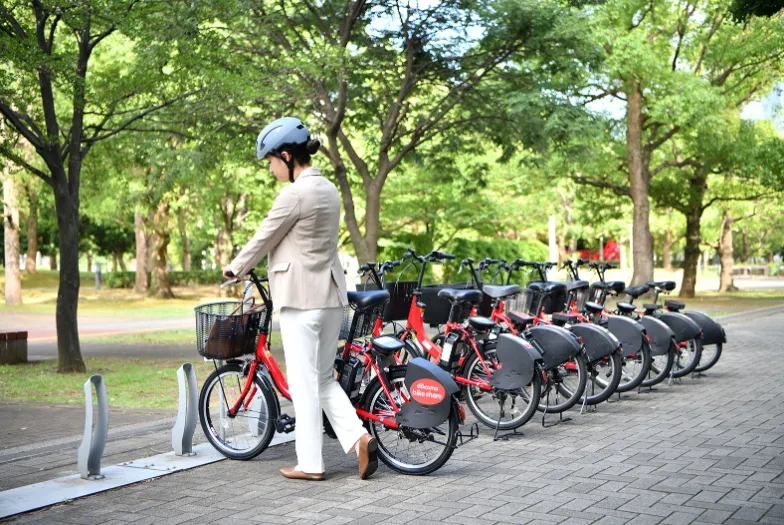
Largest network, primarily in Tokyo and many other cities.If you’ve spent any time in Tokyo, you’ve definitely seen them: the iconic bright red electric bikes parked in clusters near stations and convenience stores.While newer apps like LUUP are trendy, Docomo remains the powerhouse for heavy-duty commuting and long-distance city exploring thanks to its sturdy frames and larger wheels.
Using the app is easy as it’s available in English. Simply check for the nearest bike station or “bike port,” look through the available bikes and reserve.
✔️Pros:
-
Battery Life: They generally have larger batteries and more "kick" than LUUP bikes, making them better for bridges or hilly areas.
-
Large Network: They are everywhere in central Tokyo (Minato, Chuo, Chiyoda wards).
-
Convenience Store Integration: You can often find ports right outside 7-Eleven or FamilyMart.
-
Can be linked to Suica/Pasmo cards.
❌Cons:
-
App Clunkiness: The app UI feels a bit dated compared to modern tech startups.
-
Weight: These bikes are heavy. If the battery dies (always check the % before you rent!), they are a workout to pedal manually.
-
Area Restrictions: You generally cannot return a bike to a different city's network (e.g., you can't rent in Tokyo and return in Yokohama).
💰Rental Fees:
To sign up, you can choose from a one-time use membership, a one-day pass membership or a monthly subscription through the official app.Rental fees vary per location, but generally, they cost ¥165 for 30 minutes, while a one-day pass is ¥1,650, and a monthly pass is ¥2,200. From June 1, 2023, monthly membership rates for Tokyo and Kawasaki will be ¥3,300.
|
Plan Type |
Base Fee |
Usage Rate |
Note |
|
One-Time Member |
0 yen |
165 yen / first 30 min |
165 yen per 30 min after |
|
1-Day Pass (App) |
1,650 yen |
Unlimited |
Valid until 23:59 same day |
|
1-Day Pass (IC Card) |
2,200 yen |
Unlimited |
Includes physical card fee |
2) Hello Cycling
While Docomo Bike Share dominates central Tokyo, Hello Cycling is the giant of the suburbs and regional Japan. If you are exploring places like Saitama, Yokohama, or even parts of rural Japan, you will see their signature yellow signs everywhere.As of April 2026, they have expanded to over 13,000 stations, making them the largest network in the country.
While it doesn’t have as much English as Docomo Bike Share does, it’s still quite intuitive. Again, look for the nearest bike port, input the pin code and you’ll be on your way. These bikes are arguably newer, offer slightly more elevated seating and are yellow and white.

✔️Pros:
-
Most bikes are electric-assist e-bikes, perfect for hilly urban areas and longer rides.
-
The newer bikes and lower fees.
-
One person can reserve up to 4 bikes on a single account. Docomo generally requires one account per bike.
-
In some areas, they offer not just standard e-bikes, but also "electric cycles" (small mopeds) and even heavy-duty cargo bikes.
-
Modern app UI.
❌Cons:
-
The app isn’t as English-friendly.
-
Their bike ports aren’t as readily available since their services are more common in Tokyo’s suburban areas than the city center.
💰Rental Fees:
Prices can vary slightly by region.Hello Cycling transitioned to a slightly different pricing structure in early 2026 to accommodate shorter trips.To sign up, you can choose from a one-time use pass or a 12-hour pass through the official app and website.
-
Standard Rate: 160 yen for the first 30 minutes.
-
Extension: 160 yen for every additional 15 minutes.
-
12-Hour Cap: Most regions cap the fee at 1,800 to 2,000 yen for a 12-hour period, making it great for full-day excursions.easier for tourists to bypass the phone number requirement.
3) LUUP
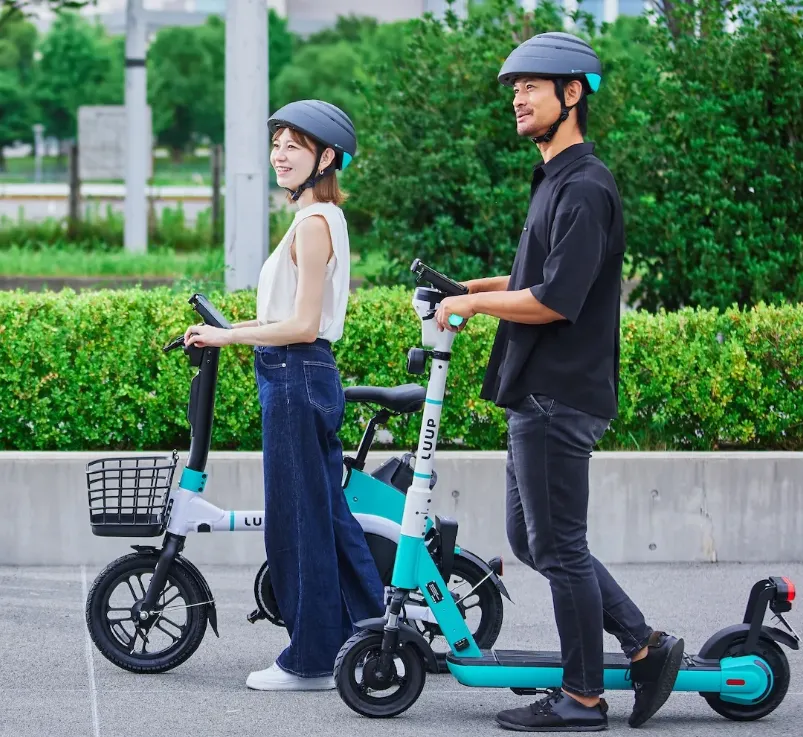
LUUP is currently the "cool kid" on the Japanese streets. Known for its distinct teal-and-black branding and compact designs, it is the most modern, app-centric choice for travelers in major urban hubs.
They’re available in major cities like Tokyo, Yokohama and Osaka. They’re constantly growing their service area with over 1,000 bike ports. But aside from the modern-looking design, what sets LUUP apart is that they also have electric scooters for rent. Painted white and teal blue, you’ll often see people scooting away around downtown.
✔️Pros:
-
The bikes are newer, sleeker and can cover 45 kilometers when fully charged.
-
The app is exceptionally well-translated and easy for tourists to set up with an international credit card.
-
High density of ports.
- Everything is handled by scanning a QR code on the handlebars.
❌Cons:
-
Due to the price, it may be best to use it to cover only a short distance.
-
You’ll need a driver’s license to use these scooters, which they’ll need to verify on the app displayed mostly in Japanese.
💰Rental Fees:
Out of the three, LUUP is the most expensive service to subscribe to. The “base fee” for using the bike is ¥50, then ¥15 per minute.
|
Region |
Base Fee |
Usage Rate |
Total for 30 min |
|
Tokyo & Osaka |
50 yen |
20 yen / minute |
650 yen |
|
Kyoto, Nagoya, Fukuoka, etc. |
50 yen |
15 yen / minute |
500 yen |
How to Rent a Bike in Japan?
Renting a bike in Japan has changed significantly with the introduction of the "Blue Ticket" (Ao-kippu) system on April 1, 2026. Whether you’re using a high-tech app or a local shop, here is the current step-by-step process for 2026.
1. Choose Your Rental Method
Depending on your tech comfort and itinerary, you’ll likely use one of these three:
-
Bike-Sharing Apps (LUUP, Hello Cycling, Docomo): Best for short, urban "Point A to Point B" trips. These are self-service 24/7.
-
Local Rental Shops (Renta-cycle): Best for full-day sightseeing (e.g., Kyoto or Arashiyama). Usually offer better daily rates (1,000–2,500 yen) and more comfortable "mama-chari" bikes.
-
Sport/Road Bike Centers: Best for long-distance routes like the Shimanami Kaido. Require advance booking and height measurements.
2. The Registration Process
A. Using the Apps
As of 2026, verification is stricter. You will need:
-
A Smartphone: With a data connection (e-SIMs like Ubigi or Airalo work well).
-
Identity Verification: Most apps now require a photo of your Passport or a valid ID to comply with 2026 safety regulations.
-
Payment: An international Credit/Debit card.
-
A Phone Number:
-
- LUUP: Accepts most international numbers.
-
Hello Cycling/Docomo: Often requires a Japanese number (+81) for SMS. If you don't have one, look for Docomo 1-Day Passes sold over-the-counter at 7-Eleven or Tourist Info Centers.
B. At a Local Shop
-
Walk-in: Look for the bicycle icon near train station exits.
-
ID: Show your physical passport (they will take a copy).
-
Form: Fill out a basic contact form with your hotel address.
-
Payment: Usually cash or IC Card (Suica/Pasmo).
3. Unlocking and Parking
-
To Unlock: Use the app to scan the QR code on the handlebars/rear wheel, or enter the 4-digit PIN provided.
-
Mid-Trip Stops: You can lock your bike manually to run into a temple or cafe, but the "clock" keeps ticking on your rental fee.
-
To Return: You must park in a designated "Port" (for apps) or return to the original shop.
⚠️Warning: In 2026, parking outside designated zones can lead to the city impounding your bike and a recovery fee of 3,000–5,000 yen, plus potential "Blue Ticket" fines.
Essential Traffic Rules & Laws
Japan strictly regulates bicycle use, and police do issue tickets to tourists.
1. Basic Traffic Rules for Cyclists
In Japan, bicycles are legally classified as “vehicles,” and cyclists must follow the same rules as motor vehicles. The several fundamental rules are:
|
Rule |
Description |
|
Keep Left |
Always ride on the left side of the road, in the same direction as cars. |
|
Sidewalks |
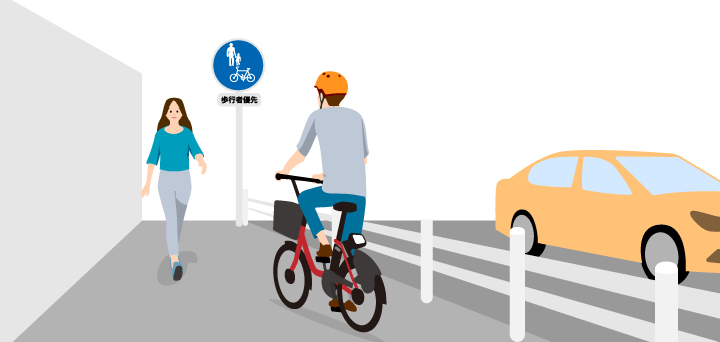
Generally prohibited unless signs say otherwise. If on a sidewalk, pedestrians always have the right of way. |
|
Helmets |
As of April 2023, all cyclists are "required to make an effort" to wear a helmet. While not strictly mandatory (no fine), it is highly recommended. |
|
No "Drunk Riding" |
Zero tolerance. Penalties are as severe as for driving a car (up to ¥1,000,000 fine). |
|
Lights at Night |
Mandatory. Most rental bikes have "dynamo" lights or automatic LED lights. |
|
Double Riding |
Prohibited (no one on the back/pegs) unless the bike is specifically equipped for a child. |
|
No Devices |
Using a phone or holding an umbrella while riding is illegal and subject to fines (up to ¥50,000). |
2. 2026 Blue Ticket Fines
Starting April 1, 2026, Japan introduced a new “Blue Ticket” (Ao-Kippu) system that imposes on-the-spot fines for bicycle traffic violations. This applies to all cyclists in Japan regardless of nationality, including foreign tourists.Major infractions and their fines include:
|
Violation |
Fine (JPY) |
|
Using a smartphone while riding |
12,000 yen |
|
Riding on the right side (wrong side of the road) |
6,000 yen |
|
Ignoring traffic lights |
6,000 yen |
|
Obstructing pedestrians at a crosswalk |
6,000 yen |
|
Riding with an umbrella |
5,000 yen |
|
Wearing headphones while riding |
5,000 yen |
|
Failing to stop at a stop sign |
5,000 yen |
|
Not using lights at night |
5,000 yen |
|
Riding double (two people on one bicycle) |
3,000 yen |
|
Riding side-by-side |
3,000 yen |
|
Slow riding on sidewalks (obligation to keep pace) |
3,000 yen |
⚠️Note: If you leave Japan without paying a Blue Ticket fine, you may be denied re-entry in the future. Serious offenses, such as drunk cycling or causing a major accident, may result in a Red Ticket, which leads to criminal proceedings.
3. Parking and Security
Never "free park" on the street. Japan has strict anti-parking zones, and illegally parked bikes are frequently impounded.
-
Churinjo (Bicycle Parking): Look for designated lots near stations and malls.
-
Fees: Usually ¥100–¥200 for 8–24 hours. Many have automated racks where you pay at a machine when leaving.
-
Impoundment: If your bike is removed, you must go to a "Bicycle Silver Center," show ID, and pay a fine (usually ¥2,000–¥5,000) to get it back.
-
Registration: All bikes in Japan must be registered (jitensha bouhan touroku). Your rental will have a small yellow or silver sticker. If stopped by police, they may check this against your rental agreement.
Insurance Requirements
In many prefectures across Japan, cyclists are required to carry liability insurance. The Tokyo Metropolitan Government ordinance, effective April 1, 2020, requires all individuals using bicycles within Tokyo to enroll in liability insurance that covers injuries caused to others. Similarly, Kanagawa Prefecture (including Yokohama) has mandatory liability insurance for cyclists. Other prefectures have similar requirements or strong recommendations.
How Tourists Can Get Covered:
Most reputable rental shops and bike-share services include basic liability insurance in the rental fee. For example, Tokyobike provides third-party liability coverage up to 100,000,000 JPY for injuries or damage caused by rental bicycle use. Many bike-sharing services also include damage insurance in their fees.
-
Optional top-up insurance: Some rental providers offer optional accident insurance for an additional fee—typically around ¥300 per person.
-
Existing coverage: Check whether your travel insurance, credit card benefits, or home insurance policies already include bicycle liability coverage during international travel.
Top Cycling Destinations
The Shimanami Kaido (Hiroshima/Ehime)
The "Holy Grail" of Japanese cycling. A 70km route connecting Honshu to Shikoku via six islands and massive suspension bridges. It features a dedicated blue-line path for cyclists.
Kyoto City
Kyoto is notoriously flat and its sights are spread out, making it perfect for cycling. Be careful in the Gion district, as some narrow streets are "no-cycling" zones to protect pedestrians.
Lake Biwa (Shiga)
The "Biwaichi" loop is roughly 200km. Most tourists do a partial segment to visit Hikone Castle or the Omi-Maiko beaches.
Kibi Plain (Okayama)
An easy, 17km flat route through rural landscapes, rice paddies, and ancient shrines. You can rent a bike at Bizen-Ichinomiya Station and drop it off at Soja Station.
Practical Tips for Bike Rental in Japan
-
Booking in Advance: For popular routes like the Shimanami Kaido or during peak tourist seasons (spring cherry blossom season and autumn foliage season), it‘s wise to book your rental bike in advance, especially if you need a specific type of bike like a road bike or e-bike.
-
Multi-Day Rentals: Many rental services offer discounted rates for multi-day rentals. If you plan to cycle for several days, inquire about extended rental rates when booking.
-
Language Support: Major bike-sharing apps (Hello Cycling, LUUP) have English-language interfaces. For traditional rental shops, those in popular tourist destinations often have English-speaking staff or English signage. Some guided tour companies specialize in English-speaking cycling experiences.
-
Bringing Bikes on Public Transport: While it is possible to bring bicycles onto trains in Japan, the bike must generally be disassembled or folded and placed in a special “rinko bag.” This process can be cumbersome and is not recommended for casual tourists. The rent-locally approach is far simpler.
-
Coin Lockers: Use station lockers for your heavy bags; most "Mamachari" baskets can only handle a small backpack.
-
Navigation: Use Google Maps but set it to "Walking" or "Cycling" mode, as "Driving" might send you onto highways where bicycles are strictly forbidden.
-
What to Pack: Most rental shops provide essential items including helmets, front lights, and locks. However, you may want to bring:
-
Comfortable clothing suitable for cycling
-
Sunscreen and sunglasses
-
A small backpack for personal items
-
A portable phone charger (for using bike-share apps)
-
Your credit card or travel money card (for rental payments)
-
Bike Rental in Japan: Q&A
Do I need a license to rent a bike in Japan?
No. You do not need a driver’s license or any special permit to rent or ride a bicycle in Japan.
Can tourists rent bikes easily?
Yes. Most rental shops and bike-sharing services are tourist-friendly, especially in cities like Tokyo, Kyoto, and Osaka. Some apps may require registration, but many now support international users.
Are electric bikes widely available?
Yes. E-bikes are very common, especially in tourist areas and hilly cities like Kyoto. They’re a great option if you want a more आराम and effortless ride.
Is cycling safe in Japan?
Yes. Japan is considered one of the safest countries for cycling thanks to:
-
Respectful drivers
-
Clean, well-maintained roads
-
Low crime rates
Still, always follow local traffic rules.
Do I have to wear a helmet?
Helmets are recommended but not always mandatory for adults. Some rental shops provide them for free or a small fee.
Can I ride on sidewalks?
Sometimes. In many areas, cycling on sidewalks is allowed, but:
-
Pedestrians always have priority
-
Follow posted signs and markings
What happens if the bike gets stolen or damaged?
You may be responsible for repair or replacement costs. Some rental shops include basic insurance, so always check before renting.
Can I rent a bike at train stations?
Yes. Many major stations and tourist hubs offer rental services nearby, making it easy to combine cycling with train travel.
Can I rent multiple bikes on one phone?
-
LUUP / Docomo: No. Each person needs their own smartphone, account, and ID verification.
-
Hello Cycling: Yes. You can reserve up to 4 bikes on a single account, making it the go-to app for families.
-
Local Shops: Yes. One person can usually rent for the whole group by showing their passport.
What do I do if the bike battery dies mid-ride?
-
App Rentals: You can still pedal, but the bikes are very heavy. Most apps will not let you "Return" the bike if the battery is at 0% because the electronic lock won't function.
-
Pro-Tip: Always check the battery percentage in the app before you unlock. If it's under 20%, find a different bike.
Where can I leave the bike when I’m done?
-
Apps: Only at designated "Ports" shown on the map. If you leave it on a random street, the clock keeps charging you, and the bike may be impounded.
-
Local Shops: You must return it to the exact shop where you rented it, usually before 5:30 PM or 6:00 PM.