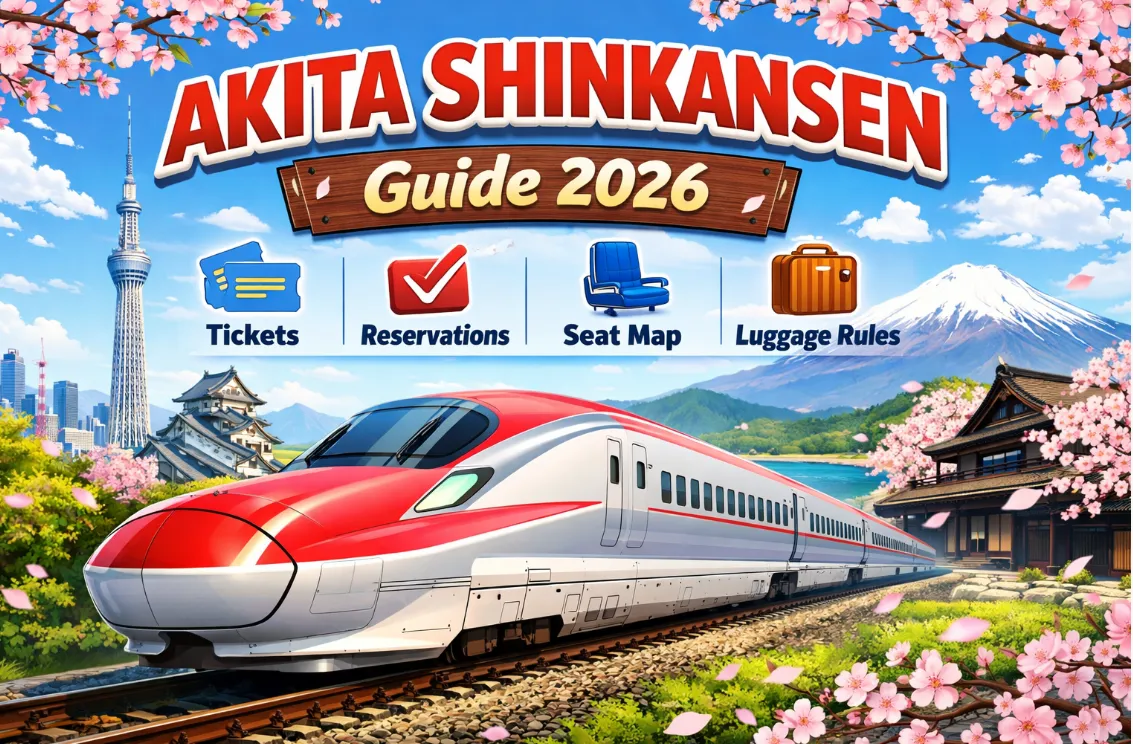
The Akita Shinkansen is one of Japan's most unique "mini-Shinkansen" routes. The line offers a scenic route, particularly through the mountains between Morioka and Akita, and offers a crucial, direct link from Tokyo to the Akita prefecture region. Glide past mountains, rice fields, and seasonal landscapes while enjoying one of the country’s most comfortable rail services. However, navigating high-speed rail in Japan requires a bit of prep work to ensure a smooth journey. From securing your seat during peak holiday seasons to understanding the specific luggage storage spaces available on board, knowing the logistics in advance can make all the difference. This guide breaks down everything you need to know about ticketing options, how to read the interior layout, and the current baggage regulations.
Overview: What Is the Akita Shinkansen?
The Akita Shinkansen is a high-speed train operated by JR East, running between Tokyo and Akita via Morioka. It’s part of the Tōhoku Shinkansen network but uses both high-speed and conventional tracks.The line, known for its distinctive deep-red E6 Series "Komachi" trains, is a "Mini-Shinkansen."Unlike the massive, dedicated tracks used by the Tokaido Shinkansen (Tokyo to Osaka), the Akita Shinkansen is a "hybrid" route.It operates as a high-speed service on the Tohoku Shinkansen tracks to Morioka, then travels at reduced speeds (up to 130 km/h) on upgraded conventional, narrower tracks to Akita.
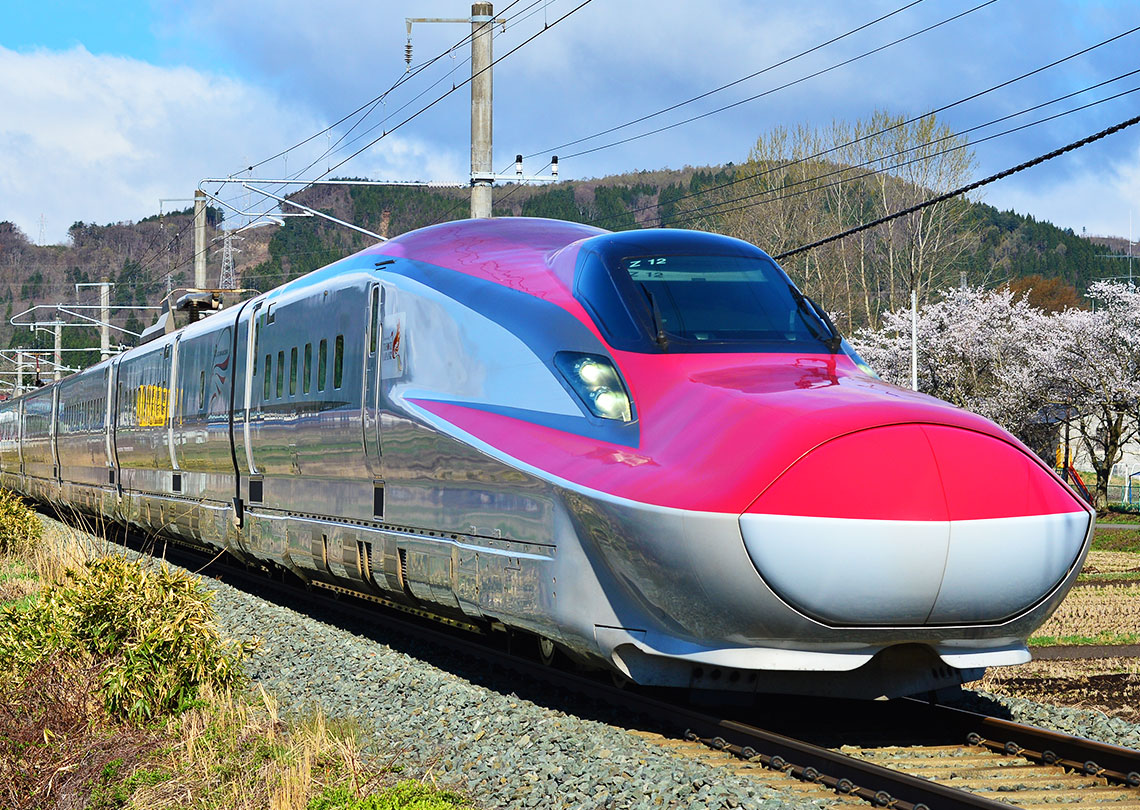
1. The Train: E6 Series "Komachi"
The service is operated by the E6 Series, easily recognized by its vibrant "Akita Madder" red nose.
-
Narrow Body: Because it has to fit through older, smaller tunnels on the local lines, the train is physically narrower than a standard Shinkansen.
-
Seating Layout: While most bullet trains have 3+2 seating, the Komachi is 2+2 across in both Ordinary and Green cars.
-
The "Step": Because the train is narrower than the platforms on the main high-speed line, a small yellow step automatically extends from the door at stations like Tokyo or Sendai to bridge the gap.
2. The Route & Stations
🚉 Route: Tokyo → Ueno → Omiya → Sendai → Morioka → (Akita Shinkansen Line) → Tazawako → Kakunodate → Omagari → Akita.
The Akita Shinkansen runs from Tokyo to Akita, sharing tracks with the Tōhoku Shinkansen before branching off at Morioka into a scenic regional line.
-
Tokyo to Morioka: The Akita Shinkansen train (Komachi) couples with the Tohoku Shinkansen Hayabusa train, running together on standard Shinkansen tracks at speeds up to 320 km/h.
-
Morioka to Akita: At Morioka Station, the two trains separate. The Komachi continues onto the Akita Shinkansen line, which runs on converted conventional railway tracks with a maximum speed of 130 km/h, earning it the "Mini-Shinkansen" classification
While the train stops at major hubs like Ueno, Omiya, and Sendai during the first half of the trip, the "true" Akita Shinkansen stations start after Morioka.Here is the complete list of stations, with details on which trains stop.Here is the complete list of stations, with details on which trains stop:
|
Station Name |
Japanese |
Stopping Pattern |
Location (Prefecture) |
Key Attraction / Note |
|
Morioka |
盛岡 |
All trains |
Iwate |
Connection point with Tohoku Shinkansen.Famous for Wanko Soba (all-you-can-eat noodles). |
|
Shizukuishi |
雫石 |
▼ (Limited stops) |
Iwate |
Gateway to high-end ski resorts and Koiwai Farm. |
|
Tazawako |
田沢湖 |
▲ (Most trains stop) |
Akita |
Access to Lake Tazawa (Japan’s deepest) and Nyuto Onsen. |
|
Kakunodate |
角館 |
▲ (Most trains stop) |
Akita |
Known as the "Little Kyoto of the North" for its Samurai district. |
|
Omagari |
大曲 |
All trains |
Akita |
The train reverses direction here. Famous for national fireworks. |
|
Akita |
秋田 |
All trains |
Akita |
Terminus; connection to Uetsu and Ou Main Lines.Home to the Kanto Lantern Festival and Akita dogs. |
⚠️Note on Omagari: Don't be surprised when the train starts moving "backward" after this stop! Because of the track layout, the train must change directions for the final 50 km leg to Akita City. Most passengers rotate their seats manually at this point.
Travel Time and Timetable
A. Travel Time
The journey takes approximately 2 hours and 40 minutes to 3 hours and 50 minutes depending on the specific service and time of day. The fastest services (e.g., Komachi 9) can complete the trip in roughly 2 hours and 24 minutes.Here are the average durations for the most common segments:
-
Tokyo to Akita: ~3 hours 45 minutes (Fastest: 3h 37m)
-
Tokyo to Morioka: ~2 hours 10 minutes
-
Morioka to Akita: ~1 hour 35 minutes
-
Sendai to Akita: ~2 hours 15 minutes
B. Timetable Overview
1. Outbound: Tokyo → Akita
The service typically starts around 6:30 AM. Between 7:00 AM and 8:00 PM, you can expect a departure almost every hour (usually at :20 or :32 past the hour).
|
Train Name |
Tokyo Dept. |
Akita Arr. |
Total Duration |
|
Komachi 1 |
06:32 |
10:24 |
3h 52m |
|
Komachi 5 |
07:32 |
11:25 |
3h 53m |
|
Komachi 13 |
10:03 |
13:52 |
3h 49m |
|
Komachi 23 |
12:20 |
16:16 |
3h 56m |
|
Komachi 35 |
17:20 |
21:04 |
3h 44m |
|
Komachi 41 (Last) |
20:16 |
23:53 |
3h 37m |
2. Inbound: Akita → Tokyo
If you are heading back to the capital, the early bird gets the worm with a 6:00 AM start.
|
Train Name |
Akita Dept. |
Tokyo Arr. |
Total Duration |
|
Komachi 6 |
06:09 |
10:04 |
3h 55m |
|
Komachi 16 |
09:12 |
13:04 |
3h 52m |
|
Komachi 28 |
13:12 |
17:04 |
3h 52m |
|
Komachi 38 |
17:10 |
21:04 |
3h 54m |
|
Komachi 48 (Last) |
19:10 |
23:04 |
3h 54m |
⁉️How to Check the Real Timetable?
-
JR East Official Timetables: JR East provides a dedicated English timetable portal. Search for "Tokyo" or "Akita" station. Select the Akita Shinkansen line to see a chronological list of all Komachi services for that day.
-
Google Maps: Great for a quick "I want to leave now" search. It shows platform numbers (usually platforms 20-23 at Tokyo Station) and real-time delay information.
-
Japan Travel by NAVITIME: Highly recommended for tourists because it has a "JR Pass" filter. If you are using a rail pass, it ensures you are looking at the correct eligible trains (though all Komachi trains are covered by the JR Pass).
Seat Map & E6 Series Layout
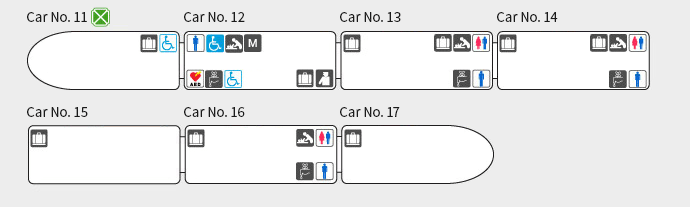
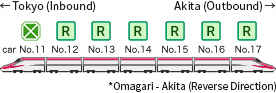
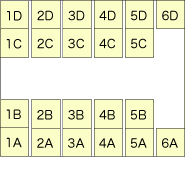
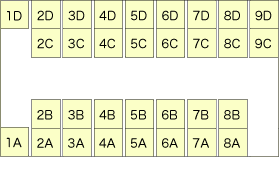
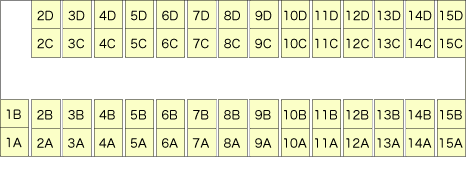
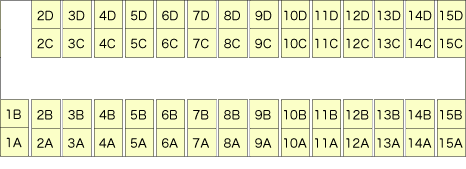
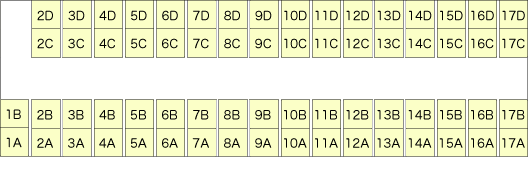
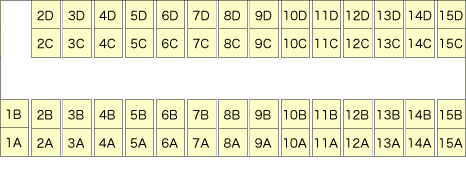
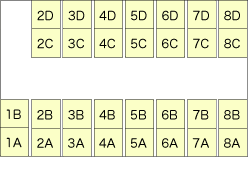
The Akita Shinkansen runs with 7 carriages (Cars 11 through 17) .The interior facilities place an emphasis on universal design and security measures. Car no. 12 has a large restroom which is accessible to electric mobility scooters. Other features include large full-color LED information displays as well as security cameras inside the cars and in the areas at both ends of the cars.
|
Car No. |
Class |
Layout |
Seat Map |
Features |
|
Car 11 |
Green |
2 + 2 |
|
22 Seats. Luxury leather, footrests, luggage area. |
|
Car 12 |
Ordinary |
2 + 2 |
|
34 Seats. Wheelchair accessible, Universal Toilet. |
|
Car 13 |
Ordinary |
2 + 2 |
|
60 Seats. Toilet & Urinal. |
|
Car 14 |
Ordinary |
2 + 2 |
|
60 Seats. Toilet. |
|
Car 15 |
Ordinary |
2 + 2 |
|
68 Seats. Standard seating. |
|
Car 16 |
Ordinary |
2 + 2 |
|
60 Seats. Toilet. |
|
Car 17 |
Ordinary |
2 + 2 |
|
32 Seats. Smallest car, ends at Akita/Tokyo. |
🔔Seat Selection Tips:
-
Window Seats (A & D): All seats have power outlets.
-
Best Views: For the mountain pass between Morioka and Akita, Seat A (Westbound) or Seat D (Eastbound) offers better views of the valleys and Lake Tazawa.
Tickets & Reservations
Here’s everything you need to know about buying tickets and reserving seats on the Akita Shinkansen (Komachi)—explained clearly for first-time travelers.
A. Ticket Structure (Very Important)
Shinkansen tickets are usually made up of two components:
-
Base Fare Ticket (乗車券): Covers the distance traveled.
-
Limited Express Ticket (特急券): Covers the Shinkansen service + seat reservation.
You must have both tickets to board.At ticket gates, insert both tickets together.
The Akita Shinkansen is an all-reserved train ("全車指定席"). Unlike some other Shinkansen lines (like the Tokaido Shinkansen), there are no "non-reserved" (free seating) cars on the Komachi service. You must have a reserved seat ticket to board.
-
Ordinary Car Reserved Seat: Standard seating.
-
Green Car Reserved Seat: First-class seating.
B. How to Buy the Tickets
Option A: Online (Recommended)
1) JR East's Official "Ekinet" Service
From October 31, 2025, JR East launched a service allowing reservations up to three months in advance for travel from January 10, 2026. This is the official way to book directly. It also introduced features for fee-free refunds or changes if your reserved train is cancelled or significantly delayed.
-
Platform: JR-EAST Train Reservation (Eki-Net)
-
Benefits:
-
Seat Map: You can visually select your preferred seat (choose D for mountain views going north).
-
E-Tickets: You can link your purchase to a Suica, PASMO, or Welcome Suica. This allows you to tap through the Shinkansen gates using your phone or IC card—no paper ticket required.
-
Early Bird Discounts: Look for "Tokudane" fares, which can save you 10% to 30% if booked 14–20 days in advance.
-
2) Online Booking Platforms
These are convenient for international travelers, often allow you to pay in your own currency, and provide a QR code for boarding. Some platforms allow you to reserve seats with extra luggage space.
Option B: At the Station
-
Reserved Seat Machines: These green machines have a passport reader (new for 2026) to help international tourists validate rail passes or pick up online orders.
-
Midori-no-Madoguchi: The traditional ticket office. Best if you have complex requirements or need to change a trip manually.
C. Ticket Prices
Prices fluctuate based on season (peak vs. off-peak) and how early you book.
|
Route (Tokyo Departure) |
Ordinary Seat (Reserved) |
Green Car (First Class) |
|
to Morioka |
~¥15,450 |
~¥20,320 |
|
to Kakunodate |
~¥17,700 |
~¥22,770 |
|
to Akita |
~¥18,460 |
~¥23,530 |
-
Discounts: Look for "Tokudane" (Early Bird) deals on the Eki-net website. In 2026, these can offer 10% to 30% off if booked 20+ days in advance.
-
Children: Kids aged 6–11 pay 50% of the adult fare. Children under 6 travel free unless they occupy their own reserved seat.
D. Using Rail Passes
If you are using a rail pass, the Akita Shinkansen is one of the best "values" because of the high individual ticket cost.You have two primary options. Both cover the entire Akita Shinkansen route (Tokyo to Akita), including the high-speed and the "mini" sections.
1. The New "All-in-One" JR EAST PASS
As of March 2026, the separate "Tohoku Area" and "Nagano/Niigata" passes have been merged into a single, more powerful pass.
-
Cost: ¥35,000 (5 consecutive days) or ¥50,000 (10 consecutive days).
-
Coverage: Unlimited rides on all Shinkansen and JR lines in Eastern Japan (Tokyo, Akita, Aomori, Sendai, Nagano, and Niigata).
-
Verdict: This is almost always the best value for a trip to Akita. A single round-trip from Tokyo to Akita already "pays off" the 5-day pass.
2. The National Japan Rail Pass
-
Cost: Starts at ¥50,000 for 7 days (Ordinary Car).
-
Coverage: All of Japan.
-
Verdict: Only choose this if you are traveling to other regions (like Kyoto or Hiroshima) during the same trip. If you are staying in the Tokyo/North-East area, the JR East Pass is significantly cheaper.
E. How to Make Reservations (Free with Pass)
Since the Akita Shinkansen (Komachi) is all-reserved, you cannot just hop on. You must get a seat ticket.
-
Via Ticket Machines: Since April 2026, you can use any "Reserved Seat" machine with a passport reader. Simply scan the QR code on your pass, scan your passport, and select your seats.
-
Online (Eki-Net): You can book your seats up to a month in advance on the JR-East Reservation site. You can then pick up your physical seat tickets at the station using the same machines or at a ticket office.
-
In-Person: Visit any Midori-no-Madoguchi (Green Window) and show your pass to the staff.
⚠️Important Rules & Tips:
-
❶ The "Morioka Rule": If you have a JR Pass and want to hop on for the short leg between Morioka and Akita without a reservation, you must still obtain a "Seat Optional" ticket from a machine or staff, which allows you to sit in any empty seat until a reserved passenger arrives.
-
❷ Upgrading to Green Car: Most passes cover Ordinary Cars only. If you want to ride in the luxury Green Car (Car 11), you must pay the "Green Car Surcharge" separately at the ticket office.
-
❸ Standing Tickets (Tachiseki): If a train is 100% full (common during Cherry Blossom season or the August Kanto Festival), you can buy a "Standing Ticket." This allows you to stand in the deck areas between cars. The price is the same as the base fare plus a slightly discounted express fee.
The Luggage Rules
While the Tokaido/Sanyo Shinkansen (Tokyo–Osaka–Fukuoka) requires mandatory reservations for "Oversized Baggage," the Akita Shinkansen (JR East) does not currently require a formal reservation for oversized bags.
1. Size Categories
-
Standard (<160 cm total): (Length + Width + Height). Fits easily on the overhead racks.
-
Oversized (160 cm – 250 cm): You can bring these on board for free. However, since the E6 is narrower, the overhead racks are slightly shallower than on the main lines.
-
Storage Areas: There are dedicated luggage racks at the ends of Cars 12–17. These are first-come, first-served.
-
Prohibited (>250 cm): Items exceeding 250 cm total or 60kg in weight are not allowed.
⚠️Note: Even though reservations aren't "mandatory" for bags on this line, if you have very large suitcases, it is highly recommended to book the last row of seats in the car so you can store your bags behind your seat.
2. Onboard Storage Locations
-
Overhead Racks: Fits standard carry-ons and medium suitcases.
-
Luggage Racks: Found in the vestibules of Cars 11, 12, 13, 14, 15, 16, and 17.
-
Behind Last Row: Specifically for those who reserved these specific seats.
Akita Shinkansen FAQs
What if I miss my reserved train?
Since the Komachi is all-reserved, your ticket officially becomes invalid for a seat once the train departs. However, there is a "safety net" rule: You can board the standing area (decks) of a subsequent Komachi train on the same day. If there are empty seats, you may sit in them, but you must yield the seat if the person holding the reservation for it boards.
Why did the train suddenly start moving backward?
This happens at Omagari Station. Because of the track layout, the train must "switchback" to reach Akita City. Most passengers stand up and use the foot pedal at the bottom of their seat to rotate the entire row 180 degrees. It’s a fun, quirky part of the Akita Shinkansen experience!
Do I need an "Oversized Baggage" reservation?
No. Unlike the Tokaido Shinkansen (Tokyo to Osaka), JR East lines—including the Akita Shinkansen—do not require a specific "oversized baggage" seat reservation as of 2026. You can use the overhead racks or the luggage storage areas at the ends of cars 12–17 for free. However, your bag must still be under 250 cm (total dimensions) and 30 kg.
Is the "Morioka Split" worth seeing?
Absolutely. If you are a fan of engineering, it’s one of the most iconic sights in Japanese rail travel. At Morioka Station, the Hayabusa and Komachi uncouple automatically. Many people jump off the train for 2 minutes to record the mechanical "separation" on the platform. Just don't get left behind!
Do I need to reserve a seat?
Yes. All Komachi trains are fully reserved. You must book a seat in advance, either at a station or online.
Can I buy tickets online from overseas?
Yes. Use JR East Ekinet or partner travel sites.Tickets must be picked up in Japan before boarding.
How far in advance can I book?
Depending on the booking platform, you can reserve tickets 2 to 4 months in advance.
Is there food service on board?
Mobile ordering may be available in Green Car. For standard cars, purchase ekiben (station lunch boxes) and drinks at station kiosks before boarding. Full meal service is not provided.
Is the train non-smoking?
Yes. All cars are completely non-smoking.
Are there wheelchair-accessible facilities?
Yes. Wheelchair-accessible toilets and multi-purpose rooms are available, primarily located in Car 12.