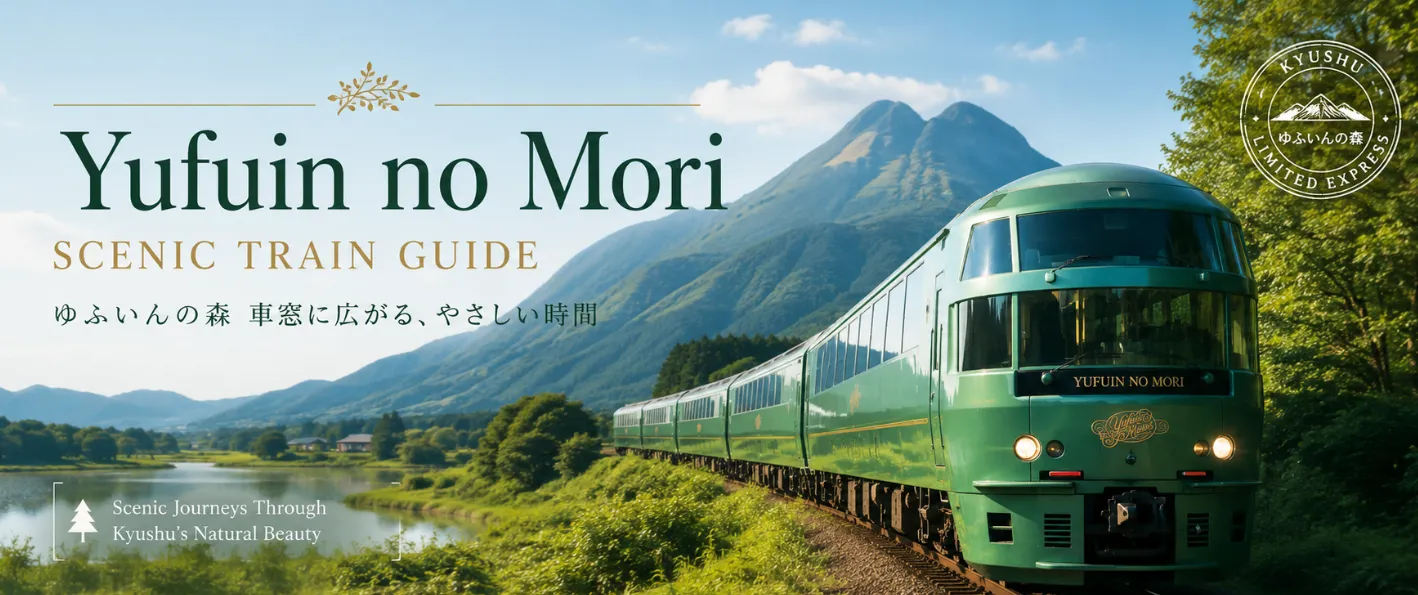
Few train journeys in Japan offer the cozy, nostalgic charm of the Yufuin no Mori. Rolling through forests, rivers, and mountain valleys, this famous Kyushu sightseeing train has earned a reputation as one of Japan’s most charming rail experiences. The iconic green sightseeing train connecting Fukuoka with the hot spring town of Yufuin is one of Japan’s most popular railway journeys. With panoramic windows, elegant wood interiors, and beautiful countryside views along the way, it offers much more than simple transportation.Because it is an all-reserved seating train with massive global popularity, securing a ticket takes a bit of strategy.So how do you book tickets for Yufuin no Mori? Which seats offer the best views? In this guide, I break down the most efficient booking methods, reveal the optimal seat for capturing forest and mountain vistas, and share little-known JR Pass tricks to make your reservation smoother. Avoid last-minute disappointment and learn how to turn this iconic rail adventure into the highlight of your Kyushu itinerary.
What is the Yufuin no Mori Scenic Train?
‼️ Quick Facts:
|
Item |
Details |
|
Operator |
JR Kyushu |
|
Route |
Hakata → Yufuin → Beppu |
|
Travel Time |
About 2 hr 15 min (Hakata–Yufuin) |
|
Seat Type |
All seats reserved |
|
JR Pass Coverage |
Yes (reservation still required) |
|
Reservation Opening |
1 month before departure |
|
Best Season |
Spring (March–May) & Autumn (October–November) |
|
Luggage Space |
Limited |
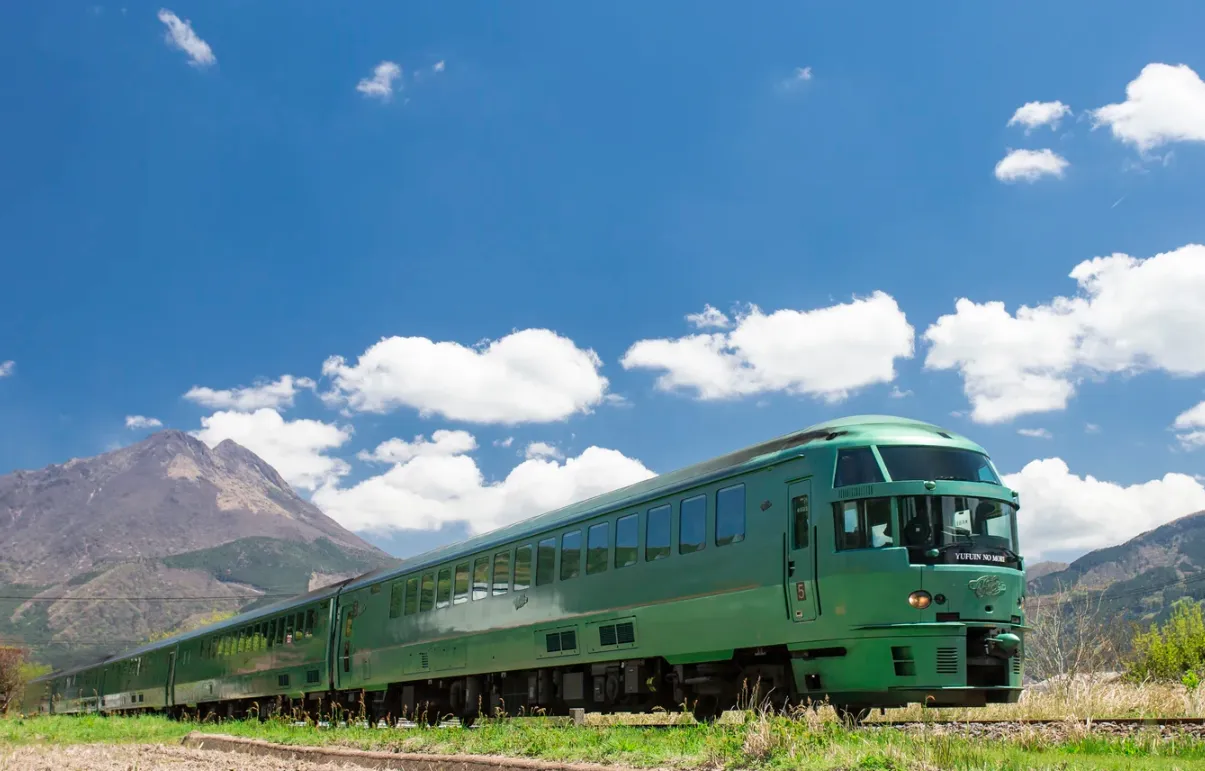
The Yufuin no Mori (ゆふいんの森) is one of Japan's most famous sightseeing trains, connecting Fukuoka and the hot-spring town of Yufuin through the mountains and forests of Kyushu. Operated by JR Kyushu, the emerald-green train is known for its resort-style wooden interior, panoramic windows, onboard snacks, and beautiful rural scenery. It runs three outbound services per day from Hakata and two return services back.There are no non-reserved seats on any service — seat reservations are mandatory for all passengers, including JR Pass holders.
Why Ride the Yufuin no Mori?
The train was designed as a "resort on rails" experience rather than a simple means of transportation. Highlights include:
-
Large panoramic windows
-
Warm wood-themed interior
-
Lounge and observation areas
-
Scenic mountain and river views
-
Exclusive onboard souvenirs
-
Bento meals and local desserts
-
Access to Yufuin's famous hot springs and cafes
Popular scenic sections include:
-
Minou Mountains
-
Chikugo River Valley
-
Jion-no-taki Falls
-
Forested countryside around Bungo-Mori and Yufuin
Train Route & Major Stations
The train transitions from the urban sprawl of Fukuoka into rural farm country, climbs through dramatic forested mountain valleys, and follows winding rivers before arriving at Kyushu’s premier hot spring destinations. It travels primarily along the Kagoshima Main Line before veering onto the highly scenic Kyudai Main Line (also known as the "Yufu Kogen Line").

1. Hakata Station (Fukuoka)
-
The Starting Point: The absolute hub of Fukuoka. If you are arriving via the Sanyo Shinkansen (from Osaka/Hiroshima) or the Kyushu Shinkansen (from Kumamoto/Kagoshima), this is where you will transfer to the Yufuin no Mori.
2. Tosu & Kurume Stations
-
The Gateway to the Valleys: The train heads south through the Chikugo Plains.
-
Scenery Note: Shortly after leaving Kurume Station, keep an eye out the window to see the sweeping ridges of the Minou Mountain Range rising in the distance.
3. Hita Station
-
"Kyoto of Kyushu": Hita is a historic town famous for its preserved Edo-period merchant district (Mameda-machi) and traditional wooden geta clogs. The scenery from here onward turns deeply mountainous.
4. Amagase Station
-
The Riverside Onsen: A tiny, atmospheric hot spring town where traditional outdoor baths sit right along the rushing riverbanks.
-
⭐ Major Highlight: Right after the train passes Amagase Station, it will dramatically slow down. Look out the right side of the train (Seats C & D if outbound) to see Jion Falls, a spectacular two-tiered waterfall.
5. Bungo-Mori Station
-
The Locomotive Haven: Highly popular with train enthusiasts. As you pull into the station, look out the window to see the Bungo-Mori Roundhouse—a massive, hauntingly beautiful abandoned rail turntable and engine shed built in 1934 that survived WWII bombings.
-
Scenery Note: Keep an eye out for Mount Kirikabu, an unusual, completely flat-topped mountain that looks like a giant tree stump.
6. Yufuin Station
-
The Main Event: The final stop for most of the daily trains. The station itself was designed by famous architect Arata Isozaki and features an upscale, sleek wooden design.
-
Platform Perk: Don't miss the warm outdoor foot-bath (ashiyu) right on Platform 1 to soak your feet while watching the trains come and go.
7. Oita & Beppu Stations (Trains 3 & 4 Only)
-
The Coastal Extension: For the afternoon extension, the train climbs past the base of Mount Yufu, cuts east toward the coast of the Beppu Bay, stops at the prefecture capital of Oita, and terminates at Beppu—Japan's literal hot spring capital famed for its steaming "Hells" (Jigoku).
2026 Timetable Overview
Travel Time:
-
➤ Hakata to Yufuin: approximately 2 hours 10–20 minutes.
-
➤ Hakata to Beppu: approximately 3 hours 10 minutes (includes the segment to Yufuin).
Daily Services:
The train makes 3 round trips daily.The train runs daily, but check the official calendar for seasonal operation adjustments.
-
➤ Hakata - Yufuin: 2 round trips a day.
-
➤ Hakata - Beppu: 1 round trip a day.
Daily Timetable:
1) Hakata ⇒ Yufuin / Beppu
|
For Yufuin / Beppu |
Hakata Lv. |
Tosu Lv. |
Kurume Lv. |
Hita Lv. |
Amagase Lv. |
Bungo-Mori Lv. |
Yufuin Lv. |
Oita Lv. |
Beppu Ar. |
|
YUFUIN NO MORI 1 |
9:17 |
9:43 |
9:51 |
10:37 |
10:49 |
11:04 |
11:31 |
||
|
YUFUIN NO MORI 3 |
10:11 |
10:37 |
10:47 |
11:33 |
11:45 |
12:00 |
12:32 |
13:20 |
13:31 |
|
YUFUIN NO MORI 5 |
14:38 |
15:04 |
15:12 |
15:56 |
16:09 |
16:24 |
16:50 |
2) Beppu / Yufuin ⇒ Hakata
|
For Hakata |
Beppu Lv. |
Oita Lv. |
Yufuin Lv. |
Bungo-Mori Lv. |
Amagase Lv. |
Hita Lv. |
Kurume Lv. |
Tosu Lv. |
Hakata Ar. |
|
YUFUIN NO MORI 2 |
12:01 |
12:32 |
12:47 |
13:01 |
13:46 |
13:55 |
14:19 |
||
|
YUFUIN NO MORI 4 |
14:36 |
14:58 |
15:56 |
16:24 |
16:40 |
16:53 |
17:36 |
17:44 |
18:10 |
|
YUFUIN NO MORI 6 |
17:17 |
17:44 |
17:59 |
18:12 |
18:54 |
19:02 |
19:27 |
Service frequency varies seasonally, and some days only trains 1, 2, 5, and 6 operate. Always confirm schedules before booking.
How to Book & Reserve Seats?
Because the Yufuin no Mori is an all-reserved train, you cannot board without a seat assignment. Tickets go on sale exactly 1 month prior (at 10:00 AM JST) to your travel date.
Option A: Booking Without a Rail Pass (Individual Tickets)
If you are buying point-to-point tickets, a one-way ticket from Hakata to Yufuin costs approximately ¥5,190 (approx. USD $35–$38, subject to exchange rates).
-
Official JR Kyushu Reservation Website: Book online directly on the JR-Kyushu Train Reservation platform. You can select your seats using a seat map.
-
Third-Party Platforms: Sites like Klook offer convenient English booking flows.
-
In-Person: You can purchase tickets at any JR Ticket Office (Midori-no-Madoguchi) in Japan, though popular timeslots are usually sold out weeks in advance.
Option B: Booking With a JR Pass
This train is fully covered by the Whole Japan Rail Pass and the JR Kyushu Rail Pass (both the All Kyushu and Northern Kyushu versions). The Southern Kyushu Pass does not cover this route.
If you purchased your JR Kyushu Pass through the official JR Kyushu website, you can log in and book your seat reservations online up to 30 days in advance for a small reservation fee (usually ¥1,500 per seat).
-
Purchase your JR Kyushu Rail Pass in advance from an authorized vendor (JR Kyushu website, Klook, etc.).
-
Register on the official JR Kyushu online booking system.
-
Log in exactly 30 days before your intended travel date at 10:00 AM Japan Time.
-
Search for your preferred Yufuin no Mori departure and select your seats.
-
Reserve your seats using your Rail Pass voucher number.
-
Pay the ¥1,500 reservation fee online.
-
At Hakata Station, present your Rail Pass (or voucher) and credit card to collect your tickets.
Best Seats on the Yufuin no Mori
All seats on the Yufuin no Mori are elevated higher than standard trains to maximize window views. However, certain seats elevate the experience even further.
Train Configuration:
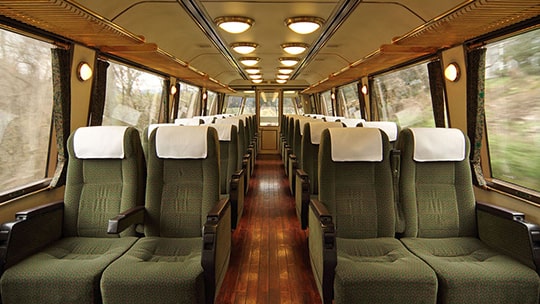
The Yufuin no Mori operates in 4- or 5-car formations, depending on the service. All cars feature:
-
2×2 seating (like most limited express trains).
-
4-person box seats available in some sections for families/groups.
-
Observation decks at the front and rear of each car for standing and taking photos.
-
High-decker seats—elevated one step above the floor for unobstructed outward views.
Best Seats:
1) The Golden Seats: Front & Back Panoramic Views
-
Heading to Yufuin (Outbound - Trains 1, 3, 5): Book Car 1, Row 1 (Seats A, B, C, D). These front-row seats face a massive glass windshield looking straight down the tracks through the driver's cabin.
-
Heading to Hakata (Inbound - Trains 2, 4, 6): Book the last row in the last car (Car 4/5, Row 15 or 13 depending on the train model) for an uninterrupted rear-facing view.
2) Left vs. Right Side (Waterfall Views)
-
Right-Side Seats (Seats C & D going outbound): Highly recommended. These seats offer the best views of Jion-no-taki Falls (a beautiful double-tiered waterfall) and the rolling Minou Mountain range. The train conductor will slow down the train as it passes Jion-no-taki so passengers can take photos.
-
Left-Side Seats (Seats A & B going outbound): Beautiful views of rural Kyushu farms and peaceful ravines, but slightly less dramatic than the right side.
3) Group Traveling (3–4 People)
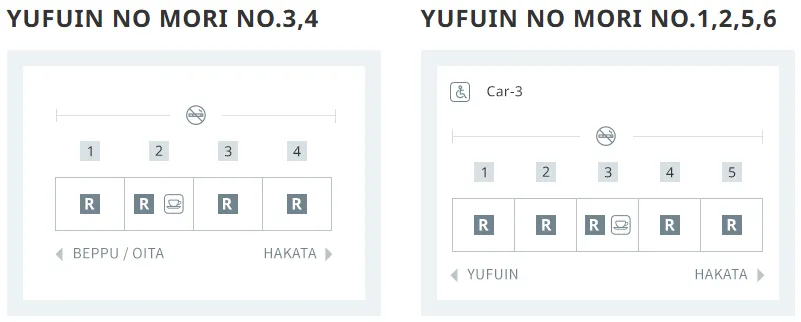
If you are traveling with family or friends, try to book the Booth Seats (available on Trains 3 & 4). These are semi-private compartments separated by wooden partitions with a large shared table in the middle.
Car-by-Car Guide:
|
Car |
Special Features |
|
Car 1 |
Panoramic front views, observation deck, cream/wood-tone decor |
|
Car 2 |
Standard seating, comfortable for families |
|
Car 3 |
Buffet/souvenir shop—bento boxes, ice cream, limited-edition souvenirs, commemorative stamp corner |
|
Car 4 |
Most unique forest-themed design; extra-wide windows on Trains 3 & 4 |
|
Car 5 |
(On 5-car formations) Additional seating, quiet ambiance |
⚠️ Note: Car 3 can get crowded during the journey, especially near the buffet counter.
Which Train to Book?
|
Train No. |
Direction |
Cars |
Best For |
|
No. 1 & 2 |
Hakata↔Yufuin |
4 cars |
Standard Yufuin trip |
|
No. 3 & 4 |
Hakata↔Beppu |
5 cars |
Best panoramic windows, extended scenery, less crowded |
|
No. 5 & 6 |
Hakata↔Yufuin |
4 cars |
Standard Yufuin trip |
Onboard Experience & Amenities
The Yufuin no Mori is designed to feel like a moving hot-spring resort. Take time to explore the train during your two-hour journey:
-
The Cafeteria/Bar (Carriage 2 or 3): Grab the famous Yufuin B-Speak Swiss Roll (it sells out fast!), local craft beers, and the signature green tea ice cream.
-
The Lounge Car (Free Access): Located in the center of the train, this glass-walled saloon features forward-facing high counters and seats where anyone can sit to watch the scenery roll by.
-
Commemorative Photo Board: Friendly cabin attendants walk through the train holding a date plaque and a replica conductor hat. They will happily take your photo with your phone or camera for a free, unforgettable souvenir.
-
Free Wi-Fi & Stamp Rally: Grab a commemorative postcard from the stamp desk and stamp it to mark your journey.
-
Free Foot Bath: If you are stopping at Yufuin Station, there is a small outdoor foot-bath (ashiyu) right on the platform. You can buy a ticket and a small towel at the station counter for a quick soak before you even leave the station!
The Luggage Rules
Managing luggage on a scenic train requires a bit of planning. Because the Yufuin no Mori is designed with a retro, elevated interior (the cabin floor sits higher than a standard train to maximize the window views), space is structurally tighter than on a standard Shinkansen.Here is the breakdown of the luggage rules, space realities, and the best ways to handle your bags.
The "160 cm Rule" Does NOT Apply Here
If you have traveled on the Tokaido or Kyushu Shinkansen lines, you might know about the strict mandatory reservations required for "Oversized Baggage" (suitcases where length + width + height total between 161 cm and 250 cm).
-
The Rule: The mandatory oversized baggage seat reservation system only applies to Shinkansen bullet trains.
-
On the Yufuin no Mori: It is a Limited Express conventional train, meaning you cannot book a specific "Oversized Luggage Seat." You are allowed to bring large bags without a penalty fee, but you have to utilize the train's specific storage layouts.
Onboard Storage Options
1. The Overhead Racks (Best for Small to Medium Bags)
Every carriage features overhead racks above the seats.
-
The Catch: Because the train windows are uniquely large and wrap slightly upward, the overhead racks are narrower and shallower than standard trains.
-
What fits: Backpacks, duffel bags, and small carry-on sized rollers (cabin size). Large, thick check-in suitcases will not fit or will overhang dangerously.
2. Designated Luggage Racks (Best for Large Suitcases)
There are dedicated, shared luggage racks located near the entry doors/decks of the carriages.
-
How it works: These are first-come, first-served. They fill up incredibly fast because a vast majority of the passengers on this route are tourists heading to Yufuin for an overnight stay.
-
Pro-Tip: Queue up on the platform early so you are among the first to board your carriage and lock down a spot on these racks.
3. At Your Seat
If the luggage racks are entirely full, you will have to keep your suitcase in your seating row.
-
Legroom: The Yufuin no Mori has relatively generous legroom compared to airplanes, so a medium suitcase can technically wedge in front of your knees, though it will make a 2-hour trip much less comfortable.