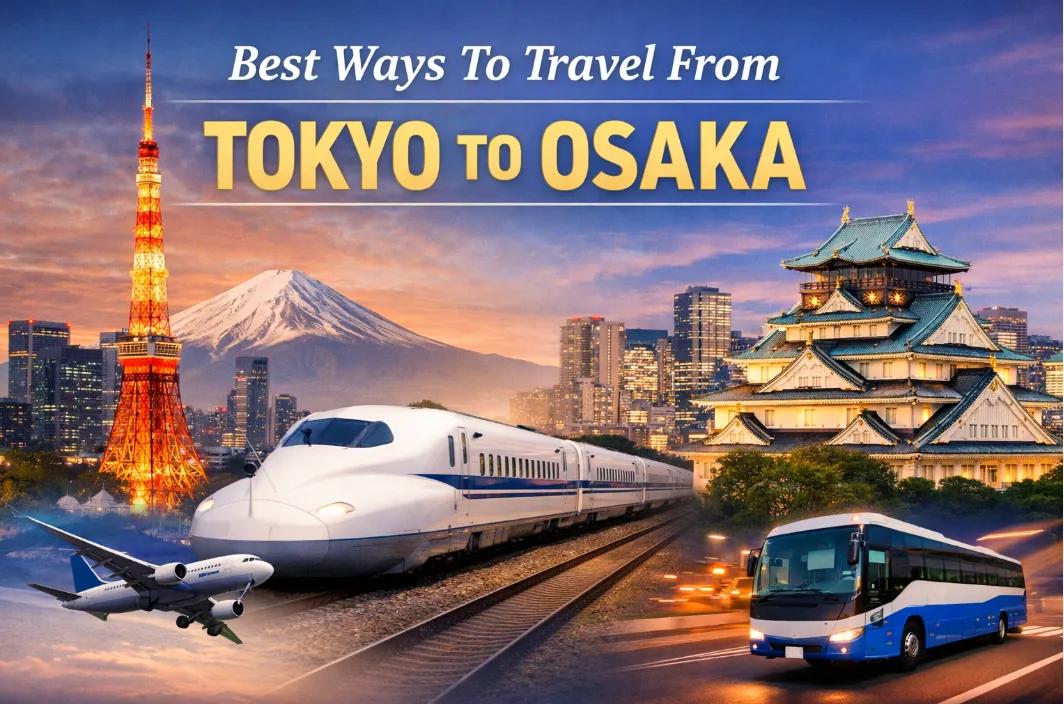
Moving from the historic heart of Tokyo to the vibrant, neon-lit alleys of Dotonbori in Osaka is a quintessential Japanese experience. The two Japan city are separated by hundreds of kilometers, yet getting between them is surprisingly easy. Still, with so many transportation styles available, travelers often wonder which one fits their schedule and budget best.Should you ride a high-speed rail, catch a domestic flight, or save money with a long-distance bus?In this guide, you’ll find a detailed comparison of the main transportation methods linking Tokyo and Osaka, including travel duration, estimated expenses, advantages, drawbacks, and booking tips. Whether you value convenience, affordability, or scenery, this article helps you decide the smartest way to make the journey.
Best Ways to Travel from Tokyo to Osaka
Traveling from Tokyo to Osaka is the most popular route in Japan, and luckily, you have several excellent options depending on whether you value speed, cost, or a good night's sleep.Here is the quick comparison table:
|
Mode |
Total Time |
Approx. Cost (One-Way) |
Comfort |
Best For |
|
Shinkansen |
2.5 hours |
¥13,000 – ¥20,000 |
⭐⭐⭐⭐⭐ |
Speed, comfort, and convenience |
|
Flight |
3.5 - 4 hours |
¥4,000 – ¥15,000 |
⭐⭐⭐⭐ |
Travelers near airports or with LCC deals |
|
Highway / Overnight Bus |
8 - 11 hours |
¥3,000 – ¥20,000 |
⭐⭐ - ⭐⭐⭐ |
Saving on transport and one night’s hotel |
|
Local JR Trains |
8 - 10+ hours |
¥8,000 - ¥9,000+(less with passes) |
⭐⭐ |
Extreme budget / Slow travel fans |
|
Rental Car/Driving |
6 -7 hours or 2 - 3 days |
¥61,000+ |
⭐⭐⭐ |
Families or groups wanting freedom |
1. Shinkansen (Bullet Train) - Fastest & Most Popular
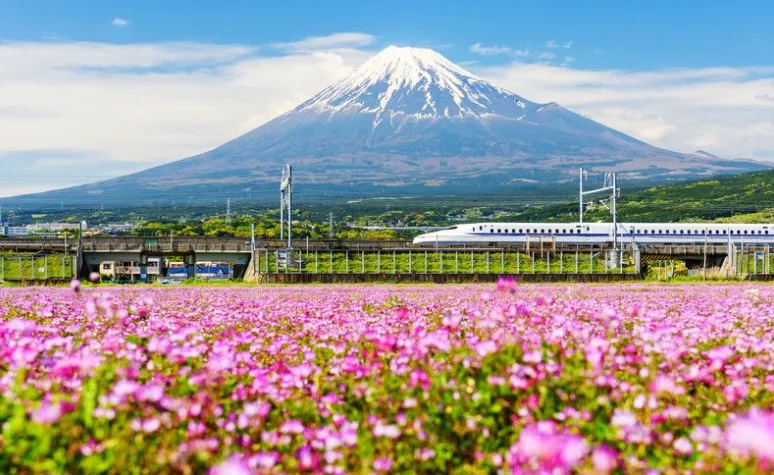
To travel from Tokyo to Osaka, you will use the Tokaido Shinkansen line which connecting Tokyo Station or Shinagawa Station directly to Shin-Osaka Station.The Tokaido Shinkansen is Japan's premier, busiest high-speed railway line, connecting Tokyo, Nagoya, and Osaka since opening in 1964 as the world's first bullet train. Operated by JR Central, it offers 285 km/h (177 mph) service, transporting passengers between Tokyo and Osaka in about 2.5 hours.
✔️Pros:
-
City Center to City Center: Fastest way to go between city centers.No long airport transfers.
-
Frequency: Trains depart every few minutes.
-
Punctuality: Famous for being on time to the second.
-
Comfort & Experience: seating, plenty of luggage space, and on-board amenities.Spacious seats, plenty of luggage space,on-board amenities, impeccable service (ekiben bento boxes!), views of Mt. Fuji (on right side, from Tokyo).
❌Cons:
-
Most expensive standard option.
-
The fastest Nozomi service is not covered by the Japan Rail Pass (JR Pass).
📍 Who It's Best For: Most travelers, especially first‑timers, families, and anyone valuing speed & convenience.
Total Travel Time:
There are three main Shinkansen services on the Tokaido Shinkansen line (Tokyo ↔ Osaka).The travel time depends on which train service you choose:
|
Service |
Stops |
Time |
Notes |
|
Nozomi |
Fastest, few stops |
~2 hr 30 min |
Not covered by JR Pass |
|
Hikari |
Slightly slower, more stops |
~3 hr |
Covered by JR Pass |
|
Kodama |
Stops at all stations |
~4 hr |
Covered by JR Pass, rarely used for direct travel |
🔔Tip: For most tourists, Nozomi is fastest, but if you have a JR Pass, use Hikari.
Cost:
For a one-way trip between Tokyo and Osaka (Shin-Osaka) in 2026, the price of a Tokaido Shinkansen ticket generally ranges from ¥13,870 to ¥19,590, depending on the train type and seat class.Below is the standard price breakdown for adult one-way tickets.
|
Seat Type |
Nozomi (Fastest) |
Hikari / Kodama |
|
Non-Reserved |
¥13,870 |
¥13,870 |
|
Reserved Seat |
¥14,720 |
¥14,400 |
|
Green Car (First Class) |
¥19,590 |
¥19,270 |
-
Children (Ages 6–11): Pay 50% of the adult fare.
-
Infants (Under 6): Travel for free if they sit on an adult's lap.
How to Book:
-
Smart EX App/Website: The official booking tool. Offers "Hayatoku" early-bird discounts.
-
Klook/KKday: User-friendly third-party options.
-
Ticket machines or Midori no Madoguchi counters at major stations.
2. Flight - Quick Air Time, Moderate Total Time
Flying between Tokyo and Osaka is a fantastic budget option, often costing less than half the price of the Shinkansen if you book the right airline and airport combination.
✔️Pros:
-
Often the cheapest way to travel if you book 2+ weeks in advance.
-
Great for earning or using frequent flyer miles.
-
Fast air segment.
-
Great if your final destination is near the airport (e.g., Starflyer to KIX).
- Beautiful aerial views of the Japanese coastline (and Mt. Fuji if the sky is clear).
❌Cons:
-
Budget airlines (Peach/Jetstar) have strict weight limits (usually 7kg for carry-on) and charge extra for checked bags.
-
Airport access & security add time/cost.
-
Unlike the Shinkansen, where you can hop on the next train if you miss yours, flights are less forgiving.
📍 Who It's Best For: Travelers near airports or with light luggage, or anyone finding a good flight deal.
Airports:
Tokyo and Osaka both have two airports. Your choice significantly impacts your total travel time and "ground" costs.
A. Tokyo Airports
-
Haneda (HND): Much closer to central Tokyo (20–30 mins). Most ANA/JAL flights depart from here.
-
Narita (NRT): Further away (60–90 mins). This is the hub for budget airlines like Peach and Jetstar.
B. Osaka Airports
-
Itami (ITM): The "city" airport. Very close to central Osaka/Umeda (25–30 mins by bus). Primarily ANA and JAL.
-
Kansai (KIX): The international hub. Further away (50–70 mins). Most budget flights land here.
Total Travel Time:
~3.5 to 4 hours (Including 1-hour transit to airport + 1-hour check-in + 1-hour flight + 45-min transit to city).
Cost:
Prices for a one-way flight generally range from ¥4,000 to ¥15,000 ($30 – $100).
|
Airline Type |
Airlines |
Typical One-Way Price |
Best For |
|
LCC (Budget) |
Peach, Jetstar Japan |
¥4,000 – ¥8,000 |
Saving money; light packers |
|
Boutique |
Star Flyer, Skymark |
¥7,500 – ¥12,000 |
Comfort at a mid-range price |
|
Full Service |
ANA, Japan Airlines (JAL) |
¥10,000 – ¥15,000+ |
Service, luggage, & convenience |
🔔Pro Tip: If you are a foreign tourist, check the JAL Explorer Pass or ANA Experience Japan Fare. These offer fixed-price domestic tickets (often around ¥7,700) that can be cheaper than standard fares.
How to Book:
-
Airline Sites: JAL, ANA, Peach, Jetstar official booking pages.
-
Flight Search Engines: Skyscanner, Google Flights, Traveloka, Trip.com — often useful for comparing prices across airlines.
-
Book early for the lowest prices, particularly for weekend or holiday travel.
3. Highway / Overnight Bus - Cheapest Option
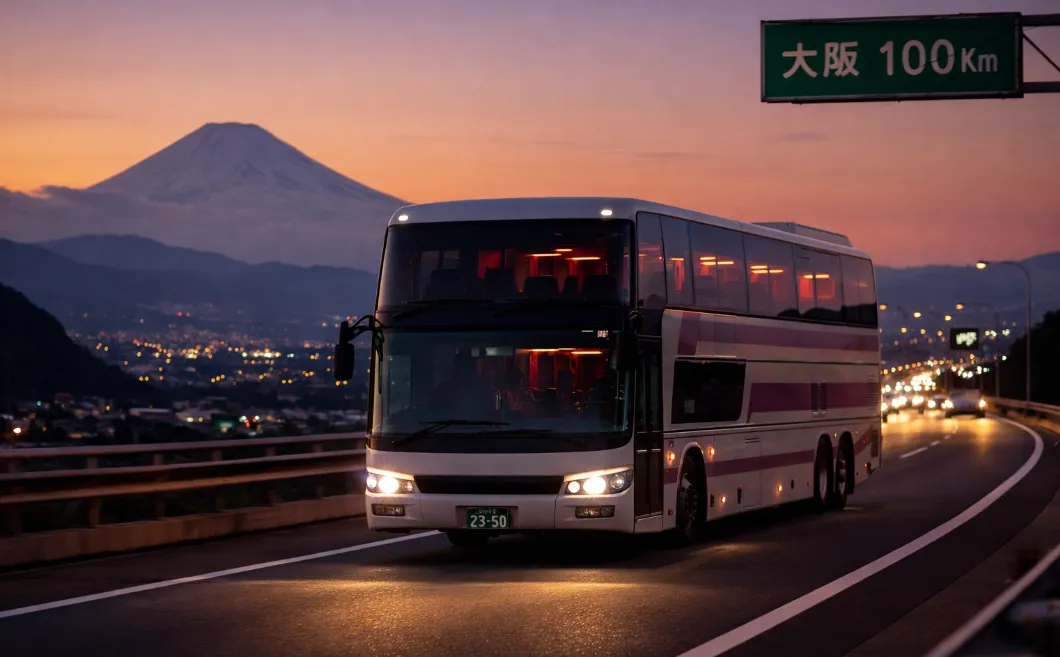
The highway bus is the ultimate "travel hack" for Japan. It is the cheapest way to travel between Tokyo and Osaka, and by taking an overnight bus, you save the cost of a hotel night.Both daytime and overnight buses run between major hubs like Shinjuku (Tokyo) and Umeda (Osaka).
✔️Pros:
-
Lowest cost of all options.
-
Taking the overnight bus also saves you the cost of a hotel night.
-
Multiple departure points in Tokyo (e.g., Shinjuku, Tokyo Station).
-
Direct to city centers.
-
Many companies offer "Ladies Only" buses or guarantee that women will be seated next to other women.
❌Cons:
-
Long travel time.
-
Comfort varies by bus operator and seat type.
-
Possible delays during holidays.
-
Narrow seats (unless you pay for "Premium" versions), and it can be difficult to sleep for some.
- Not all cheap buses have toilets (though they make 2–3 stops at high-end rest areas with clean facilities).
📍 Who It's Best For: Solo travelers on tight budgets or those who can sleep sitting up and want to maximize daytime sightseeing.
Typical Routes & Stops:
Buses often depart from major Tokyo hubs such as:
-
Shinjuku Expressway Bus Terminal
-
Ikebukuro Station
-
Tokyo (Yaesu/Busterminal)
Common arrival points in Osaka include:
-
JR Osaka Station (Sakurabashi Exit)
-
Namba / Tennoji areas
-
Universal Studios Japan area (some routes)
Some services also stop at Kyoto before reaching Osaka.
Total Travel Time:
8–10 hours for daytime buses, 9–11 hours for overnight buses.
Cost:
Prices fluctuate based on the day of the week and how early you book.
|
Seat Type |
Approx. Price |
Comfort Level |
|
Standard (4 seats/row) |
¥3,000 – ¥6,000 |
Similar to an airplane economy seat. |
|
Relax/Prime (4 seats/row) |
¥5,000 – ¥8,000 |
Includes leg rests and a "canopy" (hood) for privacy. |
|
3-Row Individual |
¥8,000 – ¥12,000 |
Wider, independent seats with curtains and more recline. |
|
Luxury (Dream Sleeper) |
¥18,000 – ¥20,000 |
Fully private "rooms" with flat-reclining seats. |
How to Book:
-
Online Aggregators:
-
Willer Express: Best for first-timers. Easy credit card payment and English support.
-
Kosokubus.com: A great aggregator that compares many different bus companies in one search.
-
Japan Bus Online: Good for booking JR-affiliated and regional buses.
-
- Station Counters: Major bus terminals like Shinjuku Expressway Bus Terminal.
💡Pro-Tip: If you arrive at 6:00 AM and can't check into your hotel, head to a Manga Cafe (like Kaikatsu Club) or a Sento (public bath) near the station. It’s a cheap way to shower and nap for a few hours before starting your day.
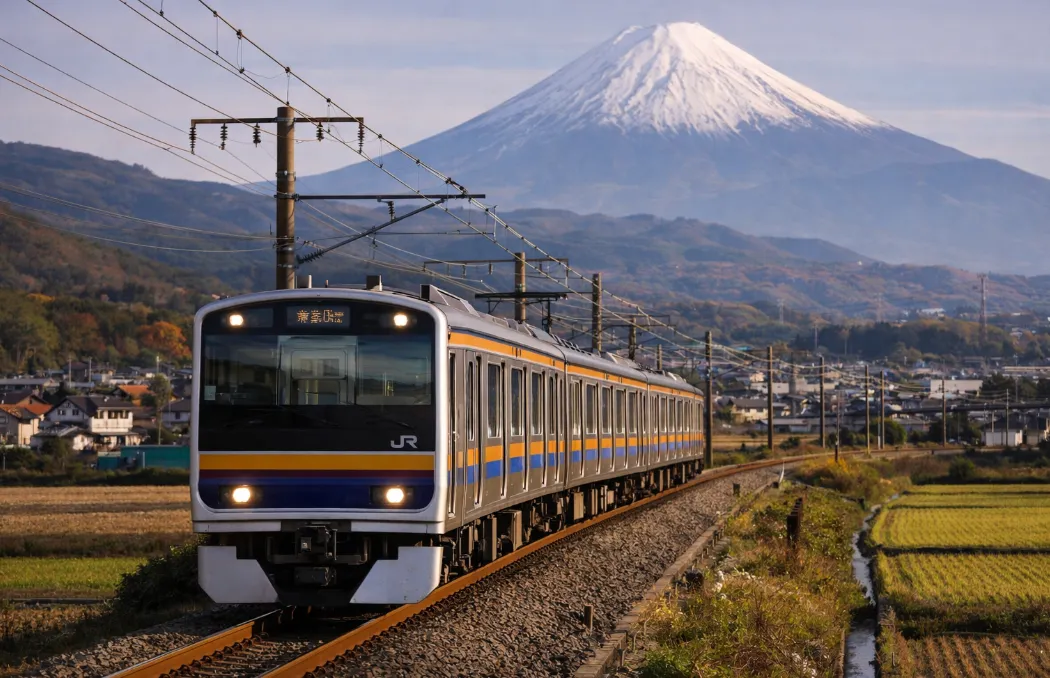
4. Local JR Trains - Budget With Time to Spare
While the Shinkansen is the star of the show, taking local JR trains (regular commuter and rapid trains) from Tokyo to Osaka is the "Slow Travel" challenge of Japan. It’s a journey for those who value the experience of the route over the speed of the destination.Unlike the direct Shinkansen, there is no "local train" that goes the whole way. You will be traveling along the Tokaido Main Line, which requires multiple transfers at major regional hubs.
✔️Pros:
-
A slow, scenic journey through Japanese towns and countryside.
-
Extremely cheap with the seasonal pass.
-
Flexible exploration — hop off to sightsee en route.
-
Access to "hidden gem" stations.
-
No need for reservations.
❌Cons:
-
Requires planning because you’ll make multiple transfers.
-
Very long travel time.
-
Very exhausting for a single day.
-
Pass rules (e.g., consecutive travel days) can be restrictive.
-
Not ideal if you’re on a tight schedule or have lots of luggage.
📍 Who It's Best For: Ultra-budget travelers with time to spare or rail enthusiasts wanting the complete local experience.
Route Overview:
There’s no single nonstop local train service from Tokyo to Osaka. Instead, you’ll ride a series of local & rapid trains on the Tōkaidō Main Line and connected JR lines. Typical segments include: Tokyo → Atami → Shizuoka → Hamamatsu → Nagoya → Maibara → Kyoto → Osaka.You’ll transfer multiple times because local trains don’t run the full way nonstop.
-
Distance: ~556 km (345 miles)
-
Number of Transfers: Typically 5-10 changes
-
Trains Used: Local (普通, futsū), Rapid (快速, kaisoku), and sometimes Limited Express trains
Tools like Japan Travel by NAVITIME, Ekispert, or HyperDia (with Shinkansen/express unchecked) can help you plan specific segments with timed transfers.
Total Travel Time:
8–10+ hours depending on schedule, transfers, and wait times.Some travelers even report 11–12 h on certain connections if there are many transfers or slower segments.
Cost:
A. Regular JR Fare (One-Way)
Basic fare from Tokyo → Osaka by local/rapid trains is typically around ¥8,700–¥9,100 one way.You only pay the ordinary fare, as rapid/local trains don’t require express or reserved seat charges.
B. Seishun 18 Kippu — Best Value (If Valid)

This is a seasonal JR ticket that lets you ride unlimited local & rapid JR trains nationwide on each day of use.If you are paying the full ¥9,000 fare, a highway bus is actually cheaper and faster. The only time local trains truly make sense is during the seasonal availability of the Seishun 18 Kippu.
-
Price: ¥10,000 (3-day version) or ¥12,050 (5-day version).
-
Validity:
-
Spring:
-
Period of use: March 1 to April 10
-
Period of sale: February 20 to March 31
Summer:
-
Period of use: July 20 to September 10
-
Period of sale: July 1 to August 31
Winter:
-
Period of use: December 10 to January 10
-
Period of sale: December 1 to December 31
-
-
-
Flexibility: Can be shared (e.g., 5 people use it for 1 day)
-
Restrictions: Valid on local/rapid JR trains nationwide only (NO Shinkansen, NO reserved seats)
How to Book:
Standard Ticket:
-
Buy at a JR ticket office (“Midori no Madoguchi”) or ticket machine.
-
Ask for a regular fare ticket from Tokyo to Osaka via local JR trains.
Seishun 18 Kippu:
-
Buy at a JR ticket office during the sales period for the season you intend to travel.
-
Present it for stamping when entering the first JR station on your travel day.
5. Rental Car/Driving - Flexible but Often Less Practical
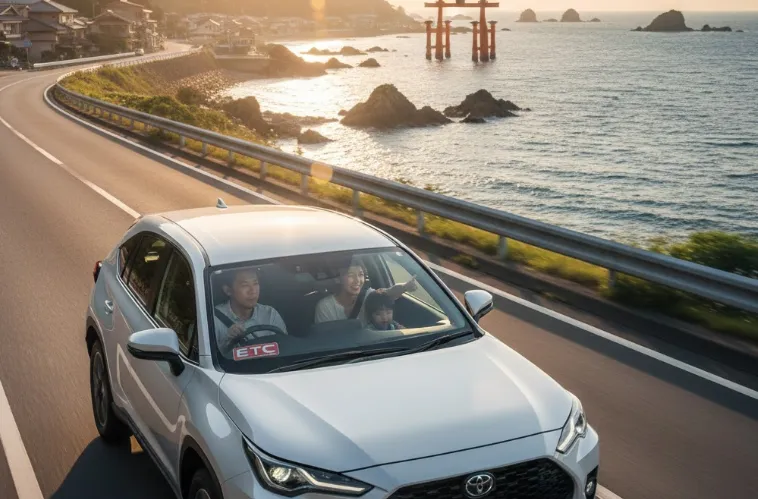
Driving from Tokyo to Osaka is rarely the fastest or cheapest option, but it is the ultimate way to see the "hidden" Japan. For a group or family, it can also be a surprisingly practical choice if you want to stop at Mt. Fuji, Hakone, or the Izu Peninsula along the way.
✔️Pros:
-
Ultimate Freedom: Stop at small wasabi farms, mountain shrines, or coastal viewpoints where trains don't go.
-
Group Savings: If you are a family of four, the total cost (minus the one-way fee) can actually be comparable to four Shinkansen tickets.
-
Service Areas (SA): Japanese highway rest stops are world-class, featuring gourmet local food, Starbucks, and even footbaths.
❌Cons:
-
Left-Side Driving: If you aren't used to it, navigating Tokyo’s complex multi-level highways can be stressful.
-
Parking Costs: Expect to pay ¥2,000–¥4,000 per night for parking at hotels in Tokyo or Osaka.
-
Traffic: The Tomei Expressway is prone to heavy congestion, especially during "Golden Week" (May) or "Obon" (August).
📍 Who It's Best For: Groups of 3-4 splitting costs; Travelers making multiple stops along the route; Those with specific destinations not accessible by train; Families with children needing flexibility or photographers wanting to stop for scenic shots.
Time & Routes:
There are two main ways to drive this route, depending on whether you want speed or scenery.
-
The Expressway Route (Fastest): Takes about 6–7 hours via the Tomei and Shin-Tomei Expressways. It is a well-maintained, high-speed toll road with excellent service areas.
-
The Scenic Route (Slowest): Takes 2–3 days. You can drive through Hakone, around the Fuji Five Lakes, and down through the Japanese Alps or the Kiso Valley (Magome/Tsumago).
Cost:
Driving is expensive due to three main factors: rental fees, high tolls, and the dreaded "one-way drop-off" fee.
|
Expense Type |
Estimated Cost |
Estimated Cost |
|
Daily Rental |
¥8,000 – ¥15,000 |
$55 – $100 |
|
Highway Tolls |
¥12,000 – ¥14,000 |
$80 – $95 |
|
One-Way Fee |
¥35,000 – ¥50,000 |
$240 – $345 |
|
Fuel |
¥6,000 – ¥8,000 |
$40 – $55 |
|
Total (One-way) |
¥61,000+ |
$415+ |
The One-Way Drop-off Fee is the biggest "hidden" cost. Because the rental company has to transport the car back to Tokyo, they charge a premium based on the distance (approx. 500km).
How to Book & Requirements:
-
Required Documents: You must have a physical International Driving Permit (IDP) based on the 1949 Geneva Convention along with your home country's license. (Note: Residents of Switzerland, Germany, France, Belgium, Monaco, and Taiwan need a certified Japanese translation instead).
-
Rent an ETC Card: When you pick up the car, ask to rent an ETC (Electronic Toll Collection) card (usually ¥330). This allows you to drive through toll gates without stopping; you pay the total balance when you return the car.
-
Recommended Companies:
-
-
Toyota Rent-a-Car: Largest fleet and most drop-off locations.
-
Nippon Rent-a-Car: Great English support and airport locations.
-
Times Car Rental: Often has competitive pricing for compact cars.
-
Detailed Comparison: How to Choose?
Choosing how to travel between Tokyo and Osaka really depends on time, budget, comfort, and your travel style.
🚄 Choose the Shinkansen If:
-
You have a moderate budget. At ~$100 USD, it’s not cheap, but it’s the most "frictionless" experience.
-
You value your time. Door-to-door, it is faster than flying because you arrive in central Osaka (Shin-Osaka), not an hour outside at the airport.
-
You want comfort. Massive legroom, tray tables, and the ability to eat an Ekiben (station bento) while watching the scenery.
✈️ Choose a Flight If:
-
You are a solo traveler on a budget. Low-cost carriers (Peach, Jetstar) often have fares for ¥5,000 (~$35), which is half the price of the train.
-
You are connecting. If your international flight lands at Narita (NRT) and you want to head straight to Osaka, a domestic hop is easier than hauling luggage to a train station.
-
Note: Total travel time is usually 4+ hours when you factor in the 60-minute train to Narita and the 60-minute train from Kansai Airport (KIX) to central Osaka.
🚌 Choose the Highway/Overnight Bus If:
-
You are "backpacking" or on a strict budget. It is the cheapest possible way to move between the cities.
-
You want to "teleport" while sleeping. You leave Shinjuku at 11:00 PM and wake up in Umeda at 7:00 AM, effectively gaining an extra day of sightseeing.
-
Avoid if: You are a light sleeper or tall. Even "Premium" buses can feel cramped for an 8-hour stretch.
🚃 Choose Local JR Trains If:
-
It’s the right season. Only worth it during Seishun 18 Kippu months (Mar, Aug, Dec), where the cost drops to ~¥2,410.
-
You are a train nerd. You get to see the "real" Japan—the residential backyards, small-town platforms, and regional commuters.
-
Avoid if: You have more than one small bag. Carrying a large suitcase through 5–7 local train transfers is a nightmare.
🚗 Choose a Rental Car If:
-
You are a group of 3 or 4. Once you split the ¥14,000 toll and ¥10,000 fuel, it can be cheaper than four Shinkansen tickets (though the one-way drop-off fee usually negates this).
-
The journey is the destination. If you want to stop in Hakone for an onsen, Shizuoka for tea fields, or Nagoya for wings, a car is the only way to do it on your own clock.
The Bottom Line: Japan's transportation is excellent across all modes. You can't make a wrong choice, but you can make a better choice based on your specific needs. When in doubt, the Shinkansen is almost always the right answer for this route.