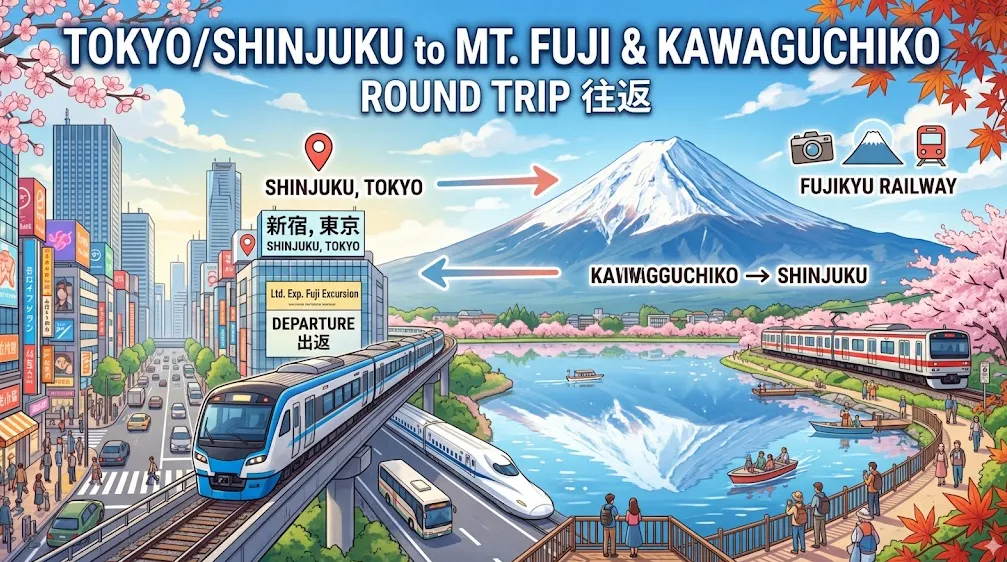
Traveling between the Tokyo metropolis and the iconic Mount Fuji area is a highlight of any Japan itinerary, but the transportation options can vary wildly in both price and convenience. If you want to maximize your time soaking in the views at Kawaguchiko rather than stressing over complicated transit maps, choosing the right method is essential.This guide breaks down the most efficient and budget-friendly ways to travel between the city and Kawaguchiko, along with practical tips on securing seats and making the most of your journey.
Quick Comparison at a Glance
|
Option |
Direct |
Time |
Cost (One Way) |
Best For |
|
Fuji Excursion Train |
✅ |
~1 hr 55 min |
¥4,200 |
Fastest & scenic |
|
Highway Bus |
✅ |
~1 hr 40 – 2 hrs |
¥2,200 – ¥2,600 |
Cheapest with no transfers |
|
Local Train + Transfer |
❌ |
~2 hr 30 – 3 hrs |
¥2,500 – ¥4,000 |
Budget + rail experience |
Option 1: The Fuji Excursion (Fastest & No-Transfer Train)
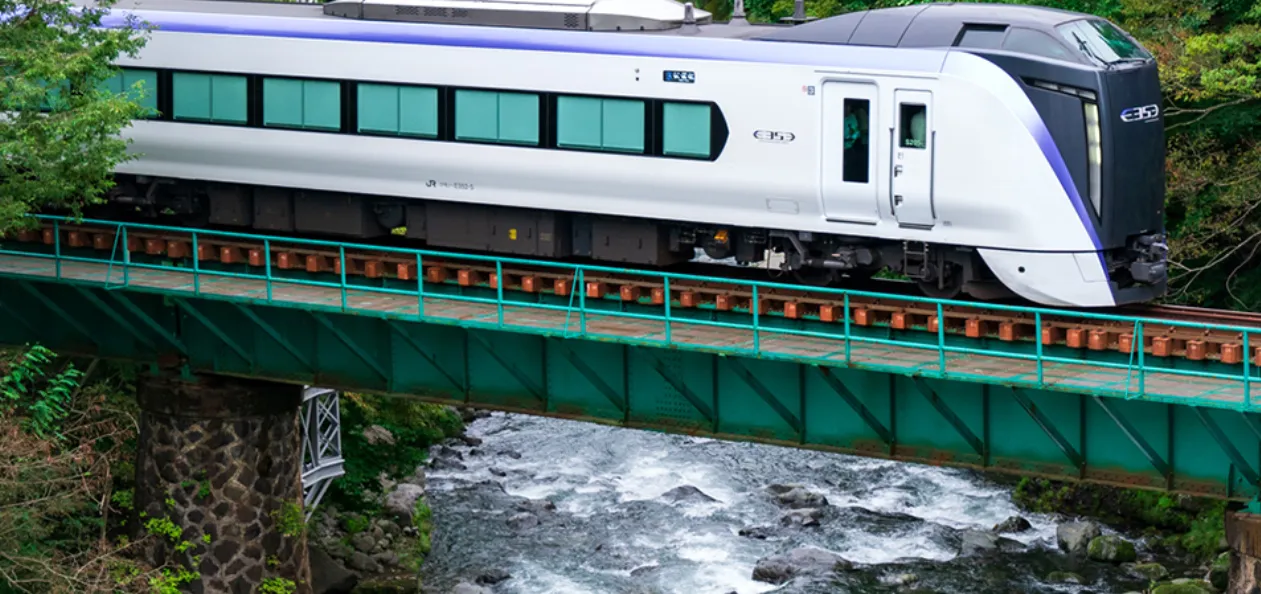
The JR Fuji Excursion (Fuji Kaiyu) is a direct, limited express train service operated by JR East and Fujikyu Railway, connecting Tokyo’s Shinjuku Station to Kawaguchiko Station at the base of Mount Fuji in about 2 hours.It is one of the easiest and most comfortable ways to travel from Tokyo to the Mt. Fuji area—no transfers, no confusion, just a smooth ride straight to Kawaguchiko. If you're planning a day trip or overnight visit, this limited express train saves time while offering scenic views along the way.
✔️Pros:
-
No transfers: The most hassle-free option.
-
Comfortable: Reserved seats, power outlets, onboard WiFi, and luggage storage.
-
Scenic: Offers great views of Mt. Fuji from the right side of the train after passing Otsuki.
❌Cons:
-
Expensive: The priciest public transport option.
-
Limited schedule: Only a few trains run per day.
-
Must book in advance: Tickets often sell out, especially during peak seasons (Cherry Blossoms, Golden Week, Autumn Leaves) .
Key Details:
-
Route: Shinjuku Station → (Direct) → Kawaguchiko Station.
-
Travel Time: Approximately 1 hour and 55 minutes.
-
Cost: ¥4,200 (includes base fare and limited express fee) .
- Frequency: 4 round trips per day. Additional seasonal trains (like No. 81 & 78) run on weekends and holidays.
How to Book Tickets:
1) Online (Easiest)
1️⃣Official JR East Website
Use the JR-EAST Train Reservation portal. You can choose your specific seat (aim for Seat A on the left for the best mountain views!).Reservations open one month (30 days) before your travel date at 10:00 AM JST.
2️⃣Official Partners
You can book through platforms like Klook, Japan Bullet Train, or NAVITIME. You will receive a QR code to exchange for a physical ticket at the station.
2) At the Station
Use the "Reserved Seat Ticket Vending Machine" (dark blue/purple) or the "Midori-no-Madoguchi" (Green Window) ticket office.
-
Ticket Offices (Midori-no-Madoguchi): Located at major JR stations like Shinjuku. Staff can assist you, but lines can be long during peak seasons.
-
Ticket Machines: Located in the station. You can buy reserved seat tickets here, but availability is not guaranteed for same-day travel.
‼️Pickup Location: If you book via JR East or Klook, you must pick up your physical paper tickets at a JR station in Tokyo (like Shinjuku, Tokyo, or Shibuya). You cannot pick up JR tickets at Kawaguchiko or Mt. Fuji stations because they are operated by a different company.
3) JR Pass Holders
The National JR Pass covers the segment to Otsuki, but you must pay a surcharge (approx. ¥1,770) for the Fujikyu Railway portion. The JR Tokyo Wide Pass (¥15,000) covers the entire trip for free.
Option 2: Highway Bus (Cheapest & Easiest No-Transfer)
Highway buses are a popular, affordable, and direct alternative to the train. They are less expensive and have a more frequent schedule.If you are on a budget, the highway bus is half the price of the train and often just as fast if traffic is clear.
✔️Pros:
-
Cheapest: The most budget-friendly direct option.
-
Frequent: More departure times to choose from.
-
Direct: No transfers; you arrive right at Kawaguchiko Station.
❌Cons:
-
Traffic: Travel time can be unpredictable due to highway congestion, especially on weekends and holidays.
-
Comfort: While modern and comfortable, buses have less legroom than the limited express train.
Key Details:
-
Route: Shinjuku Expressway Bus Terminal (Busta Shinjuku) →Kawaguchiko Station (stops at Fujikyu Highland and Fujisan Station along the way).
-
Travel Time: Approximately 1 hour 40 minutes to 2 hours (depending on traffic) .
-
Cost: ¥2,200 - ¥2,600 one-way (Adult).
-
Frequency: Extremely frequent, with buses leaving every 10–30 minutes during peak morning hours (6:45 AM – 11:00 AM).
How to Book Tickets:
Booking in advance is highly recommended, especially for morning departures.
-
Highway-Buses.jp (Official English Site): This is the most user-friendly portal for international travelers.
-
Window: Reservations typically open one month before the travel date.
-
Ticket Type: You receive a "Web Ticket" (QR code) via email; no need to print it, just show it to the driver on your phone.
-
-
Sekitori.jp: An alternative official reservation service often used for routes involving Mt. Fuji and Fuji-Q Highland.
-
Klook / Japan Bus Online: Good if you want to bundle your bus ticket with other activities or prefer using a familiar third-party app.
-
In-Person (Last Minute): You can use the automated ticket machines on the 4th floor of Busta Shinjuku. However, morning buses often sell out a day or two in advance.
Option 3: Local Trains via Otsuki (Cheapest Flexible Train)
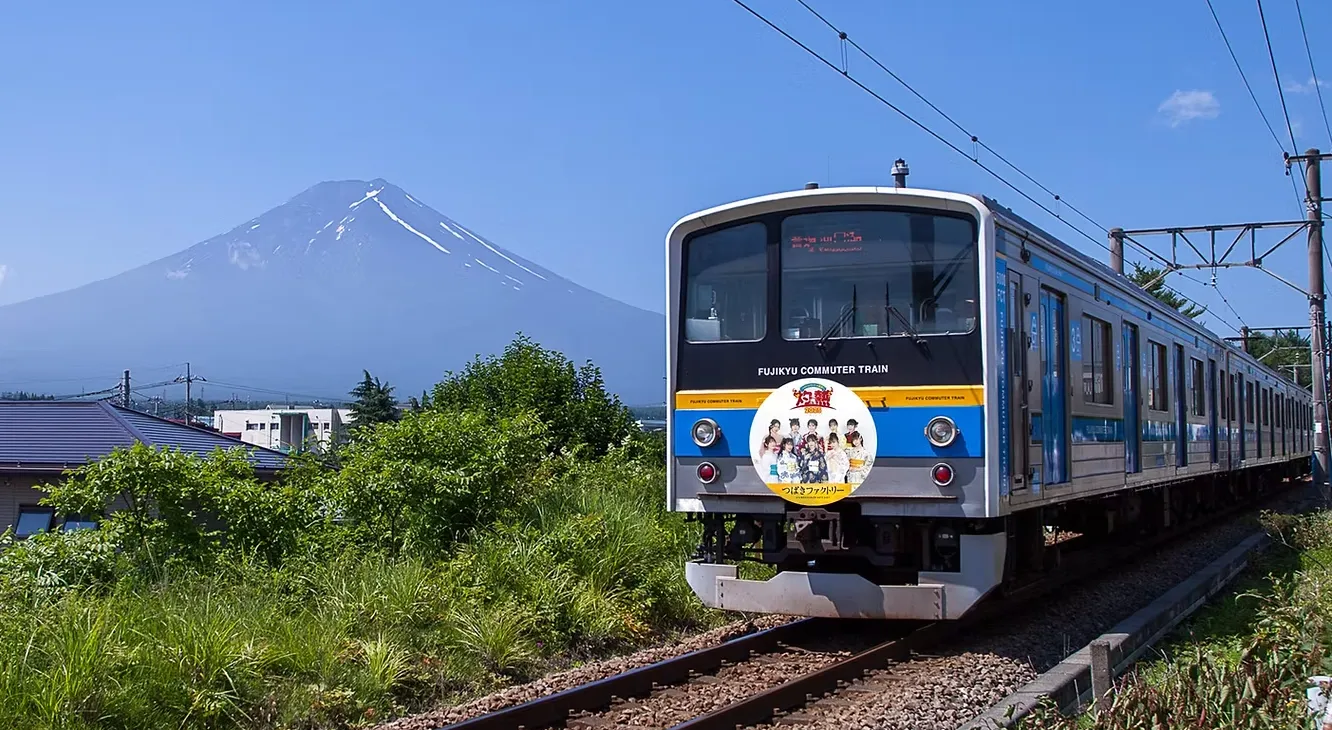
If the Fuji Excursion is sold out or you prefer to save money and don't mind a transfer, this is the best alternative.You can take a standard "Limited Express Azusa" or "Kaiji" from Shinjuku to Otsuki. And then,you have to switch platforms at Otsuki. The local train to Kawaguchiko takes about an hour and can be very crowded.
✔️Pros:
-
Flexible: Trains run frequently; you don't need a specific reservation.
-
Cheap: Significantly cheaper than the Fuji Excursion.
-
Easy Payment: You can use an IC card (Suica/Pasmo) for the entire journey.
❌Cons:
-
Slower: Takes nearly an hour longer than the direct train.
-
No reserved seats: You may have to stand, especially on the Fujikyu line from Otsuki to Kawaguchiko, which can get very crowded.
-
Transfer required: You must change trains at Otsuki Station.
Key Details:
-
Route: Shinjuku Station → JR Chuo Line (Local/Rapid) → Otsuki Station → Transfer → Fujikyu Railway Line (Local) → Kawaguchiko Station.
-
Travel Time: Approximately 2 hours 45 minutes to 3 hours.
-
Cost: Approx. ¥2,500 – ¥4,000 total.
-
Transfers: 1 transfer at Otsuki Station.
How to Book Tickets:
1) Use an IC Card (Simplest & Recommended)
This is the easiest way to travel. IC cards like Suica or Pasmo work on both the JR and Fujikyu lines for this route.No advance booking is required. Simply tap your IC card at the ticket gate in Shinjuku and follow the signs for the JR Chuo Line (Local trains). At Otsuki, exit the JR gate and tap into the Fujikyu Railway gate for the train to Kawaguchiko.
If you have an iPhone, you can add a Suica or Pasmo card directly to your Apple Wallet and top it up with your credit card. This is the most "2026" way to do it—no physical card or ticket machines needed.
2) Buy Paper Tickets
For the JR Portion (Shinjuku → Otsuki):
-
Purchase a ticket at a JR ticket machine or Midori-no-Madoguchi (manned ticket office) in Shinjuku Station.
-
Select "Otsuki" as your destination.
For the Fujikyu Portion (Otsuki → Kawaguchiko):
-
At Otsuki Station, after exiting JR, go to the Fujikyu ticket counter or vending machine.
-
Buy a ticket to Kawaguchiko.
-
Cash is recommended for Fujikyu tickets.
3) Using a JR Pass
If you have a Japan Rail Pass:
-
The JR portion (Shinjuku → Otsuki) is covered—show your pass to station staff.
-
At Otsuki, you must purchase a separate Fujikyu ticket (cash recommended) to continue to Kawaguchiko.
⚠️Note: Fujikyu Railway is a private line. Even if you have a JR Pass, you must purchase a separate ticket for this section
Crucial Tips for 2026
-
Traffic Warning: Avoid taking the bus back to Shinjuku on Sunday afternoons/evenings; the Chuo Expressway often experiences heavy "returning-to-city" congestion, turning a 2-hour trip into 4 hours. Use the train for your return leg if traveling on a Sunday.
-
Luggage: Trains have dedicated luggage racks. If using the train, use the large luggage racks in Cars 1 and 3. Buses have a "one suitcase per person" rule in the under-carriage hold.
-
The "Mt. Fuji" Seat: On the way to Kawaguchiko, try to book seats on the Right Side of the train/bus for the first glimpse of the mountain.
-
The JR Tokyo Wide Pass: If you plan to visit Nikko or Karuizawa within 3 days, this pass (¥15,000) covers the entire Fuji Excursion trip (including the private railway portion) and allows free seat reservations.
-
Check weather: Mt Fuji visibility can vary; morning often best view.
-
Fifth Station transport: If your goal is the Mt Fuji 5th Station (for climbing/ views), check seasonal direct buses too — different route from Kawaguchiko.
Frequently Asked Questions (FAQ)
Do I need a reservation for the Fuji Excursion?
Yes. All seats are reserved. It is highly recommended to book online as soon as your travel dates are confirmed (one month in advance) to avoid standing or missing out.
Can I use the Japan Rail (JR) Pass on the Fuji Excursion?
Only partially. The JR Pass covers the JR section from Shinjuku to Otsuki, but you must pay an additional fare (¥1,170 - ¥1,620) for the Fujikyu Railway section from Otsuki to Kawaguchiko.
Which side of the train has the best view of Mt. Fuji?
On the Fuji Excursion, aim for a seat on the right side (the side where you board) for the best views of Mt. Fuji after the train passes Otsuki Station.
What is the earliest departure from Shinjuku to Kawaguchiko?
For the Fuji Excursion, the first train departs at 7:30 AM. For the Highway Bus, early morning departures are also available.
What is there to do once I arrive in Kawaguchiko?
Once you arrive, you can take the Retro Bus to explore the area. Top attractions include the Mt. Fuji Panoramic Ropeway, Oishi Park (famous for lavender and seasonal flowers), and the Kawaguchiko Natural Living Museum. For a great view of Mt. Fuji with the iconic five-story pagoda, visit Arakurayama Sengen Park (a short taxi or bus ride from the station).
Is there a "best" day of the week to go?
Avoid weekends and Japanese public holidays at all costs. The Chuo Expressway (bus route) becomes a parking lot, and trains are packed. Tuesdays, Wednesdays, and Thursdays are the "sweet spots" for lower crowds and smoother traffic.
Where can I store my luggage at Kawaguchiko?
Kawaguchiko Station has many coin lockers, but they fill up by 10:00 AM.Pro-Tip: There is a luggage storage counter right next to the station (to the right as you exit) that charges a flat fee per bag and rarely "fills up."
Are there toilets on the bus and train?
-
Fuji Excursion: Yes, modern, clean toilets are available.
-
Highway Bus: Most (but not all) buses have a small toilet in the back. It’s best to use the facilities at Busta Shinjuku before boarding.
-
Local Trains: Usually no toilets on the short 2-3 car local trains.