Arriving at Narita past midnight or racing to catch a 6:00 AM departure can turn Japan’s gateway airport into a logistical puzzle. While the airport itself is famously efficient, the train schedules aren’t around the clock.Fortunately, several reliable alternatives remain available throughout the night, making it possible to travel comfortably even outside normal public transport schedules.In this guide, you'll learn when each transportation option makes the most sense, how much you can expect to pay, where to board, and which choice offers the best balance of convenience and value. Whether you're traveling alone, with family, or carrying heavy luggage, this article will help you plan a smooth transfer to or from Narita Airport.
Is Narita Airport Open 24 Hours?
The short answer is: Yes and no. Narita International Airport (NRT) is not a fully 24-hour airport in the traditional sense, but it never fully closes—you can remain inside the terminals overnight. However, understanding the specific limitations is crucial for planning a smooth trip.
Here is a comprehensive breakdown of what "24 hours" really means at Narita Airport.
1. Terminal Access Hours
While you can stay inside the terminals, not every floor is accessible around the clock. According to the official airport guide, access to different floors is restricted as follows:
|
Terminal |
Floor |
Hours |
|
Terminal 1 |
4F (International Departures) |
05:00 – 24:00 |
|
3F (Domestic Arrivals) |
05:00 – 24:00 |
|
|
2F |
05:00 – 24:00 |
|
|
1F (International Arrivals / Domestic Departures) |
Available 24 hours |
|
|
B1F |
Available 24 hours |
|
|
Terminal 2 |
4F |
05:00 – 24:00 |
|
3F (International Departures) |
05:00 – 24:00 |
|
|
2F (Domestic Arrivals) |
05:00 – 24:00 |
|
|
1F (International Arrivals / Domestic Departures) |
Available 24 hours |
|
|
B1F |
Available 24 hours |
|
|
Terminal 3 |
2F (International & Domestic Departures) |
Available 24 hours |
|
1F (International & Domestic Arrivals) |
Available 24 hours |
While flights stop, the landside areas (the public zones before you go through security/immigration) of the terminals technically stay open 24 hours. However, you can't just wander anywhere.
-
Airside Closes: The "airside" zones (duty-free shopping, boarding gates, and transit areas) close completely after the last flight departs. Security guards will usher everyone out to the public lobby. You cannot wait for a morning flight by sleeping at the gate.
-
Security Checks: Security guards actively patrol the public landside areas overnight. If you plan to sleep on a bench, they will check your passport and boarding pass to ensure you have a legitimate reason to be there.
🔔 Key Takeaway: International departure areas (check-in counters, security) close overnight and reopen around 5:00 AM. However, arrival lobbies and basement floors (where train stations and passageways are located) remain accessible 24 hours a day.
2. Runway Curfew (The Real "Closure")
The most significant restriction at Narita is not the terminal itself, but its runways. The airport operates under a strict nighttime curfew to minimize noise impact on surrounding communities.
-
Official Airport Operating Hours: The airport itself is designated to operate for 24 hours per day.
-
Aircraft Movement Curfew: In principle, aircraft takeoffs and landings are only permitted between 6:00 AM and 12:00 AM (midnight).
-
Late-Night Exceptions: Flights between 11:00 PM and 12:00 AM are, in principle, limited to aircraft using Runway A. Approvals for operations between 11:00 PM and 5:59 AM are not routine and are granted only under specific conditions
🔔 Key Takeaway: You will almost never find flights scheduled to arrive at or depart from Narita between midnight and 6:00 AM. This is why "red-eye" flights are rare at Narita compared to Haneda Airport.
3. Facilities & Services Available 24 Hours
Even though the airport is quieter at night, several essential facilities remain open around the clock to serve travelers.
|
Facility |
Terminal 1 |
Terminal 2 |
Terminal 3 |
|
Convenience Store |
✅ 24 hours |
✅ 24 hours |
✅ 24 hours |
|
Restaurant |
❌ |
✅ 24 hours |
✅ 24 hours |
|
Capsule Hotel |
❌ |
✅ 24-hour reception |
❌ |
|
Refreshment Space |
❌ |
✅ Hourly rates, no reservation needed |
❌ |
If you have an early morning flight and want to arrive the night before, your best options are right on airport grounds:
-
nine hours Capsule Hotel: Located on the B1 floor of Terminal 2 (before security). It has a 24-hour front desk and is perfect for a cheap, futuristic sleep.
-
Airport Day Rooms & Showers: Located inside the terminals, but these generally operate during daytime/evening hours and are not open all night.
The Rail Reality: Golden Train Deadlines
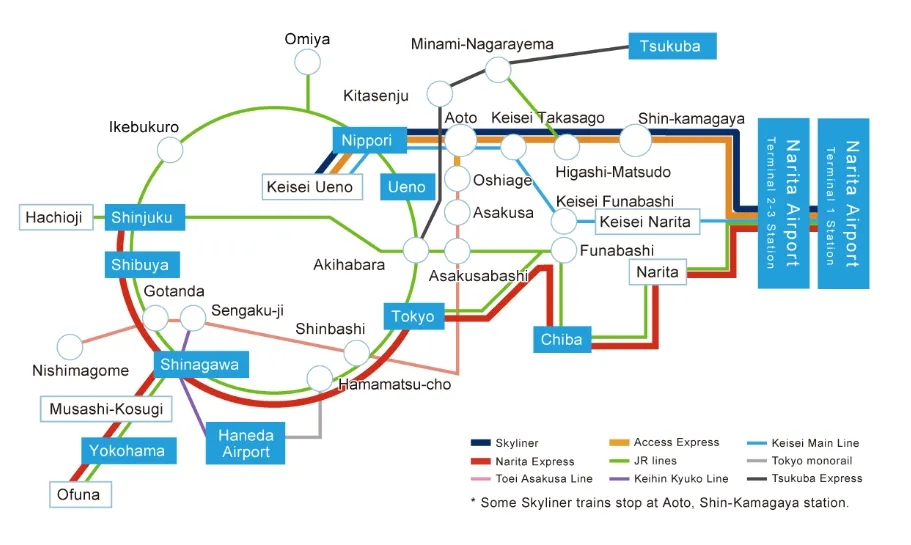
Navigating the late-night cutoff for Tokyo’s premier airport express trains requires precise timing. If you are landing late, these "Golden Deadlines" represent the absolute last rail options departing Narita Airport to get you into central Tokyo.
A. The Last Trains Out (Narita to Central Tokyo)
1. Narita Express (N'EX) – JR East
The N'EX is the go-to for direct access to major hubs like Tokyo Station, Shinjuku, Shibuya, and Yokohama.
-
The Final Curtain: The absolute last Narita Express train (N'EX 52) departs from Terminal 1 at 9:44 PM (and Terminal 2/3 at 9:47 PM).
-
Destination: This final train terminates at Tokyo Station at 10:37 PM.
-
Warning: If your flight touches down after 9:00 PM, clearing customs and making this train is incredibly tight.
2. Keisei Skyliner – Keisei Electric Railway
Keisei Skyliner - the fastest rail link to Tokyo hits speeds of 160 km/h, rocketing you to Nippori or Ueno Station. Because it runs slightly later than the N'EX, it is often a traveler's final hope.
-
The Final Curtain: The last Keisei Skyliner departs Narita Airport at 11:00 PM.
-
Destination: Arrives at Nippori at 11:36 PM and Keisei Ueno at 11:41 PM.
-
The Catch: While it gets you to Tokyo before midnight, local subways and JR lines shut down around 12:30 AM. You must move quickly to catch your final connecting local train to your hotel.
B. The First Trains In (For Early Morning Flights)
If you have an early morning flight out of Narita and want to take the train, you face the reverse challenge: trains do not run through the night to get you there at dawn.
-
Narita Express: The earliest N'EX departs Tokyo Station at 6:18 AM, arriving at Narita Terminal 2/3 at 7:13 AM.
-
Keisei Skyliner: The earliest train departs Keisei Ueno Station at 5:40 AM, arriving at Narita Airport Terminal 2/3 at 6:21 AM and Terminal 1 at 6:24 AM.
💡 The Reality Check: If your flight departs Narita before 8:30 AM, taking the morning's first express train will not leave you enough time to check bags and clear security. You should look into a late-night highway bus, an airport hotel, or a private transfer the night before.
Narita Airport Late-Night & Early-Morning Transportation
Option 1: Airport Buses - The Most Budget-Friendly Option
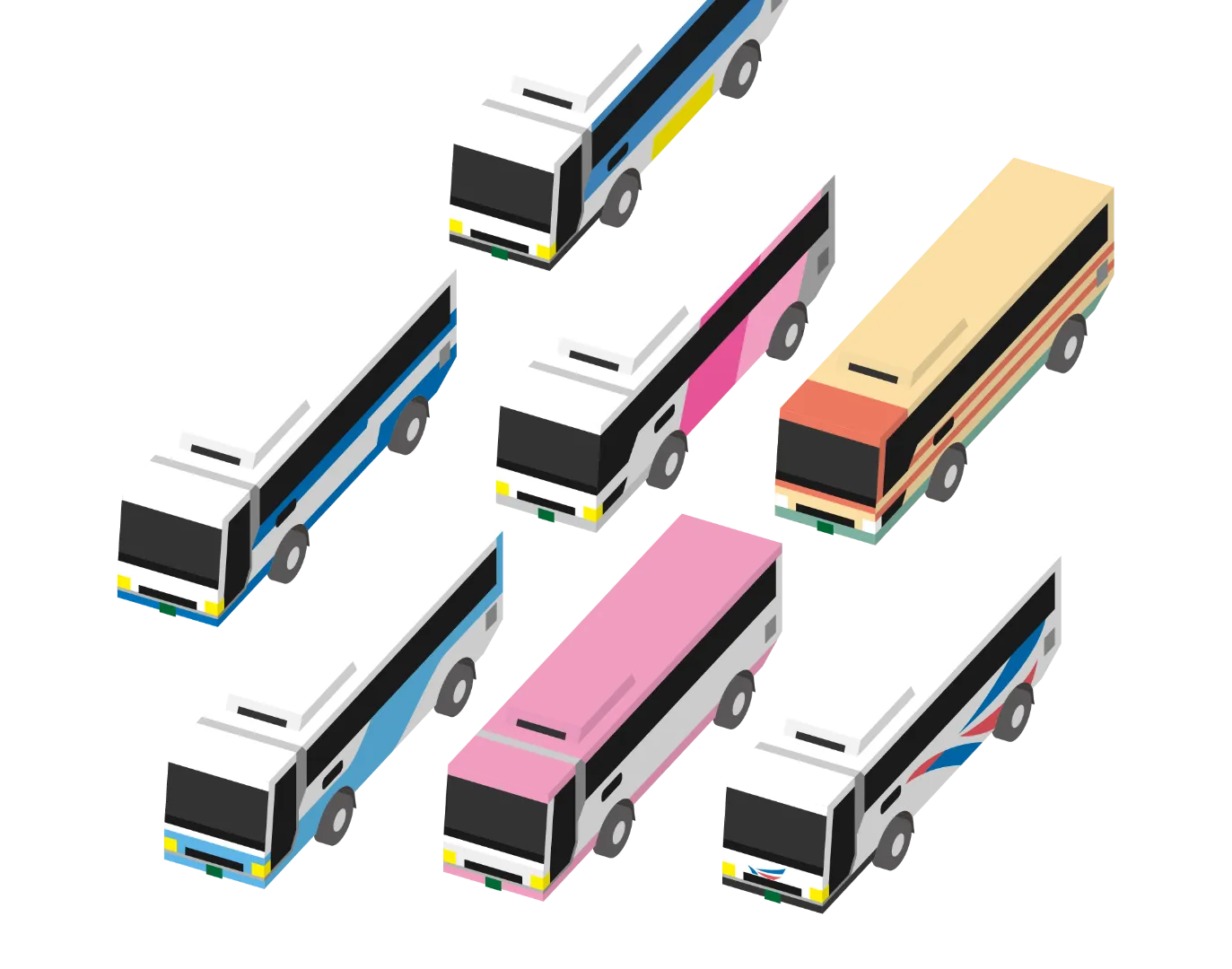
Buses are the lifeline for late-night and early-morning travelers. In 2026, services have fully stabilized, but you must be aware of the "double fare" policy for overnight runs.
A. Airport Bus TYO-NRT (Tokyo Station / Ginza)
This is the most popular low-cost bus (LCB) service, seamlessly connecting Tokyo Station (Yaesu Exit) and Ginza with Narita Airport Terminals 1, 2, and 3.
-
Daytime Fare (05:00 – 22:59): ¥1,500 (Adults) / ¥750 (Children)
-
Late-Night / Early-Morning Fare (23:00 – 04:59): ¥3,000 (Adults) / ¥1,500 (Children)
-
Journey Time: Approx. 65 to 80 minutes (subject to traffic).
-
Where to Board at Tokyo Station: Yaesu South Exit (Bus Stop #7 or #8).
-
Booking Policy:
-
To the Airport: Reservations can be made online up until 22:00 the day prior. Walk-ups are allowed if seats are available.
-
From the Airport: You cannot pre-book. You must purchase a ticket at the Airport Bus Ticket Counter in the arrivals hall (open 06:30 to 23:00) or use a contactless IC Card (Suica/Pasmo) directly at the bus stop for late-night runs when counters are closed.
-
B. Airport Limousine Bus (Major Hotel Hubs & Shinjuku)
The Airport Limousine Bus is a comfortable, luggage-friendly option that serves major hotels and popular areas in Toky, including Shinjuku (Busta Shinjuku), Shibuya, and Yokohama.
-
Availability: Regular services run from roughly 07:00 to 22:30.
-
Late-Night Service: There are very limited late-night runs (departing Tokyo after 23:00 or Narita after 23:00). Typically, a late-night service to Shinjuku or Shibuya costs around ¥4,000 to ¥5,000 one-way.
-
Recommendation: If you land after 23:00, do not rely on the Limousine Bus to drop you directly at a specific hotel. Head for the TYO-NRT Bus to Tokyo Station instead, and take a local taxi from Tokyo Station to your final destination.
For early-morning departures, some bus routes start as early as 5:15 AM from locations like Ikebukuro Station. Check the official timetable for your specific route and date.
Option 2: Pre-Booked Private Transfers
Private airport transfers are widely considered the best option for late-night arrivals and early-morning departures.
-
24/7 availability — confirmed vehicle regardless of flight delays or late arrivals.
-
Door-to-door service — direct transport from airport terminal to your hotel entrance.
-
Fixed pricing — no surprises, includes highway tolls and late-night surcharges.
-
English support available.
-
Professional driver handles your luggage.
-
Ideal for families, groups, travelers with large luggage, and first-time visitors.
For extra peace of mind, some services offer a Meet & Greet option where a staff member or driver waits for you in the arrival lobby with a name sign. This is especially helpful if you're arriving very late or feeling anxious about navigation.

-
How it Works: You provide your flight number during booking. Drivers track the flight in real-time, adjusting automatically for delays, and usually include 60 to 90 minutes of free waiting time after you touch down.
-
The Cost: Flat rates generally range from ¥24,000 to ¥30,000 ($150–$200 USD) depending on vehicle size (e.g., a standard sedan vs. a spacious Toyota Alphard).The price is fixed whether you land at noon or 1:00 AM. Your driver meets you right outside the arrivals gate with a name sign, handles your luggage, and drops you directly at your hotel doorstep.
- Booking Tips: Book in advance online through platforms like Klook, VELTRA, Transfeero, or GetYourGuide.
Option 3: Fixed Fare Taxi (Airport Taxi)
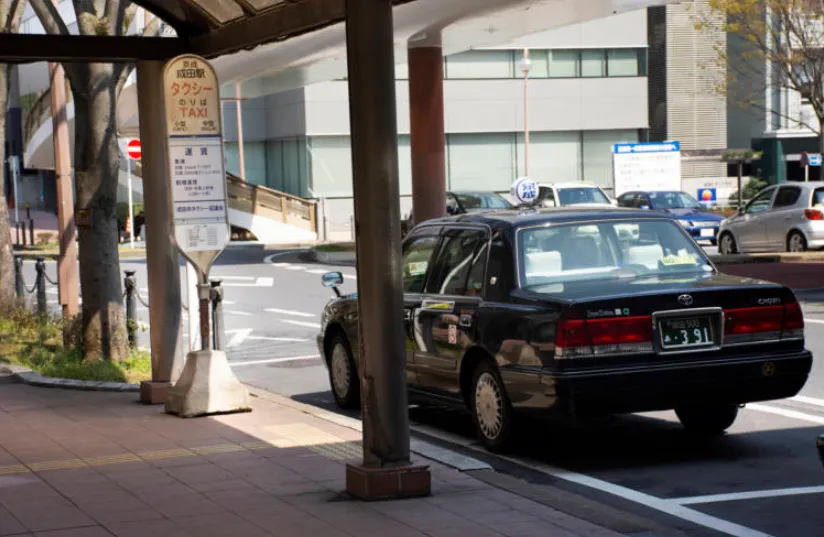
If you don't book anything in advance, you can walk out to the designated airport taxi ranks.Narita Airport taxis operate 24 hours a day and located directly outside every terminal.
Taking a regular metered taxi from Narita to central Tokyo is notoriously expensive, often exceeding ¥35,000 to ¥40,000. To prevent fare shock, Tokyo's major taxi companies offer Flat-Rate Airport Taxis.These taxis charge a uniform price from Narita Airport to different zones in Tokyo.
2026 Flat-Rate Taxi Fare Guide (By Tokyo Zone)
Fares apply to standard sedans (up to 4 passengers).
|
Zone / Wards Covered |
Daytime Fare (05:00 - 22:00) |
Late-Night / Early-Morning (22:00 - 05:00) |
|
Zone A (Edogawa, Katsushika, Sumida, Koto) |
¥19,000 |
¥23,000 |
|
Zone B (Chiyoda, Chuo, Bunkyo, Taito, Arakawa, Adachi) |
¥23,000 |
¥28,000 |
|
Zone C (Minato, Shinagawa, Meguro, Ota, Shibuya, Shinjuku, Toshima, Nakano, Kita) |
¥25,000 |
¥30,000 |
|
Zone D (Setagaya, Suginami, Nerima, Itabashi, Mitaka City, Musashino City) |
¥27,000 |
¥33,000 |
Crucial Fine Print & Surcharges
While the base fare is fixed, several additional costs will be added to your final bill:
-
Expressway Tolls: Mandatory. Expect to pay an additional ¥2,500 to ¥3,700 depending on the route taken.
-
Booking / Dispatch Fee: If you pre-book a taxi for a specific time, a fee of ¥1,000 to ¥1,500 is usually added.
-
Meet & Greet Service: If you want the driver to wait at the arrivals gate with a nameboard, companies like Tokyo MK charge an extra ¥8,000.
-
How to Book: You must book a flat-rate taxi at least 1 to 3 hours in advance via phone or English-friendly apps (Go, S.Ride, or directly via taxi websites like Nihon Kotsu, Teito, or Tokyo MK).
>>Click here for more taxi details
Summary Comparison Table
|
Metric |
Airport Bus (TYO-NRT) |
Pre-Booked Private Transfer |
Flat-Rate Taxi |
|
Cost (Est. for 2 Pax) |
¥6,000 (Late-night rate) |
¥24,000 – ¥30,000 (Fixed) |
¥30,000 – ¥38,000+ (Metered) |
|
Convenience |
Moderate (Requires transferring) |
Maximum (Door-to-door, meet & greet) |
High (But potential lines at stands) |
|
Late Surcharge |
Built into the bus ticket |
None |
Yes (+20% after 10 PM) |
|
Luggage Limit |
1 large bag per person |
Flexible (Van/HiAce options) |
Fits in sedan trunk (2-3 bags) |
|
Best For |
Budget solo travelers landing before 11 PM. |
Families, groups, or anyone landing after 11 PM. |
Unplanned emergencies / backup plans. |
Key Tips for 2026 Travelers
-
Always confirm schedules on official websites before your trip — timetables can change.
-
Pre-book private transfers for late-night arrivals — this is the most failure-proof option.
-
Consider airport hotels if your flight arrives after 11:00 PM and you're not in a rush.
-
For early flights, staying near the airport the night before is often less stressful than risking early-morning transportation.
-
Allow extra time — traffic conditions can affect bus and taxi travel times.
-
Keep essentials (passport, charger, medications) in a small day bag if staying overnight at the airport.
-
IC cards (Suica, PASMO) can be used for some bus and train payments.