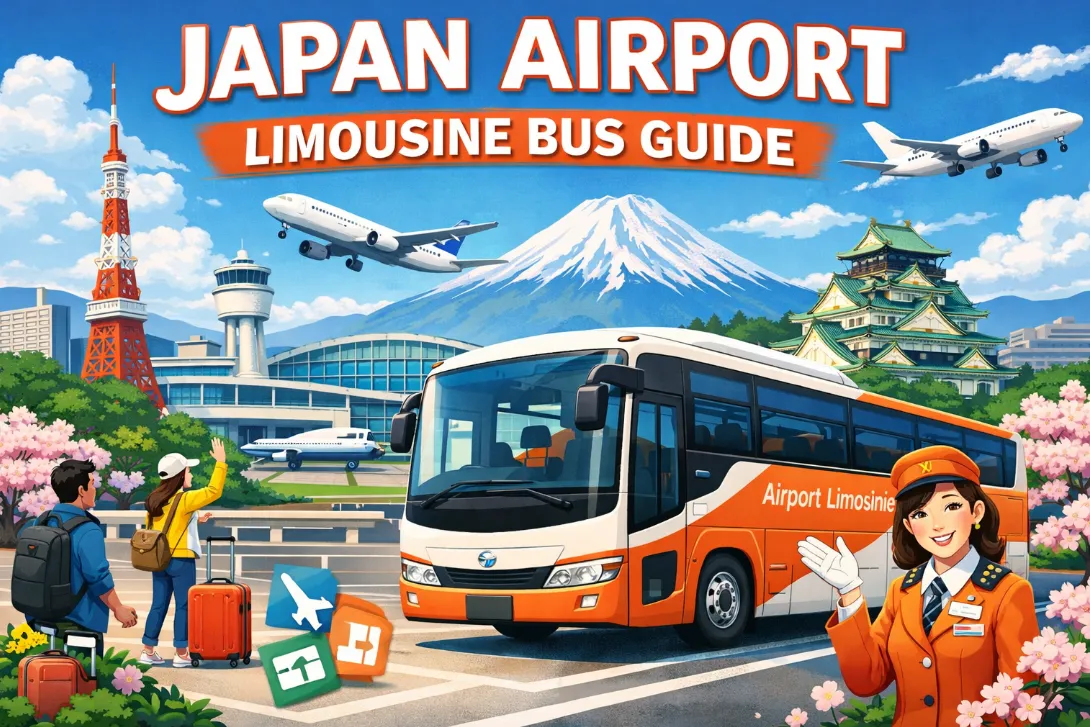
For travelers touching down in Tokyo, Osaka, or other major Japanese cities, the first hour after landing often determines how smoothly the rest of the trip unfolds. With multiple transportation options—from crowded trains to costly taxis—choosing the right one can feel overwhelming, especially after a long flight. Fortunately, Japan’s extensive network of the premium airport coach offers a straightforward solution: comfortable seating, generous luggage space, and direct drop-offs at key hotels and stations. In this guide, I break down everything you need to know about booking your ride—from real-time schedules and the latest ticket pricing to seamless door-to-door hotel drops. Say goodbye to heavy lifting on crowded trains and discover why these premium coaches are still the preferred choice for savvy international visitors this year.
What is the Airport Limousine Bus?
The Airport Limousine Bus in Japan is one of the easiest and most comfortable ways to travel between major airports—like Narita, Haneda, and Kansai—and city centers, hotels, or transport hubs. Despite the name, it’s not a luxury limo, but a fleet of modern, spacious coaches designed for stress-free airport transfers.It offers door-to-door service to many major hotels, saving you from navigating complex train stations with heavy luggage.
Key Features and Benefits
The term "Limousine" in Japan refers to the level of service rather than the vehicle shape.
-
Direct Hotel Access: Many routes stop directly at the entrances of major hotels.
-
Luggage Handling: Staff manually load your heavy bags into the undercarriage and give you a claim tag. You don't touch your bags again until you arrive.
-
Onboard Comfort: These are "SuperCabins" or high-end coaches featuring:
-
Dedicated Seats: No standing; everyone is guaranteed a seat.
-
Amenities: Most have free Wi-Fi, USB/Power outlets, and an onboard toilet.
-
Climate Control: Powerful AC and heating, which is a lifesaver during Japan's humid summers or snowy winters.
-
-
Bilingual Service: Announcements and signs are available in both Japanese and English.
-
Cost-Effectiveness: Often more affordable than a taxi, while offering similar door-to-hotel convenience.
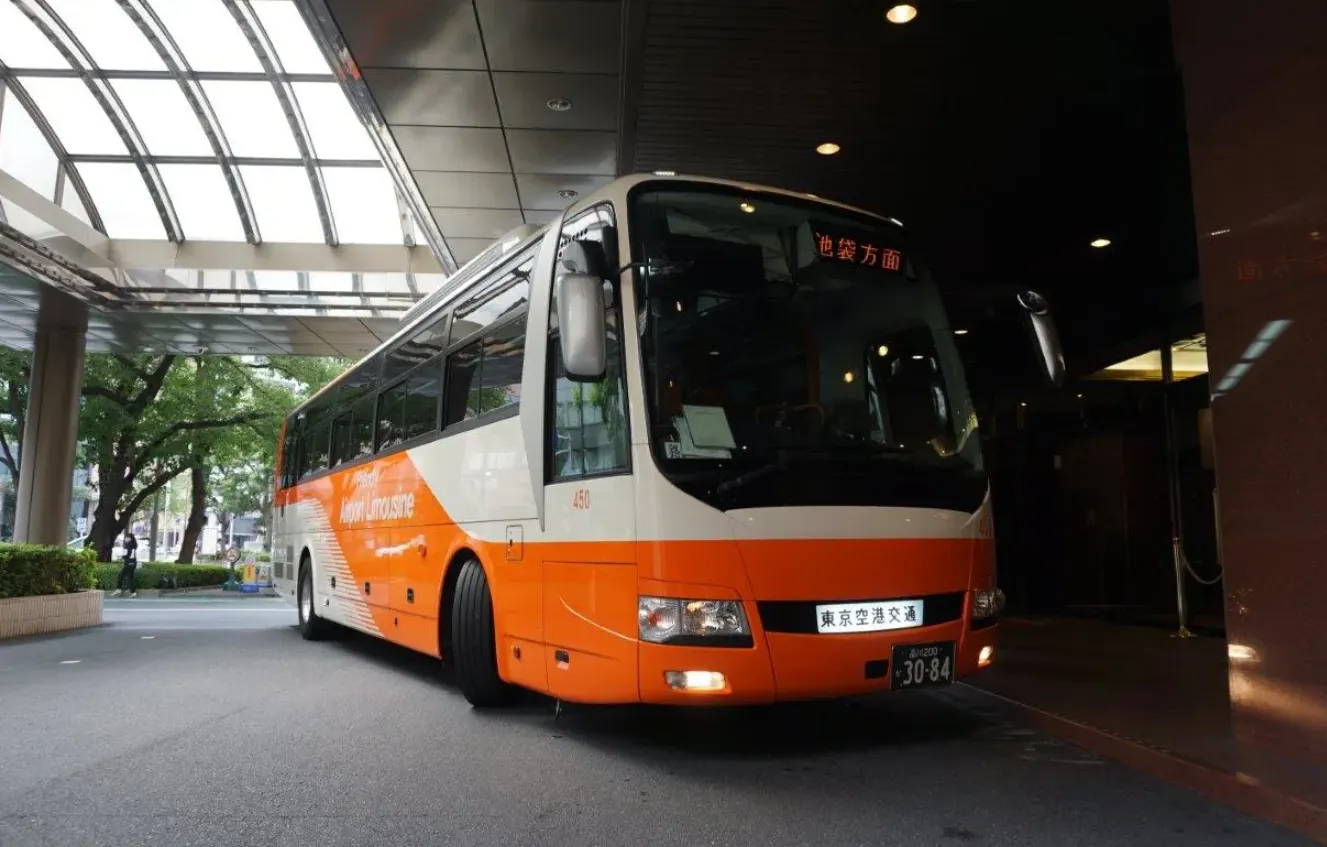
The "Orange Bus" (Tokyo)
In Tokyo, the service is most recognizable by its bright orange color and the brand name "Friendly Airport Limousine." It serves over 120 major hotels in areas like Shinjuku, Ginza, Shibuya, and Roppongi.
When Should You Use It?
|
Use the Bus If... |
Use the Train (N'EX/Skyliner) If... |
|
You have 2+ large suitcases. |
You are in a huge hurry (trains avoid traffic). |
|
Your hotel is a designated stop. |
You are using a JR Pass (trains are covered). |
|
You want to avoid walking/stairs in stations. |
You are traveling on a strict budget. |
|
You are traveling with kids or seniors. |
You are staying right next to a major train station. |
The Main Routes & Stops
Airport Limousine Buses are designed as direct point-to-point routes, not like city buses with many small stops. Most routes follow this pattern: Airport → Major Hub → Hotels / Key District Stops.
A. Narita Airport (NRT) Routes & Stops
Narita is the main international airport, and the Limousine Bus covers a wide network of hotels and city centers. Below are the major areas and their specific stops.
|
Area |
Key Stops & Hotels |
|
Shinjuku Area |
Shinjuku Station, Shinjuku Expressway Bus Terminal (Busta Shinjuku), Keio Plaza Hotel, Hilton Tokyo, Hyatt Regency Tokyo, Park Hyatt Tokyo, Hotel Century Southern Tower, Shinjuku Washington Hotel |
|
Shibuya Area |
Shibuya Station (Mark City / Shibuya Fukuras), Cerulean Tower Tokyu Hotel, Shibuya Excel Hotel Tokyu |
|
Ginza & Shiodome |
Ginza Station, Imperial Hotel, Dai-ichi Hotel Tokyo, Conrad Tokyo, Park Hotel Tokyo, The Royal Park Iconic Tokyo Shiodome, Mitsui Garden Hotel Ginza Premier |
|
Ikebukuro Area |
Ikebukuro Station (East/West Exit), Sunshine City Prince Hotel, Hotel Metropolitan Tokyo |
|
Akasaka & Roppongi |
ANA InterContinental Tokyo, Hotel New Otani, The Capitol Hotel Tokyu, The Okura Tokyo, The Ritz-Carlton Tokyo, Grand Hyatt Tokyo |
|
Tokyo Station Area |
Tokyo Station (Tekko Building), Tokyo City Air Terminal (TCAT), Nihonbashi |
|
Tokyo Disney Resort |
Tokyo Disneyland, Tokyo Disneysea, Disney Ambassador Hotel, Hilton Tokyo Bay, Sheraton Grande Tokyo Bay Hotel, and other official Disney hotels |
|
Other Areas |
|
B. Haneda Airport (HND) Routes & Stops
Haneda is much closer to the city center. These buses are faster and cheaper than those from Narita. A special Late Night/Early Morning Service (00:00–04:00) is also available for red-eye flights.
|
Area |
Key Stops & Hotels |
|
Shinjuku Area |
Shinjuku Expressway Bus Terminal (Busta Shinjuku), Shinjuku Station West Exit (Keio Department Store), Higashi-Shinjuku Station |
|
Ikebukuro Area |
Ikebukuro Station East Exit |
|
Ginza & Tokyo Station |
Ginza Station, Tokyo Station |
|
Shibuya Area |
Shibuya Station |
|
Other Areas |
Yokohama, Roppongi, and Disney Resort routes are also available |
C.Osaka & Kyoto Routes (Kansai KIX)
|
Destination |
Major Stops |
|
Osaka (Umeda) |
Hankyu Sanbangai (Main Hub), Herbis Osaka, Hotel Hankyu Respire, Hilton Osaka. |
|
Namba/Minami |
OCAT (Namba ↔ KIX), Nankai Namba Station (Midnight services). |
|
Universal Studios |
Universal Studios Japan (USJ), Universal Citywalk, Liber Hotel. |
|
Kyoto |
Kyoto Station (Hachijo Exit), Highway Kyotanabe. |
|
Kobe |
Kobe Sannomiya, Rokko Island (Sheraton). |
Airport Bus Stops (Where You Board)
✅At the Airport
Located outside arrivals on the 1st floor.Each terminal has multiple numbered bus stops.Your ticket shows the exact stop number.
-
Narita: Terminals 1, 2, 3 → all have bus stops on 1F
-
Haneda: Terminals 1, 2, 3 → bus stops on 1F outside arrivals
✅In the City
Stops are usually at:
-
Major train stations (Shinjuku, Tokyo Station, Ikebukuro)
-
Bus terminals (e.g., Busta Shinjuku, T-CAT)
-
Large hotels (Hilton, Keio Plaza, etc.)
🔔Pro Tip: T-CAT (Tokyo City Air Terminal) in Nihonbashi is the "heart" of the network. Buses run here every 10–15 minutes, making it the most reliable backup if you miss a specific hotel bus.
How to Find Your Specific Stop?
If you aren't sure which bus to take, follow these steps:
-
Check your Hotel Website: Look under "Access" or "Location." Almost every hotel that is a stop will proudly advertise "Direct Airport Limousine Bus Access."
-
Use the Destination Search:
- For Tokyo: Limousine Bus Timetable Search
-
For Osaka/Kyoto: KATE Route List
-
Google Maps: Type your hotel name and "Airport" in directions, then select the "Bus" icon. It accurately shows the Limousine Bus logos and stop times.
How to Buy the Tickets?
There are several convenient methods to purchase tickets.
A. Online (Recommended)
You can buy tickets on the Official Limousine Bus Website: Limousine Bus (Airport Transport Service) , Kansai Airport Transportation Enterprise (KATE), or through travel platforms like Trip.com or Klook.
-
Process: Select your route, pay by credit card, and you will receive a QR code.
-
Redeeming: Scan the QR code at the ticket counter or vending machine at the airport to get a physical boarding pass .
-
Advance Booking: Reservations are available up to 180 days in advance.
B. At the Airport (Arrival)
-
Ticket Counters: Located in the Arrival Lobby (Terminals 1, 2, and 3 at Narita; each terminal at Haneda) .
-
Ticket Vending Machines: Available 24/7 with English language support. You can pay with cash, credit card, or IC Cards (Suica/Pasmo).
C. Returning to the Airport
You can buy tickets at the hotel front desk (if it’s a designated stop) or at major bus terminals like Shinjuku Expressway Bus Terminal (Busta Shinjuku).
The Ticket Prices
Ticket prices for the Airport Limousine Bus are fixed based on the distance between the airport and your specific destination area. While they are slightly more expensive than local trains, the convenience of luggage handling and direct hotel drop-off is often worth the extra few hundred yen.
1. Tokyo Area (Narita & Haneda)
Prices are for one-way Adult tickets. Children (ages 6–12) are 50% of the adult fare.
|
Route |
Adult Fare (One-Way) |
Child Fare |
|
Narita ↔ Shinjuku / Shibuya / Ginza |
¥3,600 |
¥1,800 |
|
Narita ↔ Tokyo Station / T-CAT |
¥3,100 |
¥1,550 |
|
Haneda ↔ Shinjuku / Shibuya |
¥1,600 |
¥800 |
|
Haneda ↔ Tokyo Station |
¥1,300 |
¥650 |
|
Haneda ↔ Narita (Inter-airport) |
¥3,600 |
¥1,800 |
|
Haneda/Narita ↔ Tokyo Disney Resort |
¥1,300 / ¥2,300 |
¥650 / ¥1,150 |
If you need to transfer between Narita (NRT) and Haneda (HND), the Limousine Bus also operates an Inter-Airport Service. The journey takes approximately 60–90 minutes and costs around ¥3,200.
2. Osaka & Kyoto Area (Kansai KIX)
The Kansai Airport Transportation Enterprise (KATE) operates these routes.
|
Route |
Adult Fare (One-Way) |
Child Fare |
|
KIX ↔ Osaka Sta. (Umeda) |
¥1,800 |
¥900 |
|
KIX ↔ Namba (OCAT) |
¥1,300 |
¥650 |
|
KIX ↔ Universal Studios Japan (USJ) |
¥1,800 |
¥900 |
|
KIX ↔ Kyoto Station |
¥2,800 |
¥1,400 |
|
KIX ↔ Kobe (Sannomiya) |
¥2,200 |
¥1,100 |
How to Save Money:
-
Round-Trip Tickets: Some routes (especially in Osaka/Hokkaido) offer a slight discount if you buy a round-trip ticket at the counter. These are usually valid for 7–14 days.
-
Multi-Trip Vouchers (回数券 - Kaisuken): If you are traveling in a group of 4 or 10, you can buy a booklet of tickets at a discounted rate.
-
Third-Party Platforms: Sites like Klook or KKday occasionally offer "Early Bird" vouchers that can save you 5–10% compared to the airport counter price.
Step-by-Step: How to Ride
Step 1: Locate the Counter
After clearing customs, follow the signs for "Airport Limousine" or "Bus." The counters are usually orange and located in the arrival lobbies.
Step 2: Exchange/Redeem Ticket
-
If you bought a QR code online, scan it at the machine or counter to get a physical ticket.
-
If you are buying on-site, tell the staff your hotel or destination. They will assign you to the correct bus stop.
Step 3: Luggage Check
-
Allowance: 2 pieces of luggage per person.
-
Size Limit: Each bag must not exceed 120cm (height) x 60cm (width) x 50cm (depth) and weigh under 30kg.
-
Procedure: Staff will tag your luggage, place it in the trunk, and give you a claim stub. Keep this stub to retrieve your bags at the destination.
Step 4: Boarding
Proceed to the designated bus stop number. Present your ticket to the driver or staff, store your carry-ons, and take a seat.
Step 5: Arrival
When you arrive, staff will retrieve your luggage from the trunk. Match the claim stub to your bags before leaving.
Typical Limousine Bus Timetables
The Airport Limousine Bus operates on a fixed timetable that varies by route and time of day. Buses generally run frequently from early morning until late at night.Below is the timetable summary for the most popular routes in 2026.
1. Tokyo Area (Narita & Haneda)
Tokyo buses generally run from early morning (approx. 6:00 AM) until late night (approx. 11:00 PM).
To/From Shinjuku (The Busiest Hub)
-
From Haneda to Shinjuku: Every 15–30 minutes.
-
First Bus: ~6:15 AM
-
Last Bus: ~11:55 PM
-
-
From Narita to Shinjuku: Every 30–60 minutes.
-
First Bus: ~6:50 AM
-
Last Bus: ~10:30 PM
-
To/From Tokyo Station / T-CAT
-
T-CAT (Nihonbashi): This is the most frequent stop. Buses to/from Haneda run every 10–15 minutes.
-
Narita to Tokyo Station: Roughly every 30–60 minutes.
2. Osaka & Kyoto Area (Kansai KIX)
The KIX Limousine Bus (KATE) is known for its high frequency to the Umeda and Namba districts.
|
Route |
Frequency |
First Bus (from Airport) |
Last Bus (from Airport) |
|
KIX ↔ Osaka Station (Umeda) |
Every 15–20 min |
~6:50 AM |
~11:45 PM |
|
KIX ↔ Kyoto Station |
Every 30–60 min |
~6:45 AM |
~11:20 PM |
|
KIX ↔ Namba (OCAT) |
Every 30 min |
~7:00 AM |
~10:15 PM |
|
KIX ↔ Universal Studios (USJ) |
Every 60 min |
~8:20 AM |
~5:10 PM |
How to Check Real-Time Timetables:
Because traffic in Tokyo and Osaka can be unpredictable, it is highly recommended to use these official 2026 digital tools:
-
Tokyo Timetable Search: Limousine Bus Official Search
-
🔔Tip: You can search by "Hotel Name" or "Area."
-
-
Osaka/KIX Timetable Search: KATE Official Schedule
-
Navitime Japan: Use the Navitime Route Finder and filter for "Airport Bus" to see the next departing bus from your exact location.
Pro-Tips for Travelers
-
Check Traffic: While generally reliable, buses can be delayed by Tokyo's heavy traffic. If you have a flight to catch, allow an extra 30-60 minutes.
-
The "Low Cost Bus" Alternative: If you are on a budget, look for the "Airport Bus TYO-NRT" (near Tokyo Station) which costs only around ¥1,500 to Narita, but it has stricter luggage limits and fewer hotel stops.
-
Round-trip Discounts: Always ask at the counter if there are "Return Voucher" discounts or "Limousine & Subway Pass" bundles to save money.
-
Check the "Last Bus": If you have a late-night flight, check the schedule. While many routes run late, some hotel-specific stops stop earlier than the main terminal stops.
-
Pets: Small animals (birds, cats, dogs) are allowed only if kept in a secure carrier on your lap. Large animals are not permitted.
-
Refunds: Tickets purchased online have specific refund deadlines. Generally, unused tickets can be refunded, but fees may apply.
Frequently Asked Questions
Do I need to book in advance?
Generally, no. For arrivals at the airport, most travelers simply walk up to the orange counter or use a vending machine after clearing customs. However, if you are heading back to the airport from a popular hotel or during peak holidays (Golden Week in May or New Year's), booking 1–2 days in advance via their website is highly recommended to guarantee your preferred time.
What is the luggage allowance?
You can check 2 large suitcases per person in the bus's lower compartment.
-
Weight: Up to 30 kg (66 lbs) per bag.
-
Dimensions: Combined linear dimensions (L+W+H) should be under 250 cm.
-
Carry-on: You can bring one small bag inside the cabin that fits in the overhead rack or at your feet.
Can I eat and drink on the bus?
Yes, but with manners. While eating is not strictly prohibited, Japanese etiquette favors "light and odorless" snacks. A bottle of water or a sandwich is fine, but avoid strong-smelling foods (like hot fried chicken or fast food) out of respect for other passengers.
What happens if I miss my bus?
If you booked online and miss your bus due to a flight delay, you can usually change your booking via the website or at a counter for the next available slot (subject to a small fee or for free depending on the ticket type). If you bought a physical ticket at the airport, just head to the counter—they are very helpful with reissuing tickets for the next departure.
Is there a restroom on the bus?
Usually. Most long-distance routes (like Narita to Shinjuku or KIX to Kyoto) use coaches equipped with a small restroom at the back. For shorter hops (Haneda to nearby stations), the bus might not have one, but the journey is typically under 40 minutes.
Is it wheelchair accessible?
Yes, but with a caveat. Most buses require you to be able to climb a few steps to your seat, while the wheelchair is stored in the luggage hold. However, both Tokyo and Osaka have introduced "Lift Buses" on specific schedules. These must be reserved at least 24 hours in advance by phone or online.
Are the buses always on time?
Travel times are estimates only. Delays can occur due to traffic conditions. Please allow ample time for your journey to and from the airport.
Who is responsible for my luggage?
You are responsible for managing your own belongings. The operating company is not liable for loss, theft, or damage to luggage stored in the trunk, except in cases of gross negligence.